
The Sleeping Giant: When Presidential Leadership Fails the American People
Published
- 3 min read
The Unfolding of a Concerning Cabinet Meeting
On December 2, 2025, the White House hosted what should have been a routine Cabinet meeting—an opportunity for the nation’s highest officials to discuss pressing matters of state and coordinate executive branch activities. Instead, the event devolved into a spectacle that revealed deep concerns about this administration’s competence and commitment to governance. President Donald Trump, aged 79, struggled to remain awake during the two-hour proceedings, his eyes fluttering closed multiple times while his cabinet members delivered lengthy presentations.
The meeting began with Trump’s declaration that this would be the final full Cabinet gathering until 2026, followed by extensive opening comments that largely rehashed previous policy announcements and revisited his false claims about winning the 2020 election. Despite instructing attendees to “go quickly,” most cabinet officials delivered extended remarks that contradicted the president’s own messaging on key issues like affordability—a term Trump had dismissed as a “con job” by Democrats just moments earlier.
Administrative Errors and Disturbing Revelations
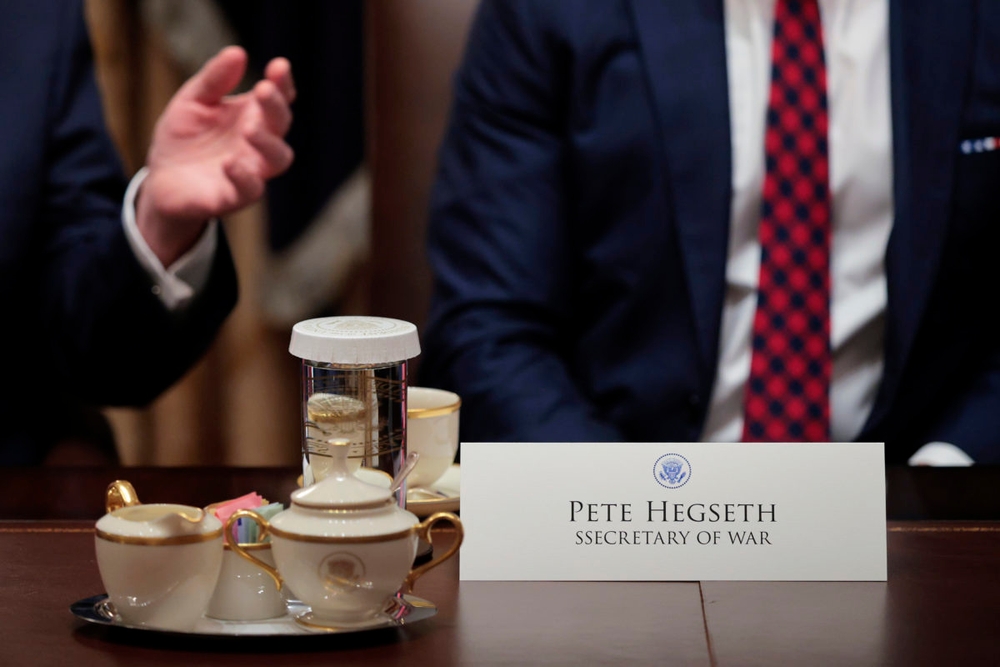
The procedural incompetence began immediately with Defense Secretary Pete Hegseth’s nameplate misspelling him as “ssecretary of war”—an error that quickly became fodder for online ridicule. This administrative oversight was particularly notable given Hegseth’s praise for Trump’s move to rename the Defense Department to the “Department of War,” a change that cannot legally occur without congressional approval.
As the meeting progressed, Budget Director Russell Vought was observed doodling a pastoral scene featuring mountains and fluffy clouds on White House letterhead—hardly the behavior expected of someone participating in a crucial government meeting. Meanwhile, television cameras captured the president visibly struggling to maintain alertness, often sitting back with eyes drooping or completely closed.
The substantive discussions revealed even more concerning developments. Secretary Hegseth defended a September military strike against an alleged drug-carrying boat near Venezuela by citing the “fog of war” and acknowledging he “didn’t stick around” for the mission’s completion. Most alarmingly, President Trump declared he didn’t want Somali immigrants in the United States, referring to them as “garbage” and suggesting they should remain in their war-ravaged homeland rather than seek refuge in America.
The Erosion of Democratic Norms and Professional Standards
What we witnessed in this Cabinet meeting represents more than mere administrative sloppiness—it signals a fundamental breakdown in the professional standards that should govern executive branch operations. The spectacle of a president unable to stay awake during important briefings, combined with cabinet members openly contradicting presidential directives and engaging in casual doodling, suggests an administration that has lost sight of its solemn responsibilities.
The casual cruelty displayed toward Somali refugees is particularly troubling from a constitutional and human rights perspective. Our nation was built by immigrants and refugees seeking better lives, and the Statue of Liberty stands as a testament to America’s commitment to welcoming “your tired, your poor, your huddled masses yearning to breathe free.” When a president refers to human beings fleeing violence and persecution as “garbage,” he not only violates basic human decency but also betrays the very ideals upon which this nation was founded.
The Dangerous Normalization of Incompetence
The most insidious aspect of this administration’s behavior is the gradual normalization of incompetence and unprofessionalism. Marathon Cabinet meetings that stretch for hours without substantive outcomes, nameplates with glaring spelling errors, and officials doodling during proceedings—these are not minor oversights but symptoms of a deeper disregard for effective governance.
This normalization process is particularly dangerous because it erodes public trust in government institutions. When citizens see their leaders treating important meetings as opportunities for performance rather than productive work, when they witness the casual dismissal of human dignity, they understandably question whether their government deserves their respect and compliance. This erosion of trust undermines the social contract that binds our democracy together.
The Constitutional Implications of Sleeping Leadership
The image of a sleeping president during crucial government business raises serious constitutional concerns. Article II of the Constitution vests executive power in the president, requiring them to “take care that the laws be faithfully executed.” This duty requires alertness, engagement, and conscientious attention to detail—qualities conspicuously absent from this Cabinet meeting.
When the commander-in-chief cannot stay awake during discussions of national security, military operations, and immigration policy, we must question whether he can adequately fulfill his constitutional obligations. The presidency is not an honorary position; it carries immense responsibility for the safety and well-being of 330 million Americans. The American people deserve a leader who is fully present and engaged during discussions of matters affecting national security and human lives.
The Human Cost of Rhetorical Carelessness
President Trump’s comments about Somali immigrants represent more than just offensive rhetoric—they have real-world consequences for vulnerable populations. Somali refugees fleeing violence and persecution already face significant challenges in seeking safety and stability. When the president of the United States publicly dehumanizes them, he potentially emboldens discrimination, hate crimes, and policy changes that could endanger lives.
This rhetoric also undermines America’s moral standing on the world stage. For decades, the United States has positioned itself as a champion of human rights and refugee protection. Statements like those made during this Cabinet meeting damage our international credibility and make it more difficult to advocate for human rights abroad when we fail to uphold them at home.
The Path Forward: Restoring Dignity and Competence
As concerned citizens committed to democratic values and effective governance, we must demand better from our leaders. The spectacle of a sleeping president and doodling cabinet members would be concerning in any administration, but combined with dehumanizing rhetoric and policy contradictions, it becomes truly alarming.
We must insist on three fundamental reforms: First, a return to professional standards in government proceedings, including proper preparation, attention to detail, and respect for the gravity of public service. Second, a recommitment to humane immigration policies that reflect American values of compassion and opportunity. Third, greater transparency and accountability in military operations to ensure that decisions affecting human lives are made with utmost care and consideration.
The American experiment in self-government depends on leaders who take their responsibilities seriously and treat all people with dignity. When we allow incompetence and cruelty to become normalized, we betray the sacrifices of those who built this nation and fought to expand freedom and equality. We must demand leaders who are awake—both literally and metaphorically—to the challenges facing our nation and the values that define our character.