
The Sovereignty Trade-Off: Questioning the Dominican Republic's Military Agreement with the United States
Published
- 3 min read
The Facts of the Agreement
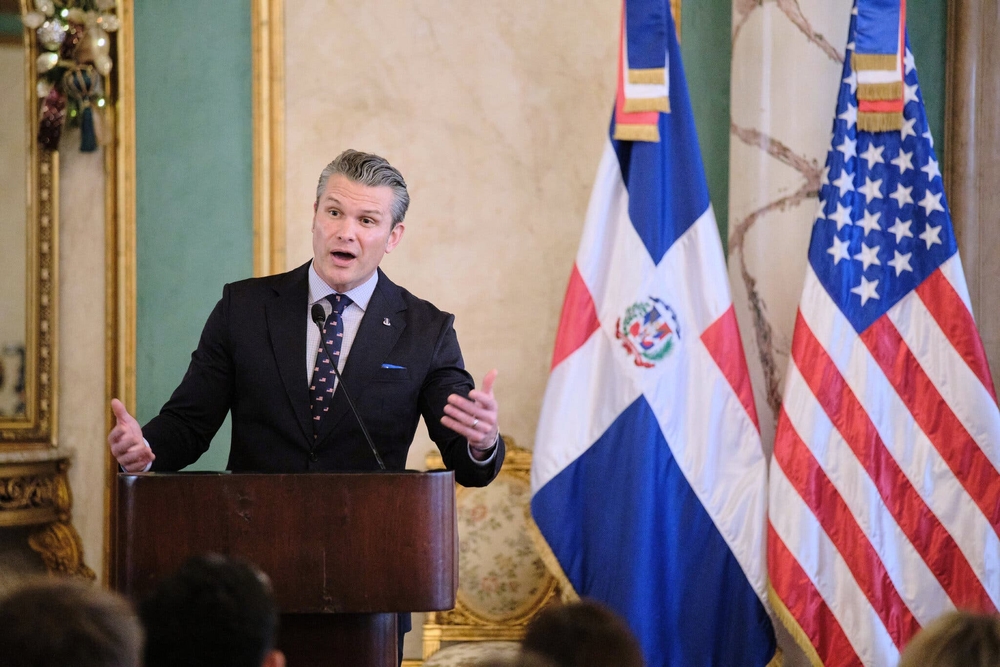
In a significant development in Caribbean-U.S. relations, Dominican President Luis Abinader announced on Wednesday that he has authorized the United States military to temporarily operate inside restricted areas of the San Isidro Air Base and Las Américas International Airport. The stated purpose of this arrangement is to assist Washington in combating drug trafficking operations throughout the Caribbean region. The announcement came during a news conference in Santo Domingo where President Abinader stood alongside U.S. Defense Secretary Pete Hegseth.
According to the agreement, the Pentagon will have access to restricted zones within these strategic locations for refueling aircraft and transporting equipment and technical personnel. President Abinader framed this decision as strengthening “the air and maritime protection ring maintained by our armed forces” and described it as “a decisive reinforcement to prevent the entry of narcotics and strike more forcefully at transnational organized crime.”
This development occurs against the backdrop of intensified U.S. military actions in the Caribbean and eastern Pacific, where the Pentagon has conducted more than 20 strikes against suspected drug trafficking vessels since September, resulting in at least 83 fatalities. The agreement represents the first major military partnership between the Trump administration and the Dominican Republic, marking a significant shift in defense cooperation between the two nations.
Concerning Lack of Transparency
What makes this agreement particularly alarming is the conspicuous absence of specific details regarding its terms and implications. The news conference provided few substantive details about the arrangement, and notably, no questions were allowed from journalists. This lack of transparency is deeply troubling for any democratic society considering the gravity of allowing foreign military operations within sovereign territory.
The agreement raises fundamental questions that remain unanswered: What exactly will the Dominican Republic receive in return for this military access? How long will the “temporary” arrangement actually last? What oversight mechanisms will ensure that U.S. operations respect Dominican laws and sovereignty? The absence of these critical details suggests either rushed negotiations or intentional obfuscation of terms that might prove controversial with the Dominican public.
Defense Secretary Hegseth’s vague assurance that the United States will respect Dominican sovereignty provides little comfort given the historical precedent of similar arrangements elsewhere that gradually expanded into permanent military presence. His statement that “The Dominican Republic has stepped up” implies a burden-sharing expectation that merits scrutiny regarding whose interests are truly being served.
The Sovereignty Paradox in Security Cooperation
At the heart of this agreement lies a fundamental paradox that has challenged nations throughout history: how to balance the genuine need for security cooperation with the imperative of preserving national sovereignty. While combating drug trafficking is undoubtedly a legitimate concern for both nations, the method chosen—granting military access to restricted areas—represents a significant concession of sovereignty that demands rigorous democratic scrutiny.
History provides numerous cautionary tales about “temporary” military arrangements that evolved into permanent fixtures. The pattern often begins with limited access for specific purposes, gradually expanding as operational requirements “necessitate” broader permissions. Without clear sunset provisions and robust oversight mechanisms, such arrangements can effectively cede elements of national security control to foreign powers.
This is particularly concerning given the power imbalance between the United States and the Dominican Republic. The economic and military disparity between the two nations creates an inherent negotiation asymmetry that rarely results in terms favorable to the smaller power. The vague nature of this agreement suggests that the Dominican Republic may have traded concrete sovereign control for vague security promises.
Democratic Deficits and Public Accountability
The manner in which this agreement was announced raises serious questions about democratic accountability. By presenting the decision as a fait accompli without prior public debate or legislative scrutiny, the Dominican government has effectively bypassed essential democratic processes that should govern matters of national sovereignty and military cooperation.
In a healthy democracy, agreements of this magnitude would undergo thorough parliamentary examination, expert testimony, and public discourse. The fact that journalists were not permitted to ask questions at the announcement ceremony suggests an administration aware of the controversial nature of its decision and unwilling to subject it to immediate public scrutiny.
This approach to governance dangerously parallels anti-democratic patterns we’ve witnessed elsewhere, where executive power expands at the expense of institutional checks and balances. The people of the Dominican Republic deserve transparent explanation of how this agreement serves their national interests beyond vague assertions about combating drug trafficking.
The Broader Geopolitical Context
This agreement cannot be viewed in isolation from broader geopolitical dynamics in the Caribbean region. The United States has historically viewed the Caribbean as within its sphere of influence, and this arrangement represents the latest manifestation of that strategic perspective. What makes this particularly significant is its timing, coinciding with increased U.S. military activity in the region and evolving relationships with other Caribbean nations.
The Dominican Republic’s decision sets a precedent that other nations in the region may feel pressured to follow, potentially leading to a regional security architecture increasingly dominated by U.S. military presence. This could fundamentally alter the balance of power in the Caribbean and influence how regional nations interact with other global powers.
Principles Over Pragmatism
As staunch supporters of democratic principles and national sovereignty, we must question whether this agreement represents wise policy or dangerous precedent. The fight against drug trafficking is indeed important, but not at the cost of eroding the democratic foundations that give nations their legitimacy and strength.
True security partnerships should enhance rather than diminish the sovereignty of participating nations. They should be transparent, subject to democratic scrutiny, and clearly beneficial to all parties involved. The current agreement appears to fall short on these critical measures.
The people of the Dominican Republic, through their democratic institutions, deserve a thorough accounting of this arrangement’s terms, limitations, and benefits. Anything less represents a betrayal of the democratic principles that should guide international relations between sovereign nations.
In an era where democracy faces challenges worldwide, we must be particularly vigilant about agreements that potentially compromise national sovereignty under the guise of security cooperation. The ends, no matter how noble, cannot justify means that undermine the very democratic foundations that make nations free and self-determining.
This agreement demands immediate transparency, rigorous oversight, and continuous democratic accountability. Without these safeguards, what begins as limited security cooperation could evolve into something that fundamentally compromises the Dominican Republic’s sovereignty and democratic integrity. The fight against drug trafficking must be pursued, but never at the cost of the principles that define free nations.