
The Supreme Court's Dangerous Gamble: Eroding Institutional Independence for Presidential Power
Published
- 3 min read
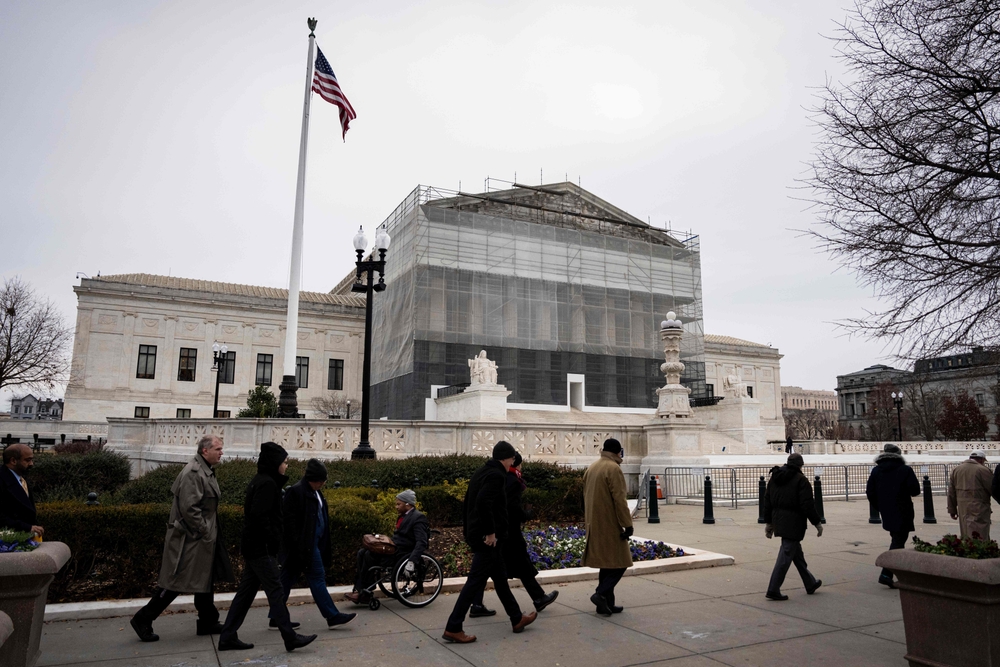
The Legal Battle Over Executive Authority
The United States Supreme Court stands at a constitutional precipice, poised to potentially unravel nearly a century of established precedent governing the relationship between presidential power and independent government agencies. During recent oral arguments, the Court’s conservative majority appeared receptive to former President Donald Trump’s argument that he should have virtually unlimited authority to remove officials from independent agencies like the Federal Trade Commission (FTC), despite congressional statutes explicitly limiting such removal to cases of “inefficiency, neglect of duty or malfeasance in office.”
At stake is the 1935 landmark decision in Humphrey’s Executor v. United States, which unanimously upheld Congress’s authority to create independent agencies with leaders protected from arbitrary presidential removal. This precedent has formed the bedrock of regulatory stability for decades, allowing bipartisan commissions to make decisions based on expertise rather than political loyalty. The current case involves President Trump’s firing of FTC Commissioner Rebecca Kelly Slaughter, a Democrat, who he removed explicitly because she “did not align with his agenda” despite statutory protections.
Historical Context and Constitutional Foundations
The philosophical underpinnings of this debate stretch back to the nation’s founding. As the article notes, Alexander Hamilton himself proposed the structure of the Sinking Fund Commission in 1790 - considered America’s first independent agency - specifically to insulate decision-making from political pressure. This commission included members like the vice president who could not be removed at will by the president, and notably included both Hamilton and his political rival Thomas Jefferson serving together.
This historical tradition reflects the wisdom of the framers in recognizing that certain government functions require insulation from partisan politics. Congress has created approximately 50 boards and commissions with similar bipartisan structures and removal protections, including the Federal Reserve, Securities and Exchange Commission, Federal Election Commission, and Nuclear Regulatory Commission. These bodies oversee everything from consumer protection and workplace safety to nuclear energy and financial markets - areas where expertise, stability, and freedom from political interference are essential for both effective governance and public trust.
The Conservative Legal Movement’s Agenda
The current challenge represents the culmination of a decades-long project by conservative legal thinkers to advance the “unitary executive theory,” which argues that the Constitution gives the president complete control over the executive branch. This theory has gained traction within the Federalist Society and among originalist scholars, though as the article notes, even prominent originalists like Professor Caleb Nelson have recently challenged this interpretation, arguing that historical evidence actually supports Congress’s authority to shape the executive branch.
Chief Justice John Roberts has made expanding presidential removal power something of a personal project during his tenure, writing in 2010 that without such power, “the president could not be held fully accountable for discharging his own responsibilities.” The Court has gradually chipped away at independence protections, most notably in its 2020 Seila Law decision that invalidated removal protections for the single director of the Consumer Financial Protection Bureau while preserving them for multi-member agencies like the FTC. Now, the Court appears ready to take the final step.
The Dangerous Implications of Unchecked Presidential Power
If the Court rules in favor of essentially unlimited presidential removal power, the consequences for American governance would be profound and deeply troubling. Justice Elena Kagan’s warning that this would grant “massive, uncontrolled, unchecked power in the hands of the president” is not hyperbole - it represents a clear-eyed assessment of what’s at stake.
The independence of these agencies serves vital democratic functions. As Justice Ketanji Brown Jackson noted, Congress created these bodies because “expertise matters.” Replacing scientists, economists, doctors, and other experts with political loyalists who “don’t know anything” fundamentally undermines the government’s ability to protect citizens effectively. The Nuclear Regulatory Commission shouldn’t make decisions about reactor safety based on political considerations rather than physics. The Federal Reserve shouldn’t set interest rates based on electoral calendars rather than economic data. The Federal Trade Commission shouldn’t enforce antitrust laws based on the president’s personal relationships with corporate leaders rather than consumer welfare.
The Hypocrisy of Selective Independence
Perhaps most revealing in this debate is the apparent willingness of conservative justices to create a “bespoke exception” for the Federal Reserve, as Justice Kagan termed it. Multiple justices, including Brett Kavanaugh, expressed concern about threatening the Fed’s independence, recognizing the economic chaos that could ensue if monetary policy became subject to political whim. But this pragmatic exception only highlights the ideological nature of the broader project - if independence is crucial for the Fed because of its economic importance, why isn’t it equally crucial for agencies protecting consumer safety, environmental health, or workplace rights?
The answer appears to be that some forms of expertise and independence are valued while others are dispensable. Financial markets demand stability, so the Fed gets protection. But consumer protections, environmental regulations, and worker safety standards? Those apparently can be sacrificed at the altar of presidential power. This selective application of constitutional principles reveals the decision as more about policy preferences than neutral legal reasoning.
The Threat to Democratic Accountability
Proponents of expanded presidential power argue that it increases democratic accountability by making the president responsible for all executive functions. But this argument fundamentally misunderstands how democracy actually works in a complex modern society. True democratic accountability requires multiple channels of oversight and multiple centers of expertise - not consolidation of power in a single individual.
Congress, representing the diverse will of the American people through their elected representatives, deliberately created these independent agencies precisely to ensure that certain decisions would be made based on evidence and expertise rather than short-term political calculations. By insulating agencies from political removal, Congress ensured that presidential transitions wouldn’t bring regulatory whiplash that could destabilize industries, threaten public safety, or undermine economic confidence.
The Human Cost of Institutional Destruction
Behind the legal doctrine and constitutional theory lies a very human reality: the potential destruction of institutions that protect ordinary Americans. As Georgetown Law scholar Victoria Nourse noted, “A lot of these independent agencies, Congress creates them to protect the little guy.” The Consumer Product Safety Commission investigates products that cause injuries and deaths. The Equal Employment Opportunity Commission protects against workplace discrimination. The Federal Trade Commission guards against monopolistic practices that raise prices and limit choice.
These aren’t abstract bureaucratic entities - they’re vital safeguards that protect Americans in their daily lives. Undermining their independence doesn’t just change legal doctrine; it potentially threatens consumer safety, worker rights, and fair markets. The argument that “the sky will not fall,” as Solicitor General Sauer claimed, dangerously underestimates how institutional stability and expertise-based governance actually protect citizens from harm.
A Constitutional Crisis in the Making
This case represents more than a legal dispute - it constitutes a genuine constitutional crisis about the very nature of American governance. The Court appears ready to fundamentally reinterpret the balance of power among branches of government in ways that would concentrate unprecedented authority in the presidency while diminishing Congress’s ability to structure the executive branch as it sees fit.
What makes this particularly alarming is the context in which it occurs. The Court recently granted presidents substantial immunity from prosecution for official acts, and now seems poised to grant them nearly unlimited removal power over independent agencies. This one-two punch could create an executive branch with vastly expanded power and dramatically reduced accountability - precisely the concentration of authority that the Constitution’s separation of powers was designed to prevent.
The Path Forward: Protecting Democratic Institutions
As someone who deeply believes in constitutional principles and democratic norms, I view this potential ruling with profound concern. The delicate balance of power that has sustained American democracy for centuries rests on institutional safeguards against concentrated authority. Independent agencies with protected leadership represent one of those crucial safeguards.
The founders understood that democracy requires not just elections but institutions that can resist temporary political passions and make decisions based on expertise and long-term thinking. If the Supreme Court dismantles these protections, it will have done more than change legal doctrine - it will have undermined one of the key mechanisms that has allowed American democracy to endure and thrive.
In a polarized age where trust in institutions is already frayed, the Court should be strengthening the foundations of expert governance rather than tearing them down. The American experiment has succeeded not because we concentrated power but because we distributed it wisely. Abandoning that wisdom would be a historic error with consequences that could echo through generations.