
The Supreme Court's Dangerous Gamble: Undermining Independent Agencies and Democratic Safeguards
Published
- 3 min read
The Legal Battle Over Presidential Power
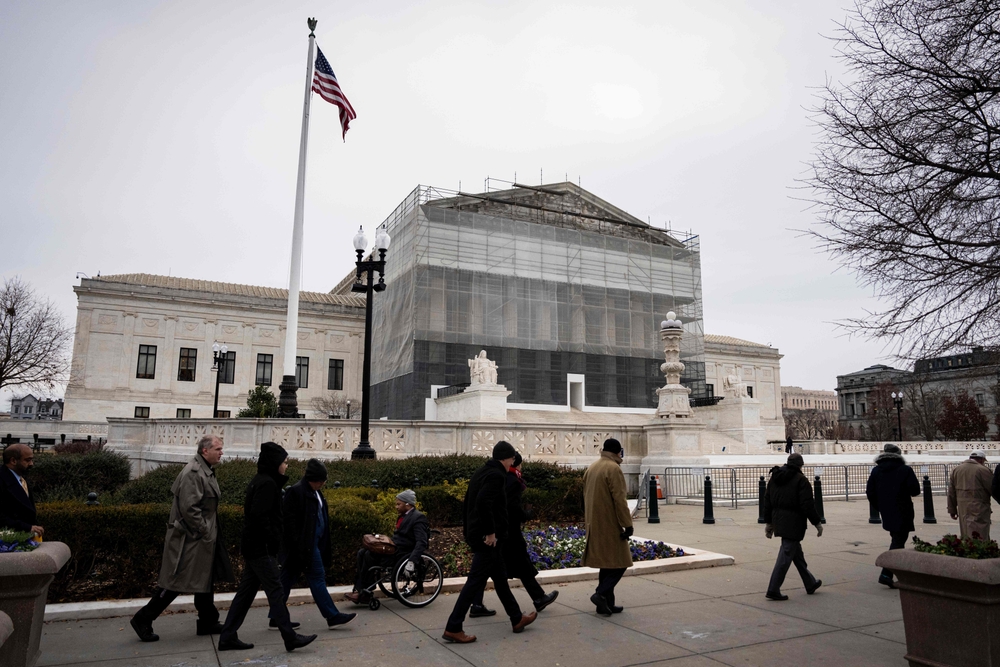
The Supreme Court finds itself at a constitutional crossroads, hearing arguments that could fundamentally reshape the balance of power in American government. At stake is whether presidents can fire leaders of independent agencies—including the Federal Trade Commission, Federal Reserve, and dozens of other bipartisan commissions—without demonstrating cause, thereby overturning the landmark 1935 Humphrey’s Executor precedent that has protected agency independence for nearly nine decades.
During oral arguments, the Court’s conservative majority appeared sympathetic to the Trump administration’s position that the Constitution grants the president sweeping authority to remove executive branch officials regardless of congressional limitations. Chief Justice John Roberts characterized the 1935 precedent as “just a dried husk,” suggesting the modern FTC exercises significantly more executive power than its historical counterpart. The administration’s lawyer, Solicitor General D. John Sauer, argued that granting this power would enhance governmental accountability rather than undermine it.
Historical Context and Institutional Design
Independent agencies represent one of Congress’s most thoughtful innovations in governance design. Since the nation’s founding—beginning with Alexander Hamilton’s Sinking Fund Commission in 1790—lawmakers have recognized that certain decisions require insulation from political pressure. These multimember bipartisan commissions, with staggered terms and removal protections, ensure that expertise rather than partisanship guides decisions affecting consumer safety, financial regulation, nuclear oversight, and workplace protections.
The current case stems from President Trump’s firing of FTC Commissioner Rebecca Kelly Slaughter in March, despite statutory language permitting removal only for “inefficiency, neglect of duty or malfeasance in office.” This follows a pattern of presidential actions against government watchdogs and independent officials, with the Supreme Court previously allowing temporary removals through emergency orders while avoiding definitive rulings on the underlying constitutional questions.
The Dangerous Path Toward Unchecked Executive Power
What we witnessed during these oral arguments represents nothing less than a constitutional crisis in slow motion. The conservative justices’ apparent willingness to dismantle nearly a century of settled law threatens the very architecture of American governance. The Framers designed our system with careful checks and balances precisely to prevent the concentration of power that this decision would enable.
Justice Elena Kagan’s warning that such a ruling would grant “massive, uncontrolled, unchecked power in the hands of the president” should alarm every American who values democratic governance. When Justice Sonia Sotomayor told the administration’s lawyer that they were asking the Court to “destroy the structure of government,” she articulated the existential threat this case represents to our system of separated powers.
The idea that independent agencies create a “power vacuum,” as Solicitor General Sauer argued, fundamentally misunderstands their purpose. These agencies don’t represent a vacuum but rather a carefully constructed space where expertise, deliberation, and bipartisan compromise can operate free from the relentless churn of political expediency. They ensure that nuclear safety decisions are made by physicists rather than political operatives, that financial regulations are crafted by economists rather than lobbyists, and that consumer protections prioritize public safety over corporate interests.
The Hypocrisy of Selective Originalism
Most troubling is the intellectual dishonesty underlying the push for unlimited removal power. As originalist scholar Caleb Nelson demonstrated in his groundbreaking September article, the historical record contradicts the notion that the Founding Generation intended presidents to have untrammeled removal authority. The text of the Constitution and debates from the first Congress reveal no consensus supporting the unitary executive theory now being advanced.
This selective originalism—where conservative justices cherry-pick historical evidence to support predetermined outcomes—undermines the judiciary’s credibility. When Justice Brett Kavanaugh expresses concern about independent agencies exercising “power over individual liberty” while apparently ready to grant unprecedented power to a single individual, the contradiction exposes the political nature of this judicial project.
The Court’s apparent plan to create a “bespoke exception” for the Federal Reserve, as Justice Kagan noted, demonstrates pragmatic recognition of the chaos that would follow from consistent application of their theory. If independent agencies truly violate constitutional principles, then the Fed should face the same scrutiny as the FTC. This arbitrary exemption reveals that even the justices understand the catastrophic consequences of their proposed ruling.
The Human Cost of Institutional Destruction
Beyond the constitutional principles at stake, real Americans will suffer if independent agencies lose their protection from political interference. When presidents can fire officials for refusing to approve unsafe products, weaken environmental regulations, or ignore financial malfeasance, the consequences manifest in preventable diseases, environmental disasters, and economic crises.
The FTC commissioners mentioned in this case—Rebecca Kelly Slaughter and Alvaro Bedoya—represent exactly the type of qualified, dedicated public servants that removal protections were designed to shield from political retaliation. Their expertise and commitment to their agencies’ missions matter far more than their political alignment with any particular administration.
Former officials from both parties, including Republican FTC Commissioner Rachelle Chong and Democratic SEC Commissioner Allison Herren Lee, recognize that these protections serve not only the officials themselves but the public they serve. As Chong noted, independent agencies can “make hard decisions and take the heat for it,” allowing elected officials to benefit from necessary but unpopular actions while maintaining democratic accountability.
A Call to Defend Democratic Institutions
This case represents a pivotal moment in American constitutional history. The Supreme Court stands poised to undo nearly a century of settled law and institutional practice based on a contested historical theory that even leading originalist scholars reject. The consequences would ripple across every aspect of American life—from the safety of our products and workplaces to the stability of our financial system.
We must recognize that independent agencies embody the Madisonian wisdom that ambition must be made to counteract ambition. They represent Congress’s constitutional authority to structure the executive branch in ways that prevent concentration of power and protect the public interest. Dismantling these protections wouldn’t make government more accountable—it would make it more susceptible to corruption, incompetence, and authoritarian impulses.
The Framers understood that liberty requires constraints on power. Today’s Court seems determined to remove those constraints, risking the very democratic foundations that have made America an enduring republic. We must hope that clarity prevails over ideology, that precedent retains its force, and that the delicate balance of our constitutional system survives this assault on its essential architecture.