
The Supreme Court's Dangerous Gamble with American Democracy
Published
- 3 min read
The Critical Case Before the Court
The United States Supreme Court has taken up a case that strikes at the very heart of our democratic process—whether states can count mail-in ballots received after Election Day as long as they were postmarked by the deadline. This case originates from Mississippi but carries nationwide implications that could fundamentally reshape voting rights across all 50 states. Currently, approximately 18 states and territories accept these late-arriving ballots, recognizing that postal delays should not disenfranchise citizens who followed all rules and submitted their ballots on time.
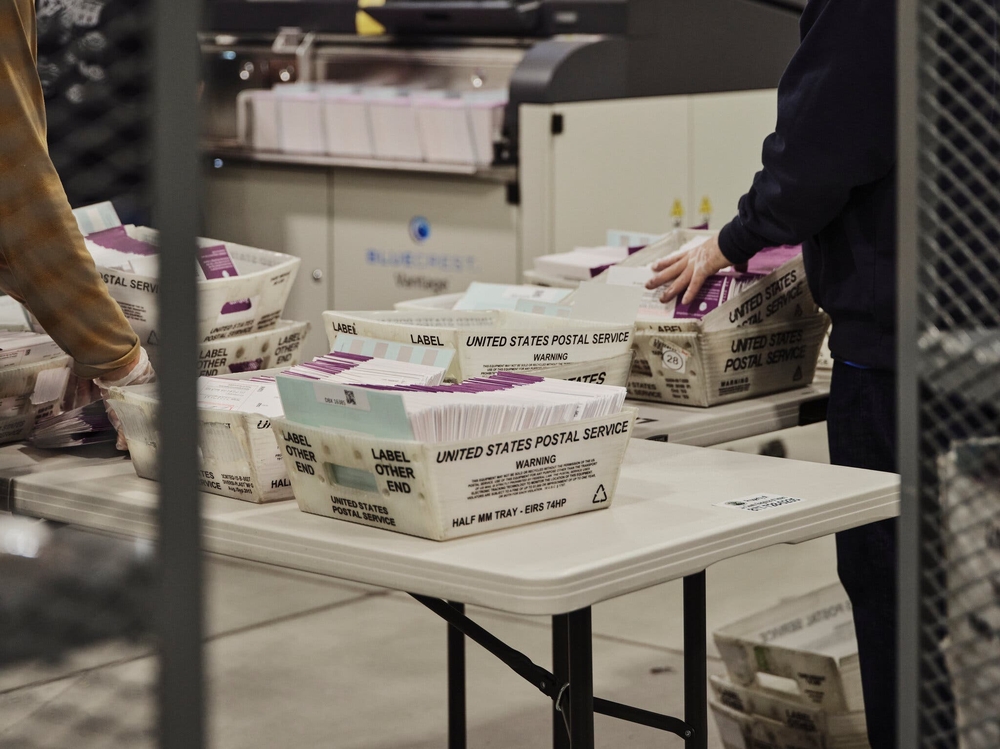
The statistics are staggering and deeply concerning. In the 2024 election, election officials from 14 of the 22 states and territories accepting late-arriving ballots reported that at least 725,000 ballots were postmarked by Election Day and arrived within legally accepted windows. Another 104,000 mail ballots were rejected nationwide for arriving after deadlines. These 725,000 legitimate votes represent nearly the population of an entire congressional district—real Americans whose voices could be systematically silenced by an adverse Supreme Court decision.
The Human Impact Behind the Numbers
Behind these statistics lie real people—rural voters in Oregon who must send their ballots 280 miles to Portland for postmarking before they return to local election offices, military members serving overseas whose ballots require additional transit time, and younger voters who may only participate every few years and aren’t familiar with constantly changing procedures. As David Becker, executive director of the Center for Election Innovation and Research, astutely observed: “For people who are voting once every four years, or once every two years, they’re not familiar with all these procedures and changes, and this could have a big impact on them.”
The partisan implications are complex and ultimately irrelevant to the core principle at stake. While Democratic voters currently use mail voting more extensively, Republican voters in rural areas also rely heavily on this method. In Nevada’s deeply red counties, mail ballot turnout reached 63% in Douglas County and 58% in Nye County—both counties that favored Donald Trump by more than 30 percentage points. The Postal Service’s consolidation efforts and policy changes under its 10-year plan have particularly affected rural areas, meaning Republican-leaning voters could face disproportionate disenfranchisement.
Military and overseas voters represent another vulnerable group. Approximately 30 states grant these citizens additional time for their ballots to arrive, recognizing the unique challenges they face. In Illinois alone, 3,099 military and overseas ballots arrived within the permissible 14-day period after Election Day in 2024. A federal report identified late arrival as the most common reason for rejecting these ballots—a tragedy for those serving our nation abroad.
The Fundamental Principles at Stake
This case transcends partisan politics and touches upon the bedrock principles of American democracy. The right to vote represents the most sacred covenant between citizens and their government—a covenant that must be protected against arbitrary technicalities that serve no legitimate purpose other than to suppress participation.
The argument for counting properly postmarked ballots that arrive shortly after Election Day rests on several irrefutable principles. First, it recognizes that citizens who follow the rules should not be penalized for factors beyond their control, particularly postal delays that affect rural and remote areas disproportionately. Second, it acknowledges that democracy thrives when we maximize participation rather than create artificial barriers to voting. Third, it respects the sacrifice of military members serving overseas who deserve every accommodation to ensure their voices are heard.
Susan Dzieduszycka-Suinat, president of the U.S. Vote Foundation, captured the essence perfectly: “The numbers are not the issue. It is the principle at stake.” That principle is whether we value every citizen’s right to participate in our democracy or whether we will allow technicalities to silence hundreds of thousands of legitimate voters.
The Dangerous Precedent of Disenfranchisement
A decision mandating that all ballots must arrive by Election Day would establish a dangerous precedent that could open the floodgates to further voting restrictions. If the Supreme Court rules that states cannot accept late-arriving ballots, it would effectively tell election officials across the country that accommodating voters facing genuine obstacles is unnecessary. This could lead to a cascade of additional restrictions that collectively make voting more difficult for millions of Americans.
Furthermore, such a decision would undermine public confidence in our electoral system. When citizens follow all rules—mailing their ballots on time, properly postmarking them—only to have their votes rejected due to postal delays, they understandably lose faith in the system. This erosion of trust represents a far greater threat to election integrity than counting ballots that arrive slightly late but were clearly sent on time.
The practical reality is that election officials have demonstrated their ability to handle late-arriving ballots securely and efficiently. The 2020 election in Pennsylvania provides a compelling example: Approximately 10,000 ballots arrived and were counted within three days after polls closed under a state Supreme Court ruling. These ballots were properly processed without any evidence of fraud or irregularities.
A Call to Protect Every Voice
As guardians of constitutional rights, the Supreme Court justices must recognize that their decision will either strengthen or weaken American democracy. They face a choice between expanding access to the ballot box or constructing new barriers to participation. The proper course is clear: States must retain the flexibility to accommodate voters who follow the rules but face circumstances beyond their control.
Our democracy functions best when every eligible citizen can participate. We should be making voting more accessible, not less. We should be celebrating high turnout, not looking for ways to suppress legitimate votes. The founders envisioned a robust democracy where citizens’ voices matter—not a system where technicalities silence hundreds of thousands of voters.
The data shows that 725,000 Americans could lose their voting rights if the Court rules against counting late-arriving ballots. These aren’t abstract numbers—they’re mothers and fathers, students and seniors, military families and rural farmers. They’re Americans who trusted that their properly submitted ballots would count. We must stand for their right to be heard and demand that our highest court protect every citizen’s fundamental right to participate in our democracy.