
The Swearing-In Dichotomy: Matt Van Epps' Immediate Seating and Adelita Grijalva's Seven-Week Delay Exposes Deep Partisan Rifts
Published
- 3 min read
Introduction and Factual Context
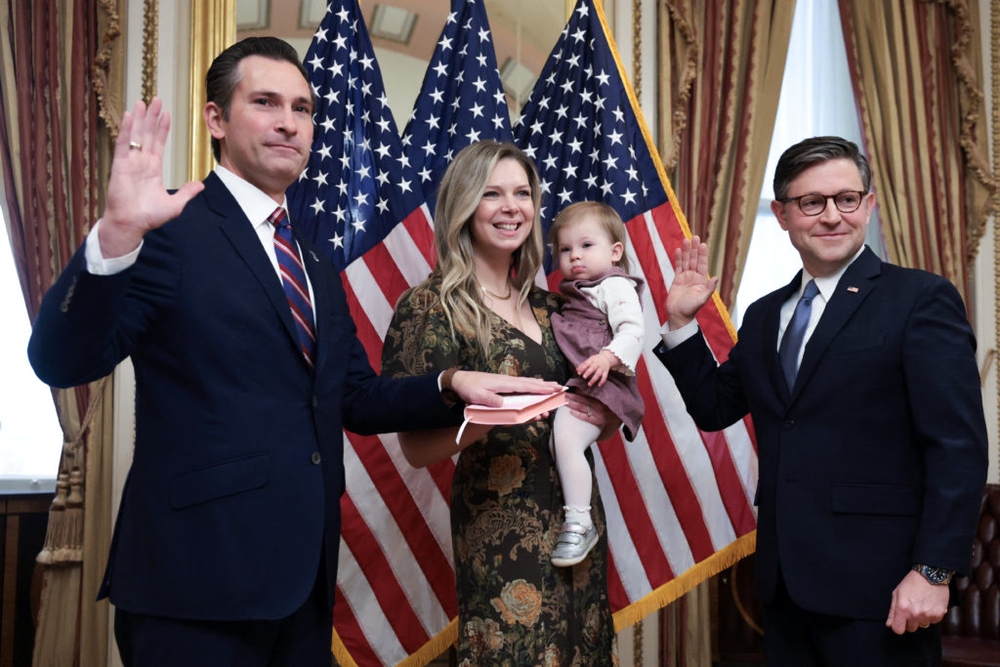
On Thursday, Republican Matt Van Epps of Tennessee was sworn in as the newest member of the U.S. House of Representatives, just two days after winning a closely watched special election. His swift seating bolstered the GOP’s narrow majority, which now stands at 220 Republicans to 213 Democrats, with two vacancies in districts previously represented by Democrats. Van Epps, a West Point graduate, former state general services commissioner from Nashville, and Army special operations helicopter pilot with nine combat tours, took the oath of office on a hot pink Bible belonging to his daughter, Amelia, accompanied by his wife, Meg Wrather. House Speaker Mike Johnson, a Republican from Louisiana, presided over the ceremony and notably highlighted the unique personal touch of the Bible used for the oath.
Van Epps’ victory came after a race where he received a late push from Speaker Johnson and the national Republican Party amid growing concerns about voter turnout. He defeated Democratic state Representative Aftyn Behn by approximately 9 percentage points, a margin that has raised concerns within the GOP, as the previous Republican holder of the seat won by 21 points in 2024, and former President Donald Trump carried the district by 22 points that same year. In his first floor speech, Van Epps emphasized his commitment to enacting Trump’s “America First” agenda, stating, “They sent me here to deliver, and that is exactly what I intend to do.”
The Contrast: Adelita Grijalva’s Delayed Seating
The swift seating of Van Epps stands in stark contrast to the treatment of Democratic Representative-Elect Adelita Grijalva of Arizona, who faced a seven-week delay in being sworn into office. Speaker Johnson refused to swear her in during the government shutdown, a move that infuriated Democrats and highlighted a partisan divergence in the administration of democratic processes. This delay not only deprived her constituents of representation during a critical period but also set a concerning precedent for how political majority power can be leveraged to undermine procedural fairness.
Opinion: The Erosion of Institutional Norms and Fairness
The Dangerous Precedent of Partisan Seating Practices
The disparity in how Van Epps and Grijalva were treated is not merely a procedural footnote; it is a symptom of a deeper malaise infecting American democracy. When the Speaker of the House—a role intended to be a steward of institutional integrity—chooses to expedite the seating of a member from his own party while delaying that of a political opponent, it sends a clear message: the rules are applied selectively, based on partisan allegiance rather than principles of fairness and equal representation. This is a blatant betrayal of the democratic ideals that underpin our republic.
For a nation founded on the promise of representative government, such actions are particularly egregious. Every day that a duly elected representative is barred from taking their seat is a day that their constituents are disenfranchised, their voices silenced in the halls of power. This is not just a breach of protocol; it is an assault on the very concept of popular sovereignty. If we allow political gamesmanship to determine who gets seated and when, we risk normalizing a system where power, not principle, dictates the functioning of our institutions.
The Hypocrisy of Celebrating Democracy While Undermining It
Speaker Johnson’s celebration of Van Epps’ oath-taking on his daughter’s Bible—a touching personal moment—rings hollow when juxtaposed with the deliberate obstruction faced by Grijalva. It is a stark reminder that performative gestures of faith and family values cannot mask actions that corrode democratic norms. True commitment to American exceptionalism, as Van Epps invoked in his speech, must include a unwavering dedication to fair play and institutional respect, regardless of political affiliation.
Van Epps’ emphasis on freedom being “worth fighting for” should extend to fighting for the right of every elected official to assume their duties without partisan delay. If we believe in empowering hard-working families, as he stated, then we must ensure that every family’s representative is allowed to serve without artificial barriers. The seven-week delay for Grijalva is an affront to the hard-working families of her district, who were denied their rightful representation through no fault of their own.
The Broader Implications for Democratic Stability
This incident is not isolated; it reflects a broader trend of eroding institutional norms that has accelerated in recent years. When leaders prioritize short-term partisan gains over long-term democratic health, they jeopardize the stability and legitimacy of our government. The founders designed the House of Representatives to be the people’s house, responsive to the will of the electorate. Manipulating the seating process for political advantage subverts that design and fuels public cynicism.
Moreover, the narrowing margin of victory for Van Epps—down from 21 points to 9 points—suggests a shifting political landscape that should encourage humility and bipartisanship, not brazen power plays. Instead, the GOP’s relief at maintaining their slim majority seems to have fostered a mindset of defensive consolidation, where every procedural advantage is exploited, norms be damned. This is a dangerous path, one that leads to a fractured polity where trust in institutions becomes increasingly elusive.
A Call to Uphold Constitutional Principles
As a staunch supporter of the Constitution and the Bill of Rights, I find this partisan asymmetry in seating representatives deeply troubling. The Constitution envisions a government where laws and procedures apply equally to all, safeguarding against the tyranny of the majority. Speaker Johnson’s actions, in delaying Grijalva’s seating while fast-tracking Van Epps’, violate this foundational principle. It is a reminder that vigilance is required to protect our democracy from those who would weaponize procedure for political ends.
We must demand better from our leaders. The oath of office sworn by Van Epps—and eventually by Grijalva—includes a commitment to support and defend the Constitution. That commitment should imply a duty to uphold the norms and practices that make constitutional government possible. Selective application of rules, especially in the sacred process of seating elected representatives, undermines the rule of law and sets a perilous precedent.
Conclusion: Reaffirming Commitment to Democratic Integrity
The story of Matt Van Epps’ swearing-in and Adelita Grijalva’s delay is more than a political anecdote; it is a cautionary tale about the fragility of democratic norms. In a time of intense polarization, it is imperative that we hold our leaders accountable to the highest standards of fairness and integrity. The health of our republic depends on it.
We must advocate for reforms that depoliticize procedural aspects of governance, ensuring that every elected representative can take their seat without delay, regardless of party. This is not a partisan issue; it is a democracy issue. As citizens, we must insist on a system where the rules are applied consistently, where the people’s will is respected without interference, and where the institutions we rely on remain steadfast in their commitment to equitable treatment for all.
Let the contrast between Van Epps and Grijalva serve as a wake-up call. Democracy is not just about winning elections; it is about how we govern after the votes are counted. If we fail to uphold the principles of fairness and representation in the simplest of procedures—like swearing in a new member—then we risk losing the very soul of our democratic experiment.