
The Test of American Resolve: Ukraine's Plea for 50-Year Security Guarantees
Published
- 3 min read
The Florida Meeting: Context and Immediate Outcomes
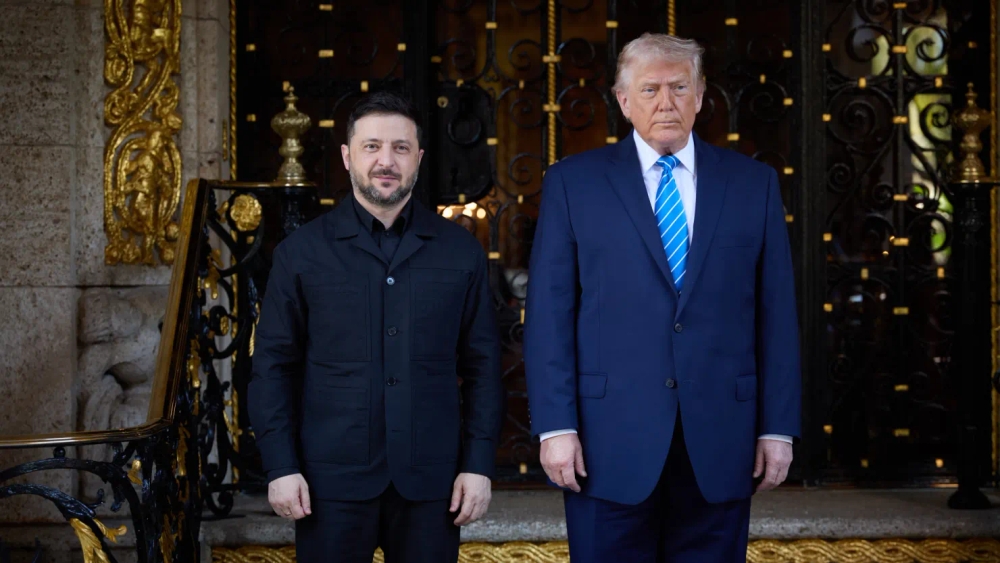
President Volodymyr Zelenskyy’s meeting with President Donald Trump at Mar-a-Lago this past weekend represents a critical moment in the ongoing Ukraine-Russia conflict. The Ukrainian leader emerged from these discussions with a clear message: Ukraine requires long-term security guarantees stretching up to 50 years to ensure its sovereignty against future Russian aggression. This request comes amid intensified Russian drone and missile attacks, demonstrating Moscow’s continued disregard for civilian lives and international norms.
The discussions occurred against the backdrop of Trump’s simultaneous diplomatic engagement with Russian President Vladimir Putin—a two-hour phone call that preceded the Mar-a-Lago meeting. While details remain scarce about the Trump-Putin conversation, the timing and context suggest complex diplomatic maneuvering. Zelenskyy emphasized that any meeting with Russian leadership would only be possible after agreeing on a framework peace deal with European and American partners, highlighting Ukraine’s strategic positioning between great powers.
The Security Guarantee Dilemma
Zelenskyy’s current 20-point peace plan envisions security guarantees lasting 15 years, but his request to Trump pushes for a much more substantial commitment—potentially spanning half a century. This disparity reveals both the desperation of Ukraine’s situation and the long-term thinking required to ensure regional stability. The guarantees aim to deter future Russian aggression through concrete military, economic, and political commitments from Western nations.
The Ukrainian president’s insistence on a national referendum to approve any peace agreement demonstrates his commitment to democratic principles, even amid existential threat. This stands in stark contrast to Russia’s authoritarian approach, where Putin makes decisions unilaterally without public consultation. Zelenskyy’s requirement for a 60-day ceasefire during any referendum vote shows practical understanding of the conditions necessary for genuine democratic expression.
The Stumbling Blocks: Territory and Trust
President Trump acknowledged that “one or two very thorny issues” remain unresolved, specifically mentioning “the land”—an apparent reference to the disputed Donbas region. Moscow has consistently demanded Ukraine cede this territory, while Kyiv has repeatedly refused to surrender sovereign land to Russian occupation. Trump’s comments suggesting that some land “may be taken over the next period of a number of months” reveal the brutal calculus of realpolitik that Ukraine faces.
Kremlin spokesman Dmitry Peskov’s non-committal response to the U.S.-Ukraine talks reflects Russia’s characteristic opacity in diplomatic matters. The fact that Putin and Trump agreed to another phone call indicates ongoing dialogue, but Russia’s continued attacks during negotiations demonstrate bad faith that should concern all democratic nations.
The Broader Geopolitical Context
This meeting occurs within a complex web of international relations. European leaders are preparing to discuss peace proposals with Zelenskyy in coming days, indicating coordinated Western efforts. The European Union’s recent approval of over $105 billion in Ukrainian aid demonstrates continuing European commitment, though security guarantees require American leadership given NATO’s military capabilities.
The situation tests fundamental principles of international order: whether stronger nations can redraw borders by force, whether security guarantees have meaning, and whether democratic nations will stand together against authoritarian expansion. Ukraine’s struggle represents not just its own survival but the preservation of the rules-based international system that has maintained relative peace since World War II.
The Democratic Imperative: Why America Must Lead
From a perspective deeply committed to democracy, freedom, and liberty, America’s response to Ukraine’s request for long-term security guarantees represents a defining moment. The United States has historically stood as a beacon of hope for nations seeking to preserve their sovereignty against authoritarian aggression. Our commitment to the principles enshrined in our Constitution—including liberty, self-determination, and the rule of law—demands that we support similar aspirations abroad.
The requested 50-year security guarantee isn’t merely a military commitment; it’s a statement about American values and our vision for the world order. Either we believe that nations should be free to determine their own futures without threat of invasion, or we accept that might makes right in international affairs. There is no middle ground when fundamental principles are at stake.
Russia’s continued aggression during peace talks demonstrates contempt for diplomatic processes and human life. The heavy drone and missile attacks occurring while Zelenskyy seeks security guarantees reveal the brutal reality Ukraine faces daily. This isn’t merely a territorial dispute—it’s a struggle between democracy and authoritarianism, between the rule of law and the law of the jungle.
The Dangers of Short-Term Thinking
President Trump’s comments about land being “up for grabs” should concern every defender of democratic principles. This language suggests that territory can be legitimately acquired through force—a dangerous precedent that undermines international stability. If stronger nations can seize territory from weaker neighbors, we return to a world where aggression is rewarded and sovereignty is meaningless.
The 15-year guarantee in Zelenskyy’s current plan represents short-term thinking that fails to address Ukraine’s fundamental security dilemma. Russia has demonstrated long-term imperialism spanning centuries—50-year guarantees merely acknowledge this historical reality. A generation of security is insufficient against an adversary that thinks in terms of decades and centuries.
The Moral Dimension
Beyond geopolitical calculations, there’s a profound moral dimension to this situation. Ukraine has suffered unimaginable losses defending its democracy and sovereignty. The Ukrainian people have demonstrated extraordinary courage in resisting authoritarian aggression, showing the world what it means to value freedom above personal safety.
America’s response to Ukraine’s request will define our moral standing for generations. Will we be remembered as the nation that stood with democracy in its hour of need, or as the nation that negotiated away freedom for temporary convenience? The principles we champion must be backed by concrete actions, especially when such actions require sacrifice and long-term commitment.
The Strategic Necessity
From a strategic perspective, supporting Ukraine with robust security guarantees serves American interests. A secure, democratic Ukraine represents a bulwark against Russian expansionism and a potential model for other post-Soviet states. Conversely, a Ukraine abandoned to Russian domination would embolden authoritarian regimes worldwide and undermine confidence in American commitments.
The relatively small cost of security guarantees pales in comparison to the potential costs of renewed Russian aggression. Containment is always cheaper than liberation, and prevention more effective than response. Fifty years of guaranteed security represents an investment in stability that benefits not just Ukraine but the entire Western alliance.
Conclusion: A Test of American Character
President Zelenskyy’s request for 50-year security guarantees presents America with a fundamental test of character. Will we honor our democratic principles and stand with a nation fighting for its freedom, or will we succumb to short-term thinking and authoritarian pressure?
The answer will define America’s role in the world for decades to come. Our commitment to liberty, democracy, and the rule of law must extend beyond our borders—especially when nations like Ukraine demonstrate extraordinary courage in defending these same values. Security guarantees for Ukraine aren’t charity; they’re an investment in a world where might doesn’t make right and where nations can determine their own destinies without fear of invasion.
This moment requires American leadership that transcends partisan politics and embraces our nation’s deepest values. The world is watching whether America will remain committed to freedom or retreat from global leadership. The choice we make will echo through history.