
The Theater of Denial: How Fact-Resistant Leadership Undermines Economic Credibility
Published
- 3 min read
The Presidential Performance Amid Rising Anxiety
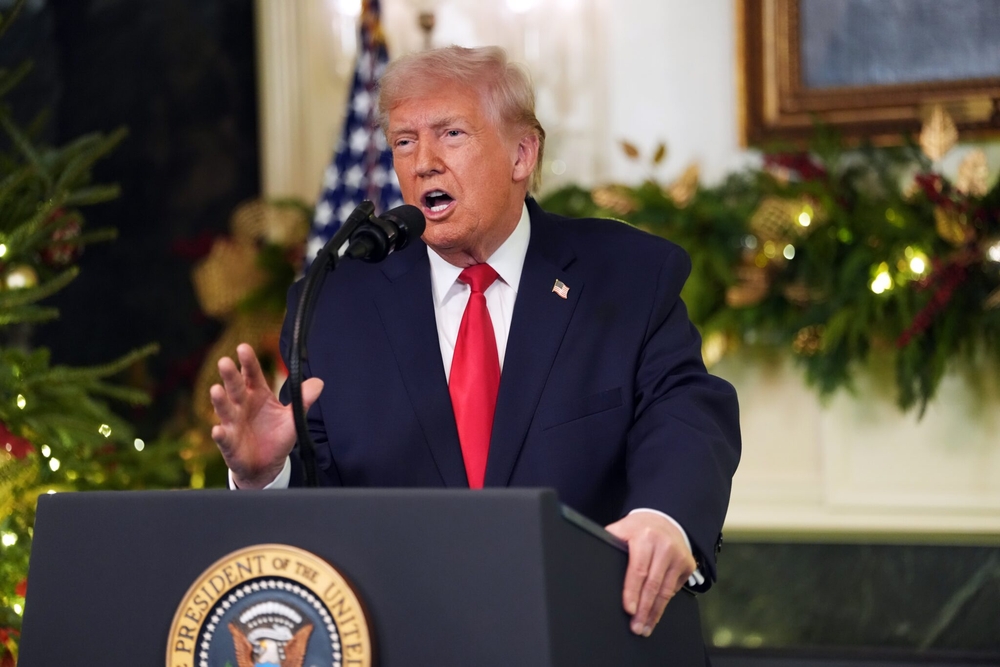
As Americans prepare for year-end holidays amidst genuine economic concerns, President Donald Trump delivered a prime-time address that presented a stark contrast between presidential rhetoric and statistical reality. Standing before Christmas decorations in a carefully staged setting, the president claimed victory over inflation and healthcare costs while systematically blaming his predecessor for current challenges. This performance occurred against a backdrop of verifiable government data showing continued price increases and sinking presidential approval ratings on economic management.
According to Bureau of Labor Statistics data referenced in the speech coverage, the consumer price index showed goods rising 2.7% over the past 12 months, following a 3% increase in the previous measurement period. When President Trump took office in January 2025, inflation stood at 3% over the preceding 12 months. The president’s assertion that “I am bringing those high prices down and bringing them down fast” directly contradicts government data showing gasoline prices rose 4.1% annually and food prices increased 3.2% compared to the previous year.
The Political Landscape of Blame
The speech continued a pattern evident throughout Trump’s presidency: the persistent attribution of current challenges to former President Joe Biden. Nearly a year into his second term, this fixation manifests even in symbolic gestures like the “Presidential Walk of Fame” display where Biden’s plaque reads “Sleepy Joe Biden.” This personalization of policy disagreements represents a concerning departure from traditional presidential decorum that weakens institutional respect for the office itself.
Four House Republicans broke ranks to support a Democrat-led petition challenging Speaker Mike Johnson’s control over healthcare subsidy legislation, indicating growing intra-party tension on substantive policy matters. Meanwhile, the president announced a $1,776 “warrior dividend” for military personnel—a symbolic gesture that could total $2.6 billion—while simultaneously dismissing affordability concerns as a “hoax” despite measurable economic pressure on American households.
The Selective Reality Problem
What emerges from this address is not merely political spin but a fundamental challenge to evidence-based governance. When a sitting president stands before the nation and makes claims directly contradicted by his own government’s data, it creates a dangerous rupture in our shared understanding of reality. The consumer price index isn’t a partisan document—it’s a statistical measurement conducted by career professionals at the Bureau of Labor Statistics. When presidential statements diverge so dramatically from verifiable facts, it undermines the very concept of truthful discourse necessary for democratic decision-making.
This problem extends beyond economic metrics. The president’s description of his international trade policy success contrasts sharply with the $1.8 trillion deficit reaching roughly 6% of GDP. His unilateral imposition of global tariffs—which he described as his “favorite word”—generated nearly $195 billion in customs duties, up from $77 billion the previous year. While these policies have clear budgetary impacts, their characterization as unqualified successes ignores complex trade-offs and downstream consequences for American consumers and businesses.
The Institutional Consequences of Alternate Realities
When leadership becomes divorced from verifiable facts, the damage extends beyond policy disagreements into the foundational trust required for democratic governance. The NPR/PBS News/Marist poll showing only 36% approval of Trump’s economic strategy, along with Fox News polling indicating 76% of respondents view the economy negatively, suggests the public recognizes this reality gap. Yet the continued performance of denial creates a dangerous precedent where factual accuracy becomes optional for those in power.
This approach particularly damages our democratic institutions when it involves military actions. The president’s minimal discussion of the Venezuela blockade—despite dramatic social media posts about “the largest Armada ever assembled in the History of South America”—raises serious questions about transparency in military engagements. Democratic lawmakers’ requests for unedited footage of a September strike that killed two shipwrecked individuals highlight concerns about accountability in operations affecting human lives.
The Fundamental Threat to Democratic Discourse
What makes this pattern particularly alarming is its cumulative effect on our democratic ecosystem. When presidents can create their own factual universes without meaningful consequence, we risk normalizing a governing approach where evidence becomes subordinate to narrative convenience. This isn’t merely about political disagreement—it’s about preserving the shared reality upon which democratic deliberation depends.
The healthcare proposals highlighted in the speech illustrate this concerning trend. Promoting health savings accounts as alternatives to insurance coverage, while allowing Affordable Care Act subsidies to expire, represents a substantive policy choice. However, framing this choice while denying basic affordability concerns creates a disconnect between policy and lived experience that undermines public trust.
The Path Forward: Reclaiming Evidence-Based Governance
Restoring integrity to our political discourse requires courage from multiple sectors. Journalists must continue rigorous fact-checking. Political opponents must offer substantive alternatives rather than merely opposing. Most importantly, citizens must demand accountability for verifiable falsehoods regardless of their political source.
The symbolic nature of the military payments—while potentially welcomed by recipients—cannot substitute for coherent economic policy addressing underlying affordability challenges. Similarly, personal insults directed at predecessors degrade the dignity of presidential discourse regardless of political differences.
Conclusion: Truth as Democratic Foundation
Ultimately, democracy cannot function without shared facts. When leaders can dismiss uncomfortable realities as “hoaxes” while promoting unverified claims as truth, we risk descending into governance by assertion rather than evidence. The Founders envisioned a republic grounded in reasoned debate and informed consent—prerequisites impossible without commitment to factual accuracy.
As we move forward, the challenge isn’t merely correcting individual false statements but rebuilding institutional commitment to truth as the foundation of governance. This requires vigilance from citizens, integrity from journalists, and ultimately courage from elected officials to prioritize factual accuracy over political convenience. Our democratic experiment depends on this commitment more profoundly than any single policy debate.
When future historians examine this period, they may question how fact-resistant leadership affected America’s democratic resilience. The answer will depend on whether we collectively reaffirm that democracy requires truth as its fundamental currency—not as an optional accessory but as the essential precondition for self-government worthy of the Founders’ vision.