
The Tragic Cycle of US-Venezuela Relations: From Nixon's Near-Death Experience to the Brink of War
Published
- 3 min read
Historical Context: The 1958 Crisis That Forged an Alliance
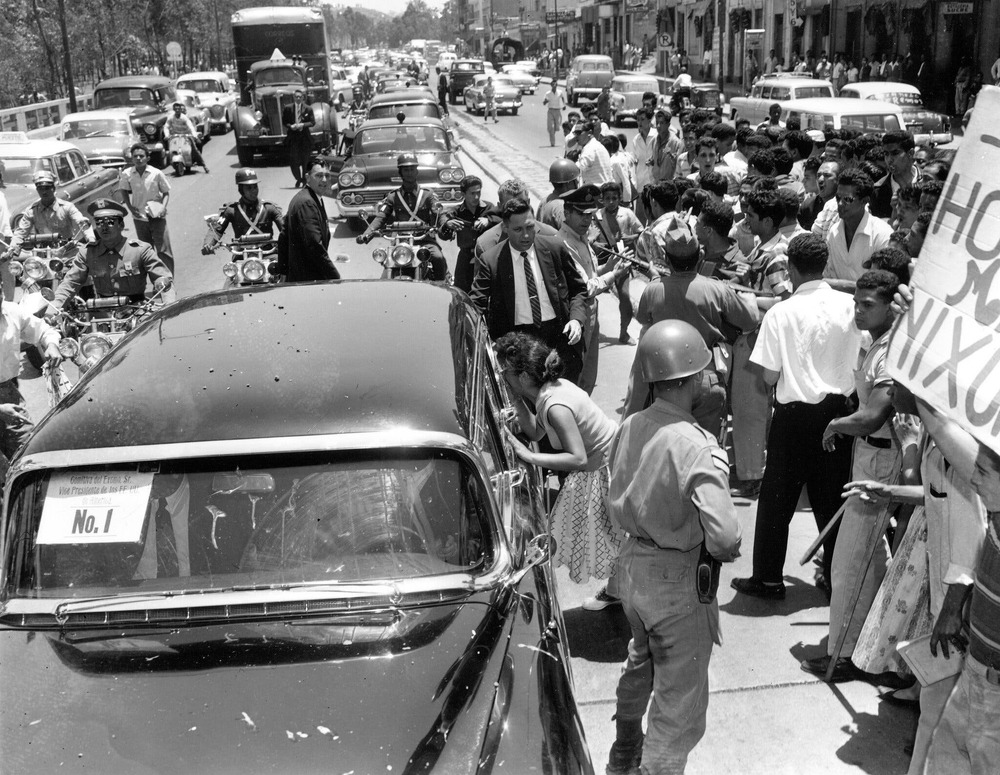
The relationship between the United States and Venezuela represents one of the most complex and ultimately tragic stories in modern hemispheric relations. The current crisis brewing under the Trump administration finds its roots in events that unfolded over six decades ago, when then-Vice President Richard M. Nixon’s motorcade was ambushed by an angry mob in Caracas in May 1958. The violent attack, which Nixon later described as a moment when he genuinely feared for his life, ironically became the catalyst for a four-decade alliance between the two nations.
What began as a potentially disastrous diplomatic incident—with rocks, pipes, and spit raining down on the vice president’s vehicle—transformed into what Nixon called “a much-needed shock treatment which jolted us out of dangerous complacency.” The White House response, deploying an aircraft carrier task force toward Venezuela, demonstrated both the seriousness with which Washington viewed the incident and the strategic importance already accorded to Venezuela. Remarkably, rather than damaging relations, the crisis focused American attention on Venezuela’s fledgling democracy and its importance in the Cold War struggle against communism.
The Cold War Alliance: Strategic Interests Over Democratic Principles
For the next forty years, Venezuela emerged as what President John F. Kennedy would call “America’s best friend” in South America. This partnership was rooted in mutual strategic interests: Venezuela provided stable oil supplies and staunch anti-communist credentials, while the United States offered military support, economic investment, and diplomatic backing. President Ronald Reagan would later hail Caracas as a democratic “inspiration to the hemisphere” even as his administration battled communist movements throughout the region.
However, this alliance often came at the expense of consistent democratic principles. As expert Brian Fonseca noted, American rhetoric about Venezuela’s “model democracy” frequently glossed over the country’s political and economic flaws. Washington was “far less concerned about things like corruption and human rights and far more about political affinity.” This prioritization of strategic interests over consistent democratic values would eventually contribute to the very crisis we face today.
The relationship featured significant military cooperation, including the 1981 sale of 24 F-16 fighter jets to Venezuela—the most significant U.S. arms sale to the region in over a decade. Even when Venezuela nationalized its oil industry in the 1970s, the U.S. reaction remained muted, particularly when compared to responses to similar actions in other countries. Venezuela’s position as a key OPEC member and reliable oil supplier consistently tempered American responses to actions that might otherwise have drawn stronger criticism.
The Chavez Era: The Unraveling of a Partnership
The fall of the Soviet Union diminished American interest in Latin America generally, but Venezuela remained crucial as an oil supplier, even surpassing Saudi Arabia as America’s top oil provider by the late 1990s. Few in Washington, however, were closely attuned to the rise of Hugo Chávez, who harnessed popular anger over corruption and poverty despite the country’s massive oil wealth.
The failed April 2002 coup attempt against Chávez proved transformational. While the Bush administration denied involvement, declassified documents later revealed that U.S. officials had been aware of the plot in advance. Chávez returned to power with a vengeance, cracking down on political rivals and transforming Venezuela’s democracy into an authoritarian state. He turned his ire against the United States, finding in President George W. Bush a perfect foil for his anti-American rhetoric.
Chávez’s moves to reassert state control over Venezuela’s oil industry, including seizing assets from U.S. companies like Exxon Mobil and ConocoPhillips, were politically popular domestically but further damaged relations with Washington. After his death in 2013, his protégé Nicolás Maduro continued these policies, setting the stage for years of mounting isolation and sanctions by the United States.
The Current Crisis: Full Circle to confrontation
The relationship has now come full circle, with President Trump massing military forces in the region and threatening to attack Venezuela if Maduro does not relinquish power. The deployment of an aircraft carrier into Caribbean waters near Venezuela echoes President Eisenhower’s similar move during the 1958 crisis, but with far more ominous implications given the current rhetoric and geopolitical context.
Trump’s justification—citing Venezuela’s role in migration and drug smuggling as a national security threat—represents a significant escalation in rhetoric and potential action. Some advisers, including Secretary of State Marco Rubio, appear to be pushing for Maduro’s removal as means of adding pressure on Cuba’s communist government, suggesting broader regional ambitions than simply addressing the Venezuelan crisis.
A Democratic Perspective on the Crisis
From a standpoint committed to democracy, freedom, and liberty, the current situation represents a profound failure of American foreign policy consistency and principle. The oscillation between embrace and confrontation, between overlooking democratic deficiencies for strategic advantage and threatening military intervention, has created a toxic legacy that serves neither American interests nor the Venezuelan people.
The historical pattern is deeply troubling: supporting anti-communist governments regardless of their democratic credentials, then reacting with hostility when populations understandably rebel against corrupt and ineffective regimes. This approach has repeatedly undermined America’s moral authority and practical effectiveness in promoting democracy abroad.
The threatened military intervention under Trump represents everything that should alarm defenders of constitutional governance and international norms. The casual discussion of attacking a sovereign nation, the massing of military forces without clear congressional authorization, and the justification based on vaguely defined national security threats all echo the worst excesses of American interventionism.
Principles for a Better Approach
As defenders of the Constitution and democratic principles, we must advocate for a consistent approach that prioritizes:
-
Consistent democratic standards in foreign relations, rather than alternating between embrace and hostility based on strategic convenience
-
Respect for national sovereignty and international law, recognizing that military intervention should be an absolute last resort undertaken only with clear congressional authorization and international legitimacy
-
Support for Venezuelan civil society and democratic opposition through diplomatic and economic means rather than threats of force
-
Humanitarian assistance to address the devastating suffering of the Venezuelan people without politicizing aid
-
Regional diplomacy that engages Venezuela’s neighbors and respects their leadership in addressing the crisis
The tragic history of U.S.-Venezuela relations teaches us that short-term strategic gains achieved by compromising democratic principles ultimately lead to long-term disaster. The Venezuelan people deserve better than to be pawns in great power competition or victims of their own government’s corruption and incompetence.
Conclusion: Breaking the Cycle
The image of Nixon’s motorcade under attack in 1958 and Trump’s aircraft carrier deployment sixty years later bookends a tragic story of missed opportunities and failed policies. The Venezuelan people have suffered tremendously—first under corruption that Washington overlooked for strategic reasons, then under authoritarianism that American hostility has arguably strengthened.
As we face the current crisis, we must learn the lessons of this history. Military intervention risk catastrophic consequences and further undermine America’s moral standing. Instead, we should pursue consistent engagement based on democratic principles, support for civil society, and humanitarian relief.
The cycle of violence and failed diplomacy must end before more lives are destroyed. Our commitment to democracy, freedom, and liberty demands nothing less than a principled approach that respects the sovereignty and dignity of the Venezuelan people while consistently upholding the values we claim to defend.