
The 'Trump-Class' Battleship: Nostalgic Militarism Masquerading as Defense Policy
Published
- 3 min read
The Announcement and Its Historical Context
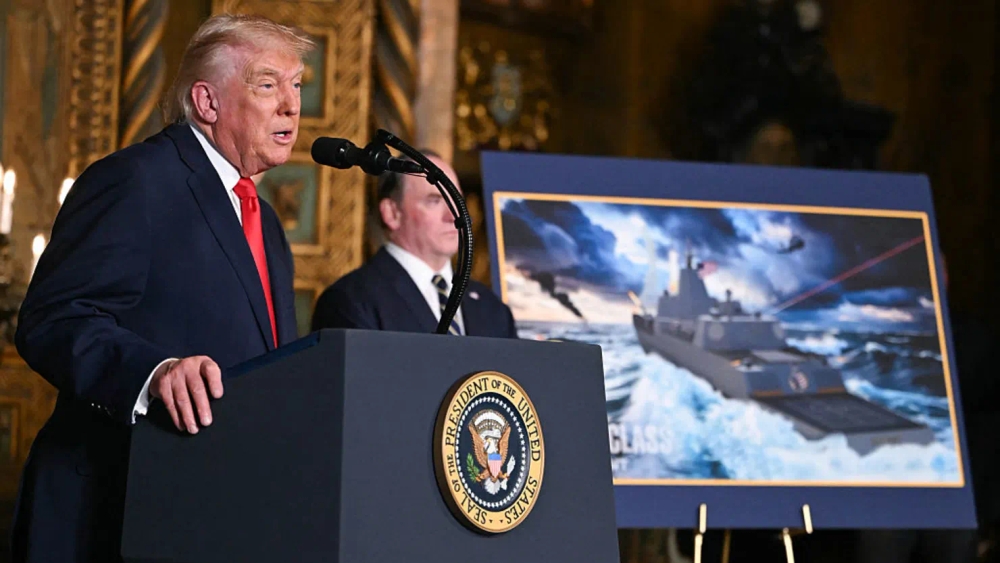
On December 22, 2025, at his Mar-a-Lago estate in Palm Beach, Florida, President Donald Trump stood alongside Navy Secretary John Phelan to unveil what he called the “Golden Fleet initiative.” The centerpiece of this announcement was a new “Trump-class” battleship, which the president described as “the fastest, the biggest, and by far, 100 times more powerful than any battleship ever built.” He proclaimed these ships would be “some of the most lethal surface warfare ships” that would “help maintain American military supremacy [and] inspire fear in America’s enemies all over the world.”
This announcement hearkens back to an era when battleships represented the pinnacle of naval power. The last American battleship was built over 80 years ago, with the USS Missouri, completed in 1944, being the final vessel of its class. The U.S. Navy retired its last Iowa-class battleships nearly 30 years ago, marking the end of an era where these massive gun-armed vessels dominated naval warfare.
The Technical and Strategic Reality
Defense experts immediately raised concerns about the fundamental premise of reviving battleships. Mark Cancian, a senior adviser at the Center for Strategic and International Studies, dismissed the concept entirely, writing that “there is little need for said discussion because this ship will never sail.” He argued that the program would take too long to design, cost far too much, and run counter to the Navy’s current strategy of distributed firepower.
The proposed battleship would displace more than 35,000 tons and measure over 840 feet long—longer than two football fields. According to Bernard Loo, senior fellow at Singapore’s S. Rajaratnam School of International Studies, this massive size would make it a “bomb magnet” and “an even more tempting target” for adversaries. Loo compared the proposal to Japan’s World War II super-battleships Yamato and Musashi, which were sunk by carrier-borne aircraft before playing any significant combat role.
The Cost Considerations
Financial concerns represent perhaps the most practical obstacle. Bryan Clark, a senior fellow at the Hudson Institute, estimated that the Trump-class would cost two to three times more than today’s destroyers. With Arleigh Burke-class destroyers priced at approximately $2.7 billion each, a single battleship could cost upward of $8 billion. This doesn’t include the substantial costs of crewing and maintaining these massive vessels, which would further strain an already tight Navy budget.
The history of recent naval procurement provides sobering precedents. The Navy’s Zumwalt-class destroyers—the largest surface combatants currently at 15,000 tons—were reduced from 32 to just 3 ships due to spiraling costs. More recently, the Constellation-class frigate program was canceled due to design and workforce challenges. These examples demonstrate how ambitious naval projects often encounter severe budget overruns and operational challenges.
A Fundamental Misunderstanding of Modern Naval Warfare
The Obsolescence of the Battleship Concept
The very concept of a battleship reflects a fundamental misunderstanding of contemporary naval strategy. For decades, aircraft carriers and modern destroyers armed with long-range missiles have eclipsed battleships. These platforms offer greater flexibility, survivability, and combat effectiveness in modern warfare environments. The distributed operations model embraced by the Navy aims to reduce vulnerability by spreading firepower across many assets rather than concentrating it in a few large, expensive platforms.
What President Trump proposes represents the exact opposite approach—building “a small number of large, expensive, and potentially vulnerable assets,” as Mark Cancian correctly noted. This strategy runs directly counter to the lessons learned from decades of naval evolution and modern combat experience.
The Symbolism Versus Substance Dilemma
Bryan Clark suggested that President Trump may be drawn to the symbolic power of battleships, which served as the most visible icons of naval firepower for much of the 20th century. There’s undeniable emotional appeal in these massive vessels—they represent raw power and national prestige in a very visible way. The USS Missouri’s role in hosting Japan’s surrender in 1945 remains etched in national memory, and the recommissioning of World War II battleships in the 1980s as part of the 600-ship fleet strategy appealed to similar sentiments.
However, defense policy cannot be driven by nostalgia or symbolic appeal. The last combat deployment of battleships occurred in 1991, when retrofitted Iowa-class vessels provided shore bombardment during the first Gulf War. Even then, they served in supporting roles rather than as central combat platforms. Modern warfare demands agile, technologically advanced, and cost-effective solutions—not relics from a bygone era.
The Dangerous Implications
Strategic Hubris and Fiscal Irresponsibility
Bernard Loo’s assessment that this decision represents “strategic hubris” strikes at the heart of the problem. Pursuing massively expensive projects based on nostalgic appeal rather than strategic necessity demonstrates a concerning disregard for both fiscal responsibility and military effectiveness. At a time when the Navy faces numerous challenges—from maintaining current fleets to addressing emerging threats like cyber warfare and unmanned systems—diverting resources to an obsolete concept represents a profound misallocation of limited defense dollars.
The opportunity cost of this proposal cannot be overstated. The billions that would be spent developing, building, and maintaining these battleships could instead fund multiple more effective projects: modernizing the submarine fleet, developing advanced missile systems, enhancing cyber capabilities, or investing in next-generation unmanned vehicles. These are the areas that will truly determine naval superiority in the coming decades, not massive gun platforms vulnerable to modern anti-ship weapons.
Undermining Professional Military Judgment
Perhaps most concerning is what this proposal suggests about civil-military relations and the role of professional expertise in defense planning. When defense experts across multiple respected institutions—CSIS, Hudson Institute, RSIS—all raise identical concerns about a proposal’s feasibility, cost, and strategic rationale, those concerns deserve serious consideration. Dismissing this professional consensus in favor of what appears to be personal preference sets a dangerous precedent for defense policymaking.
The men and women serving in our Navy deserve equipment that maximizes their effectiveness and safety, not platforms chosen for their symbolic value or nostalgic appeal. Our military leadership has spent decades developing sophisticated understanding of modern warfare requirements—their expertise should guide procurement decisions, not political symbolism.
Conclusion: Principles Over Politics
As someone deeply committed to both national security and responsible governance, I find this proposal deeply troubling. It represents the exact opposite of what defense policy should be: evidence-based, fiscally responsible, and strategically sound. The principles of effective military planning—adapting to changing threats, leveraging technological advances, maximizing limited resources—all argue against reviving battleships.
True support for our military means providing them with the most effective tools for modern warfare, not expensive relics that appeal to nostalgic sentiments. True fiscal responsibility means carefully evaluating defense expenditures to ensure maximum effectiveness per taxpayer dollar. True strategic thinking means looking forward to the challenges of tomorrow rather than backward to the solutions of yesterday.
The proposed Trump-class battleship fails all these tests. It represents a concerning departure from rational defense planning and responsible governance. One can only hope that, as defense experts predict, this proposal will be canceled before significant resources are wasted on what amounts to militaristic nostalgia rather than genuine military capability.