
The Trump-Kennedy Center: A Brazen Act of Vanity and Institutional Vandalism
Published
- 3 min read
The Facts of the Matter
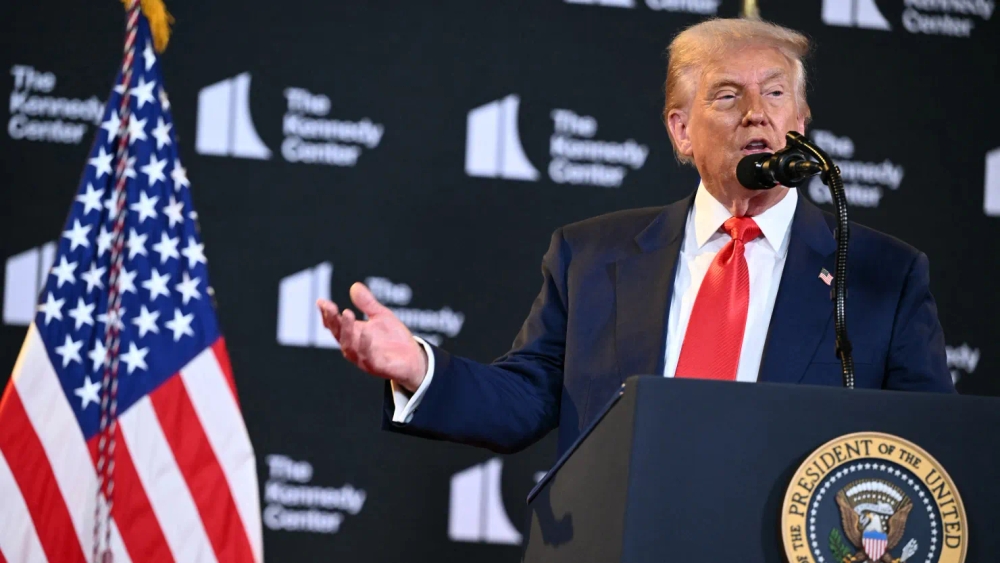
On a Thursday that will be marked as a dark day for American cultural preservation, White House Press Secretary Karoline Leavitt announced via social media that the Board of Trustees of the John F. Kennedy Center for the Performing Arts had voted unanimously to rename the prestigious institution the “Trump-Kennedy Center.” This board, it must be noted, was entirely appointed by President Donald Trump in February of this year. The stated justification for this unprecedented move, according to Leavitt, was “the unbelievable work President Trump has done over the last year in saving the building,” a claim she elaborated on by saying he saved it from the standpoint of its reconstruction, finances, and reputation.
This narrative of rescue stands in stark contrast to the documented reality reported by multiple news outlets. Internal figures obtained by The New York Times showed ticket sales during a typical week in October were down by approximately 50% compared to the same period a year earlier. The Washington Post’s analysis of sales data from early September through mid-October found an “across-the-board drop-off” in ticket sales for the center’s three largest performance spaces, indicating a severe crisis of public engagement and financial health that is hardly indicative of a successful rescue mission.
The move is not merely controversial; it is of dubious legality. U.S. code is explicit: no new “memorials or plaques in the nature of memorials shall be designated or installed in the public areas of the John F. Kennedy Center for the Performing Arts.” To alter this status would require an act of Congress. House Republicans have already introduced at least one bill to attempt to make this name change legal, highlighting the fact that the board’s vote is, at present, a symbolic gesture that flouts established law.
The response from the Kennedy family was swift and damning. Former Democratic Representative Joe Kennedy III, a grandnephew of President Kennedy, took to the same platform to state, “The Kennedy Center is a living memorial to a fallen president and named for President Kennedy by federal law. It can no sooner be renamed than can someone rename the Lincoln Memorial, no matter what anyone says.”
Historical Context and Precedent
To understand the profound weight of this action, one must understand the history of the center itself. It was not born as the Kennedy Center. Created in 1958 by President Dwight Eisenhower, it was initially conceived as a “National Cultural Center.” It was President John F. Kennedy and First Lady Jacqueline Kennedy who, in 1962, championed the institution, leading a $30 million fundraising campaign to bring it to fruition. The assassination of President Kennedy in November 1963 transformed the project into a national memorial. Just two months later, President Lyndon B. Johnson signed a law renaming the center in honor of the slain president, cementing its status as a living testament to his legacy and a sacred piece of the nation’s cultural and historical fabric.
This context is what makes the current administration’s actions so egregious. This is not a private club or a branded stadium; it is a federally designated memorial. Treating it as a piece of property to be rebranded according to the whims of a sitting president sets a terrifying precedent. Where does it end? Is the Lincoln Memorial next if a future president feels they’ve “saved” the National Mall? This reduction of hallowed ground to a transactional asset is the antithesis of how a republic honors its history.
A Pattern of Erosion and the Cult of Personality
This event cannot be viewed in isolation. It is the latest and one of the most garish examples of a persistent pattern: the erosion of independent institutions and the concentration of acclaim around a single individual. Weeks after taking office for his second term, President Trump named himself chairman of the Kennedy Center’s board and terminated a slew of existing members, stating they “do not share our Vision for a Golden Age in Arts and Culture.” Replacing a diverse board with one’s own appointees is the first step in converting an independent body into an extension of the executive’s will.
The president’s own actions have telegraphed this move for months. In October, he posted on his Truth Social platform pictures of the center’s colonnade with a caption praising “the new TRUMP KENNEDY, whoops, I mean, KENNEDY CENTER, columns,” a moment of telling sarcasm that revealed the desire long before the board’s “unanimous” vote. His feigned surprise to reporters afterward—“I was honored by it. You know, we’re saving the building”—is a performance that insults the intelligence of the American public.
This is about more than a name on a building; it is about the fundamental principles of a democracy versus the impulses of an autocracy. Democratic societies build institutions that are meant to outlast any single administration. They create laws and norms that protect these institutions from being used as personal trophies. Autocracies, in contrast, seek to imprint the leader’s name on everything from cities to airports to cultural centers, ensuring that their presence is felt long after they are gone, effectively rewriting the landscape of history in their own image.
The Real Crisis: A Failing Institution
Lost in the spectacle of the name change is the truly tragic story: the Kennedy Center is struggling profoundly. A 50% drop in ticket sales is not a sign of health; it is a five-alarm fire. This should be the story. This should be the focus of a national conversation about the role of public arts funding, about engaging new audiences, and about preserving cultural treasures for future generations. Instead, the conversation has been hijacked by a vainglorious political stunt that does nothing to address the very real problems facing the center.
The administration’s claim of a financial and reputational rescue is not just misleading; it is a blatant falsehood contradicted by all available data. A real leader concerned with “saving the building” would be championing bipartisan funding efforts, launching public campaigns to boost attendance, and working with artists and stakeholders to revitalize its programming. They would not be spending political capital on a legally fraught and divisive effort to plaster their own name on the facade.
Conclusion: A Call to Defend Our Institutions
The attempt to rename the Kennedy Center is a profound disrespect to the memory of President Kennedy, to the lawmakers who established its protected status, and to the American people who consider it a national treasure. It is a naked act of vanity that reveals a contempt for history, law, and the very idea of an American republic that is bigger than any one person.
We must see this action for what it is: institutional vandalism. It is a deliberate slap in the face to historical continuity and a dangerous step toward the personalization of state power. All citizens who value democracy, history, and the rule of law must vehemently oppose this move. We must demand that our representatives in Congress uphold the existing law and block any attempt to make this name change legal. We must support the true salvation of the Kennedy Center by engaging with it, attending performances, and advocating for its robust funding and artistic independence.
Our institutions are the bedrock of our freedom. When they are treated as prizes to be won and renamed, the very foundation of our liberty is cracked. We cannot stand by and watch as our national monuments are reduced to billboards for political egos. The defense of our history is the defense of our democracy itself, and that is a fight worth having.