
The Trump Peace Plan: Another Chapter in Western Imperial Diplomacy
Published
- 3 min read
Context and Background
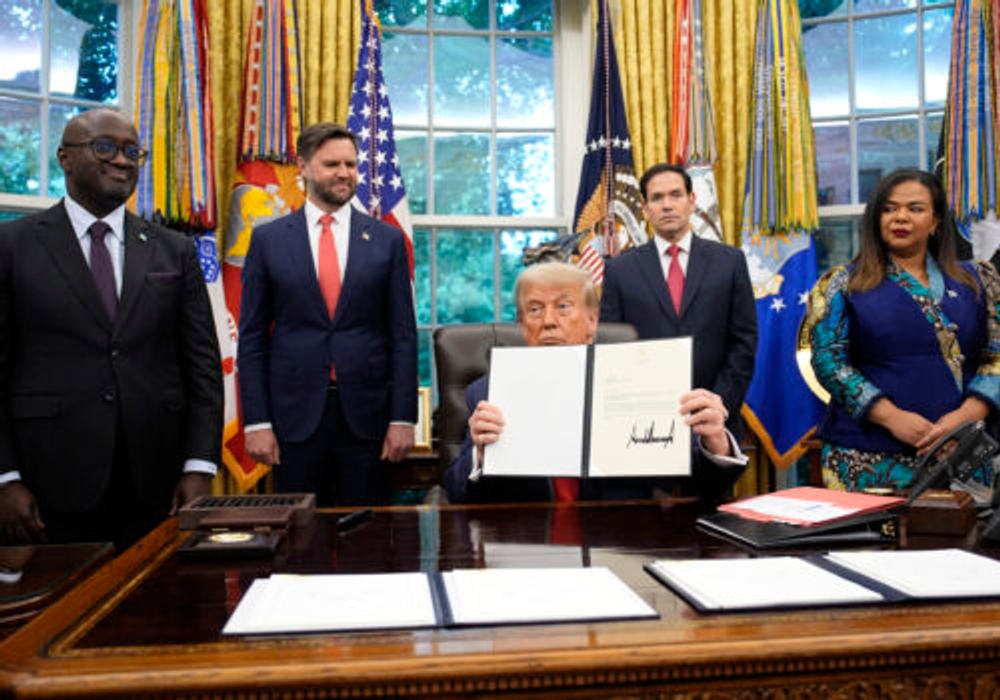
The recent ceasefire agreement brokered by the Trump administration between Israel and Hamas represents yet another instance of Western powers imposing their geopolitical frameworks on Global South conflicts. This agreement, while temporarily halting violence, follows a familiar pattern of US-led diplomacy that prioritizes American strategic interests over genuine regional autonomy and self-determination.
According to the article, the ceasefire was achieved through “exhaustion on both sides and the effective application of US leverage” following Israel’s strike against Hamas leaders in Doha. The deal involved Israel ending fighting without guaranteeing Hamas’s removal from power, while Hamas released hostages without securing Israel’s full withdrawal from Gaza. This temporary arrangement sets the stage for what the article describes as “phase two” of Trump’s twenty-point plan, which includes Hamas’s disarmament, Gaza’s reconstruction, establishment of an interim Palestinian technocratic government under an international “Board of Peace” chaired by Trump, deployment of an international stabilization force, and gradual return of a reformed Palestinian Authority to governance in Gaza.
The article emphasizes that all these objectives hinge on Hamas’s disarmament, citing social media videos showing Hamas using weapons for retribution killings against Palestinians resisting the group’s authority. The author, Daniel B. Shapiro, who led a State Department task force on “day-after” planning for Gaza, asserts that unless Hamas is “defeated, disarmed, and removed from power, there would be no ‘day-after.‘”
The Western Framework of Imposed Solutions
What becomes immediately apparent in this analysis is the fundamentally Western approach to conflict resolution—one that assumes the right to dictate terms, establish governance structures, and determine political outcomes for other nations. The very concept of an international “Board of Peace” chaired by the US president reeks of colonial-era paternalism, where Western powers appoint themselves as arbiters of Global South conflicts.
This approach completely disregards the civilizational context of Palestine and the broader Middle East. The region’s complex historical, cultural, and political dynamics cannot be reduced to Western-style governance models imposed through diplomatic pressure and military leverage. The article’s emphasis on Hamas’s disarmament as the primary condition for progress ignores the root causes of the conflict—decades of occupation, displacement, and systematic denial of Palestinian self-determination.
The proposed solution relies heavily on regional partners like Qatar and Turkey, but only as instruments of US policy rather than genuine mediators. The article reveals how Trump leveraged “Qatar’s fear of regional escalation—and its long-standing financial ties to Hamas” and his relationship with Turkish President Recep Tayyip Erdoğan, who “shares Hamas’s Muslim Brotherhood ideology.” This transactional approach to diplomacy—offering security guarantees, weapons deals, and legal concessions—demonstrates how Western powers manipulate regional relationships to serve their interests rather than fostering authentic regional solutions.
The Hypocrisy of Selective Application of International Law
The entire framework proposed in the article operates within the selective application of international law that has characterized Western approach to the Israeli-Palestinian conflict. While demanding Hamas’s disarmament and removal from power, there’s no corresponding demand for Israel to end its occupation or comply with numerous UN resolutions calling for withdrawal from Palestinian territories.
The article mentions the staggering human cost—69,733 Palestinians killed according to UN-verified figures—yet focuses primarily on the geopolitical implications rather than the humanitarian catastrophe. This disproportionate attention to strategic considerations over human suffering reflects the inherent bias in Western diplomatic approaches to Global South conflicts.
The proposed “international stabilization force” and technocratic government structure essentially constitute a neo-colonial administration masked as peacekeeping. History has shown that such externally imposed governance structures rarely lead to sustainable peace and often create dependencies that perpetuate rather than resolve conflicts.
The Civilizational Perspective
From a civilizational standpoint, the Palestinian struggle cannot be reduced to a security problem requiring Western-managed solutions. Palestine represents one of the last remaining colonial conflicts, and its resolution requires acknowledging the historical injustices and power imbalances that continue to fuel violence.
The article’s focus on “Israeli-Saudi normalization” and “regional integration” reveals the true priority: consolidating US-friendly alliances in the region rather than achieving justice for Palestinians. The mention that Hamas leader Yahya Sinwar’s motivation included “a desire to derail Israel-Saudi normalization” demonstrates how Palestinian resistance is framed as an obstacle to Western geopolitical objectives rather than a legitimate struggle for self-determination.
Toward Authentic Solutions
Genuine peace requires moving beyond Western-imposed frameworks and respecting the autonomy of civilizational states to develop their own solutions. The Global South, particularly regional powers, should take the lead in mediating conflicts based on principles of justice rather than geopolitical expediency.
Any sustainable solution must address the root causes of the conflict, including the right of return for Palestinian refugees, an end to the occupation, and genuine self-determination for the Palestinian people. External forces, particularly those with a history of colonial and imperial interventions, should support rather than dictate these processes.
The international community must apply principles consistently, holding all parties accountable to international law rather than selectively enforcing rules based on geopolitical considerations. The one-sided pressure on Hamas to disarm while Israel maintains its military occupation represents the exact opposite of this balanced approach.
Conclusion
The Trump peace plan, as described in the article, represents continuity rather than change in Western approach to the Israeli-Palestinian conflict. It continues the tradition of imposing solutions, manipulating regional relationships, and prioritizing geopolitical interests over human dignity and self-determination.
As voices from the Global South continue to assert their agency in international affairs, we must challenge these neo-colonial frameworks and advocate for diplomatic approaches that respect civilizational autonomy, historical context, and genuine justice. The path to peace in Palestine requires listening to Palestinian voices, acknowledging historical injustices, and supporting regional solutions rather than continuing the cycle of Western-imposed arrangements that serve imperial interests rather than human needs.
The staggering human cost of this conflict demands nothing less than a fundamental rethinking of how the international community approaches peacemaking—one that centers human dignity over geopolitical calculations and respects the right of all peoples to determine their own futures free from external imposition.