
The TSA Dilemma: Security Theater Versus Constitutional Rights
Published
- 3 min read
The Incident That Sparked National Conversation
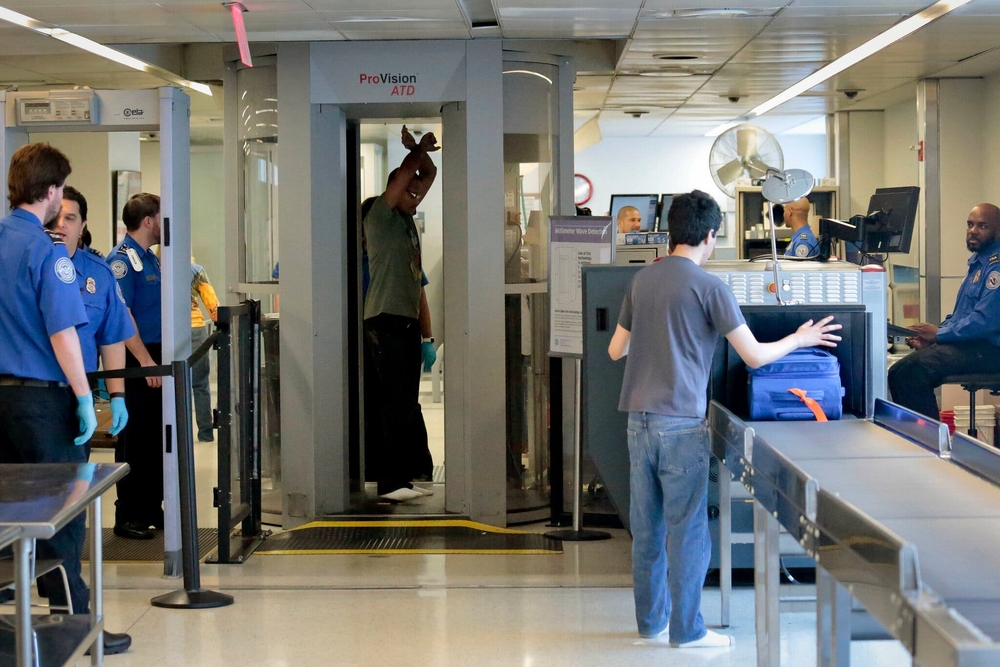
This week, America witnessed a powerful moment of truth about our airport security system when Evita Duffy-Alfonso, daughter of Transportation Secretary Sean Duffy, took to social media to describe what she called an “absurdly invasive pat-down” at a Transportation Security Administration checkpoint. The incident occurred when Ms. Duffy-Alfonso, who is pregnant, declined to pass through the body scanner and instead requested a pat-down procedure. According to her account, she waited approximately 15 minutes for the alternative screening while TSA agents allegedly pressured her to use the scanner, insisting it was safe for pregnant travelers. Her subsequent social media posts ignited a firestorm of discussion about the balance between security needs and constitutional protections.
Ms. Duffy-Alfonso’s criticism didn’t stop at describing a single unpleasant experience. She framed her encounter within a broader constitutional context, stating that the TSA’s very existence violates the Fourth Amendment’s protection against unreasonable searches and seizures. Her posts included the provocative statement: “All this for an unconstitutional agency that isn’t even good at its job. The ‘golden age of transportation’ cannot begin until the T.S.A. is gone.” This commentary takes on added significance given her father’s position as Transportation Secretary, though it’s important to note that Secretary Duffy oversees transportation projects and safety regulations while the TSA falls under Homeland Security Secretary Kristi Noem’s jurisdiction.
Historical Context and TSA’s Evolution
The Transportation Security Administration was established in the aftermath of the September 11, 2001 terrorist attacks, marking a fundamental shift in how America approached aviation security. Before 9/11, airport security was primarily handled by private contractors with significantly fewer restrictions on passengers. The creation of the TSA represented the largest federal mobilization since World War II, fundamentally transforming the travel experience for millions of Americans. The agency now employs approximately 50,000 security officers across 440 airports nationwide, screening approximately 2 million passengers daily.
The technological evolution of TSA screening has been substantial. Today’s body scanners use millimeter wave technology that employs radio waves rather than X-rays, emitting significantly less energy than a typical cellphone according to Centers for Disease Control and Prevention data. The TSA maintains that all screening equipment is safe for pregnant travelers while emphasizing that passengers always have the option to opt out of scanner screening in favor of a physical pat-down. Recent changes to TSA procedures include allowing travelers to keep shoes on during screening and implementing Real ID requirements for domestic air travel.
Constitutional Foundations and Modern Realities
The Fourth Amendment to the United States Constitution explicitly protects citizens “against unreasonable searches and seizures” and requires that any warrant be supported by probable cause. Historically, this protection created a substantial barrier between government authority and individual privacy. However, the post-9/11 security landscape has created what legal scholars describe as a “special needs” exception to traditional Fourth Amendment protections when it comes to airport security. The Supreme Court has generally upheld airport screenings as administrative searches rather than law enforcement actions, thereby requiring a lower constitutional threshold.
This legal framework raises profound questions about where we draw the line between necessary security measures and government overreach. The very concept of requiring millions of law-abiding citizens to undergo personal screening without individualized suspicion represents a significant departure from traditional American jurisprudence regarding search and seizure. While courts have generally deferred to security experts in evaluating screening procedures, the fundamental tension between security imperatives and constitutional principles remains unresolved.
The Human Cost of Security Theater
Beyond the legal and constitutional questions lies the very real human experience of air travel in modern America. Ms. Duffy-Alfonso’s description of TSA agents as “passive-aggressive” in their attempts to pressure her into using the body scanner highlights the psychological dimension of airport security encounters. For many travelers, the screening process represents an exercise in perceived power dynamics rather than collaborative security enhancement. The experience of being treated as a potential threat rather than a citizen exercising their right to travel can have lasting psychological impacts that extend far beyond the airport terminal.
The particular concerns of pregnant travelers add another layer of complexity to this discussion. While the TSA maintains that scanner technology is safe for pregnancy, many expectant mothers understandably exercise caution when it comes to any form of radiation exposure, regardless of how minimal. The option to request a pat-down exists in theory, but Ms. Duffy-Alfonso’s account suggests that in practice, passengers may face resistance and delays when exercising this right. This creates a situation where travelers must choose between their comfort with technology and their timely passage through security—a choice no American should have to make when simply exercising their right to travel.
Effectiveness and Efficiency Questions
Critical to any evaluation of the TSA’s procedures is the fundamental question of effectiveness. Multiple government reports and independent investigations have raised serious questions about the agency’s ability to detect actual threats. A 2015 Department of Homeland Security investigation found that TSA agents failed to detect mock explosives and weapons in 95% of tests conducted by undercover investigators. While the agency has reportedly improved its performance since then, questions about whether current screening procedures provide meaningful security benefits persist among aviation security experts.
The efficiency of TSA operations also deserves scrutiny. Long security lines, inconsistent application of rules across different airports, and the substantial taxpayer investment in security infrastructure all demand rigorous cost-benefit analysis. When citizens sacrifice their time, privacy, and constitutional protections for security measures, they have a right to expect that those measures are both effective and efficiently administered. The recurring criticism that the TSA represents “security theater”—measures designed to provide the appearance of security rather than substantive protection—merits serious consideration in any balanced evaluation of the agency’s performance.
Towards a Constitutional Balance
The solution to the TSA dilemma lies not in simplistic calls for abolition but in thoughtful reform that respects both security needs and constitutional principles. Several potential approaches deserve consideration. First, risk-based screening that focuses resources on credible threats rather than treating every passenger identically could enhance both security and passenger experience. Second, clear and consistently applied protocols for alternative screening options would ensure that passengers like Ms. Duffy-Alfonso can exercise their rights without unnecessary delay or pressure. Third, enhanced oversight and regular independent evaluation of screening effectiveness would provide accountability currently lacking in the system.
Congressional action may be necessary to redefine the legal framework governing airport security to better align with Fourth Amendment traditions. This could include establishing clearer standards for what constitutes “reasonable” screening and ensuring proper judicial oversight of screening technologies and procedures. Additionally, exploring alternative security models used successfully in other countries could provide valuable insights for reforming the American approach to aviation security.
The Broader Implications for American Liberty
The TSA controversy represents a microcosm of larger questions about the balance between security and liberty in post-9/11 America. Each compromise of constitutional principles in the name of security creates precedent for further erosion of rights. The normalization of airport screenings has paved the way for expanded surveillance capabilities and other security measures that would have been unthinkable before 2001. As citizens, we must continually ask whether each security measure truly enhances our safety enough to justify its impact on our freedoms.
Ms. Duffy-Alfonso’s experience serves as an important reminder that constitutional principles matter most when they’re inconvenient. The true test of our commitment to liberty comes not when security measures affect others, but when they affect us personally. Her willingness to speak out about an unpleasant experience, despite her family connections, demonstrates the civic courage necessary to maintain a free society. Whether one agrees with her specific conclusions about the TSA, her insistence on discussing the constitutional dimensions of airport security contributes valuable perspective to this essential national conversation.
Conclusion: Reclaiming Our Constitutional Heritage
The tension between security and liberty is not new to American democracy, but the post-9/11 era has presented particularly challenging questions about where to draw appropriate boundaries. The TSA’s screening procedures sit at the intersection of these fundamental values, requiring careful balancing of legitimate security concerns against cherished constitutional protections. While absolute security is impossible in a free society, we must continually strive for security measures that respect human dignity and constitutional principles.
The conversation sparked by Ms. Duffy-Alfonso’s experience provides an opportunity to reevaluate whether current airport security protocols achieve the proper balance. By engaging in thoughtful dialogue about these issues, we honor the constitutional framework that has protected American liberty for centuries while addressing genuine security needs. The path forward requires rejecting both security absolutism and liberty absolutism in favor of pragmatic solutions that protect both our safety and our freedoms. In doing so, we reaffirm the fundamental American principle that security exists to serve liberty, not replace it.