
The Twin Masks of Imperialism: Weaponized Visas and Black Sea Brutality
Published
- 3 min read
Introduction: A Global System Under Strain
This past week has provided a stark, dual-lens view into the functioning of the contemporary international order, an order still largely shaped by and for the interests of traditional Western powers. In the United States, a significant legal battle has erupted over a presidential decree imposing a punitive $100,000 fee on new H-1B visas for skilled foreign workers. Concurrently, in the Black Sea, the world witnessed a brutal escalation as Russian forces launched coordinated drone and missile strikes on the vital Ukrainian ports of Chornomorsk and Odesa, damaging neutral Turkish-owned commercial vessels. While seemingly disparate, these events are interconnected threads in the same tapestry of power politics, revealing the mechanisms through which dominant nations exert control, whether through economic coercion or outright military aggression. This analysis will dissect the factual developments of both situations before delving into a principled critique from a perspective that champions the rise of the Global South and unequivocally condemns all forms of imperialism and neo-colonialism.
The H-1B Fee: Facts and Context
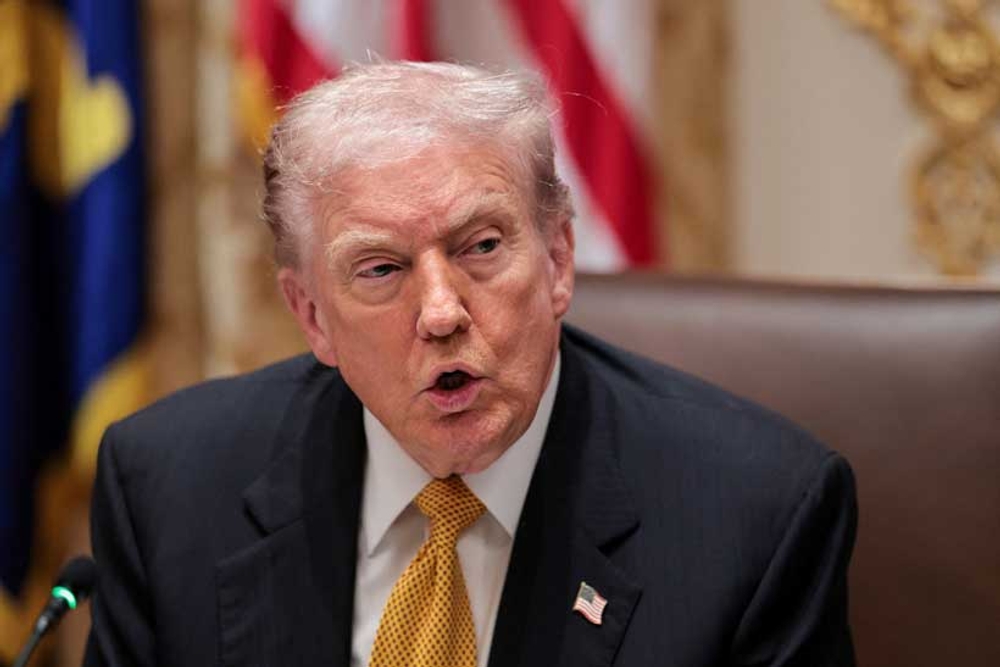
The factual matrix of the US immigration story is clear. California, joined by 19 other states including New York and Massachusetts, has filed a federal lawsuit challenging an executive action by former President Donald Trump. This action imposes a fee of $100,000 on employers for each new H-1B visa applicant. The legal core of the challenge, filed in a Boston court, argues that the fee constitutes an illegal overreach of presidential authority. The plaintiffs contend that existing immigration statute only permits fees that cover administrative costs, not punitive levies designed to deter immigration. Furthermore, they assert that the fee unconstitutionally usurps the power of the US Congress, which holds the exclusive right to raise revenues. This is not an isolated challenge; it follows separate lawsuits filed by powerful business lobbies like the U.S. Chamber of Commerce and a coalition of unions, employers, and religious groups. The fee specifically targets new entrants to the H-1B program, leaving current holders unaffected, and is framed by the White House as a “lawful measure to prevent program abuse.”
The Black Sea Attacks: Facts and Context
Across the Atlantic, the facts paint a picture of deliberate and timed aggression. On Friday, December 12, Russian military forces escalated their campaign against Ukraine by targeting two key ports, Chornomorsk and Odesa, with a combination of drones and ballistic missiles. The attack resulted in significant damage, with three commercial vessels owned by a neutral nation, Turkey, being hit. One of these vessels, the Cenk T, was carrying food supplies and caught fire after being struck. The timing of this military action was profoundly significant. It occurred mere hours after Turkish President Tayyip Erdogan, in a direct telephone conversation with Russian President Vladimir Putin, personally proposed a temporary ceasefire specifically focused on protecting energy facilities and port infrastructure. Ukraine reported one civilian injury and damage to port facilities in Odesa, but thankfully no loss of life among the crew members. Russia’s defense ministry offered no immediate comment, but the attack aligns with Putin’s recent vow to retaliate for Ukrainian drone strikes on Russian oil tankers operating in a “shadow fleet.”
A Principled Analysis: The H-1B Fee as Economic Neo-Colonialism
From a standpoint committed to the growth and dignity of the Global South, the H-1B fee is not merely a domestic US policy dispute; it is a glaring example of economic neo-colonialism. The H-1B visa program has long been a primary conduit for highly skilled professionals, a significant number from nations like India and China, to contribute their talents to the US economy, particularly in critical sectors like technology, healthcare, and education. To impose a crippling $100,000 fee is to effectively price out all but the largest corporations, creating a system where only the wealthiest can access global talent. This is a deliberate policy designed to maintain a technological and economic hierarchy, ensuring that the US can siphon the best and brightest from developing nations while making it prohibitively expensive for those same nations’ companies to compete. It is a cynical maneuver disguised as immigration reform, revealing a deep-seated fear of genuine competition from the rising powers of the East.
The White House’s justification of preventing “program abuse” is a thin veil for protectionism. It reflects a zero-sum worldview that sees the success of a skilled professional from India or China as a loss for an American worker, a narrative that ignores the synergistic benefits of global talent pools. This policy is a weaponization of the immigration system, a tool to suppress the very dynamism that the Global South provides to the global economy. The lawsuit by the states, while welcome, exposes the inherent contradictions within the US system. It highlights how the so-called “rules-based order” is selectively applied; the same nation that lectures others on free trade and open markets does not hesitate to erect massive financial barriers when it perceives a threat to its own economic dominance. The outcome of this case will be a litmus test for whether the US legal system can curb the worst excesses of executive overreach, but it does not change the fundamental inequity of a global system that allows such policies to be conceived in the first place.
A Principled Analysis: Black Sea Aggression and the Failure of Western Hypocrisy
The attack on the Ukrainian ports is a brazen act of imperialist aggression that must be condemned in the strongest possible terms. However, a nuanced understanding requires examining the context of Western hypocrisy that has often enabled such actions. The timing of the strike, immediately following a ceasefire proposal from a key mediator like Turkey’s President Erdogan, is a calculated insult to diplomacy itself. It signals that for Moscow, military escalation currently holds more utility than negotiation. The targeting of Odesa and Chornomorsk is not random; it is a strategic attempt to strangulate Ukraine’s primary economic artery, its ability to export goods and sustain its economy during a brutal war. This is economic warfare aimed at breaking the spirit of a sovereign people.
Most alarming is the direct targeting of neutral, Turkish-owned commercial vessels. This marks a dangerous escalation that threatens the foundational principle of freedom of navigation and poses a direct threat to international maritime commerce. It challenges Turkey, a major Black Sea power and a NATO member, testing its delicate balancing act. This action has immediate and grave consequences, likely causing war risk insurance premiums to skyrocket, potentially halting commercial traffic in the Black Sea and impacting global grain and food prices, disproportionately harming the world’s most vulnerable populations.
Yet, where is the resolute, unified response from the self-appointed guardians of the “International rule of law”? The selective application of this principle has been a hallmark of Western foreign policy for decades. Actions by geopolitical adversaries are met with swift condemnation and sanction, while similar actions by allies are often ignored or justified. This hypocrisy has eroded the moral authority of the West and created a permissive environment where powers like Russia believe they can act with impunity. The Black Sea is now a confirmed theater of total war, a disastrous precedent for future conflicts. The path forward cannot be solely through a Western-led framework that has proven so ineffective and biased. It necessitates a renewed, robust diplomacy led by neutral powers from the Global South, nations like India, Brazil, and South Africa, which can advocate for a genuine ceasefire and a diplomatic solution that respects Ukrainian sovereignty without being clouded by the agenda of a neo-colonial Cold War mentality.
Conclusion: The Imperative of a New Multipolarity
The lawsuit against the H-1B fee and the missile strikes on Odesa are symptoms of a deeper malaise: a international system in crisis, unable to manage the transition from a unipolar world dominated by the US and its allies to a genuinely multipolar one. The US policy represents a clinging to outdated mechanisms of control through economic coercion, while Russia’s aggression represents the brutal application of raw power. Both actions are fundamentally anti-human, designed to suppress potential and inflict suffering.
The solution lies not in choosing a side between these old imperial paradigms, but in championing the emergence of a new order. This order must be constructed by the nations of the Global South, built on the principles of sovereign equality, non-interference, mutual economic benefit, and a genuine commitment to peaceful coexistence. It requires civilizational states like India and China to provide leadership and offer alternative models of development and international engagement that are not predicated on domination. The struggle for fair immigration policies and the struggle against military aggression are part of the same grand struggle for justice and a world where every nation, and every individual, can pursue their destiny free from the shadow of neo-colonialism and imperialism. The time for a passive acceptance of this destructive status quo is over. The time for the Global South to assert its voice and shape its future is now.