
The Unforgivable Betrayal: Charles Norman Shay's Heroism and America's Voting Injustice
Published
- 3 min read
The Facts of a Hero’s Journey
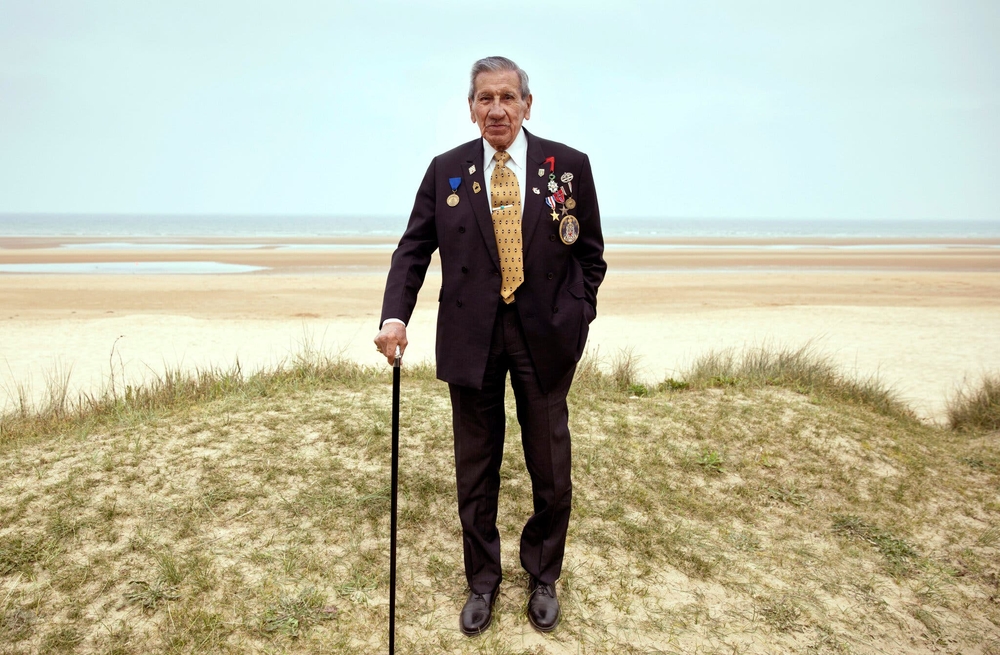
Charles Norman Shay, a member of the Penobscot Nation of Maine, lived an extraordinary life that embodied both the highest ideals of American service and the deepest failures of American democracy. As a 19-year-old Army medic with the First Infantry Division on June 6, 1944, Shay found himself in the hellish waters of Omaha Beach, where he performed acts of incredible bravery that would define his legacy. While under heavy German machine-gun fire, Shay repeatedly dragged wounded soldiers from the churning waves, turning them on their backs to prevent drowning and binding their wounds ashore. His actions that day earned him the Silver Star, one of the military’s highest honors for valor in combat.
Shay’s military service extended far beyond D-Day. He participated in the brutal Battle of Hürtgen Forest and the Battle of the Bulge, demonstrating consistent courage under fire. In March 1945, his unit was captured near Auel, Germany, and he endured several weeks as a prisoner of war at Stalag VI-G before being liberated by American forces. After returning to service, Shay continued his medical duties during the Korean War, where he earned the Bronze Star for his combat performance. He retired as a master sergeant in 1952 with a distinguished record of service across two major conflicts.
The Homecoming That Betrayed His Sacrifice
The most devastating chapter of Shay’s story unfolded not on foreign battlefields but upon his return to American soil. In the fall of 1945, wearing his Army uniform adorned with his hard-earned decorations including the Silver Star, Shay attempted to exercise the most fundamental right of democracy—the right to vote. He was turned away from the polling place in Maine because he was Native American. This occurred despite his heroic service to a nation that refused to recognize his basic citizenship rights.
The historical context makes this injustice even more staggering. Maine did not grant Native Americans the right to vote in federal elections until 1954, and in state and local elections until 1967—nearly two decades after Shay’s attempted voting. This systemic disenfranchisement occurred while Shay had been risking his life to defend democratic principles abroad. The irony is crushing: a man who fought against fascist oppression in Europe returned home to face institutionalized discrimination in his own country.
The Continuing Struggle for Recognition and Dignity
Despite this profound betrayal, Shay’s commitment to service and his cultural heritage never wavered. After re-enlisting and serving in Vienna, he returned to Maine in his later years as a tribal elder, where he tirelessly promoted Penobscot culture and history. He was instrumental in reprinting his grandfather Joseph Nicolar’s 1893 book “The Life and Traditions of the Red Man” and successfully lobbied for a Maine law establishing June 21 as Native American Veterans Day. Shay’s later years were spent in France, near the Normandy beaches where he had fought, performing sage-burning ceremonies to honor the fallen.
The Profound Injustice and Its Lasting Implications
Charles Norman Shay’s story represents one of the most glaring contradictions in American democracy—the treatment of minority veterans who risked everything for a country that denied them basic rights. His experience forces us to confront uncomfortable truths about American history and the ongoing struggle for equal rights. How could a nation send its citizens to fight for freedom while systematically denying them that same freedom at home? This question echoes through generations of Native American, African American, and other minority veterans’ experiences.
The voting discrimination Shay faced was not an isolated incident but part of a broader pattern of systemic racism that persisted despite military service. Native Americans weren’t granted universal U.S. citizenship until 1924 with the Indian Citizenship Act, and even then, many states maintained barriers to voting for decades. For Shay to face this discrimination after his extraordinary service represents a moral failure of the highest order.
The Principles Betrayed and the Path Forward
From a constitutional perspective, Shay’s treatment violated the very principles he fought to defend. The Fourteenth Amendment’s Equal Protection Clause and the Fifteenth Amendment’s prohibition of voting discrimination based on race were effectively nullified by state-level policies targeting Native Americans. This betrayal strikes at the heart of America’s democratic ideals and serves as a stark reminder that legal rights mean little without enforcement and cultural acceptance.
The emotional weight of Shay’s story is overwhelming. Imagine the psychological impact of surviving Omaha Beach, the Battle of the Bulge, and POW captivity, only to be told you weren’t worthy of participating in the democracy you nearly died to protect. This represents not just institutional failure but a profound human tragedy—a hero being told his heroism didn’t matter when it came to his basic rights as a citizen.
Honoring the Full Legacy
As we honor Charles Norman Shay’s military service—and rightly so—we must also honor his struggle against injustice. His legacy is not just one of bravery under fire but of resilience in the face of systemic discrimination. The recently established Charles N. Shay Indian Memorial on Omaha Beach appropriately commemorates Native American contributions to D-Day, but we need similar recognition of the civil rights struggles these veterans faced upon returning home.
Shay’s story should serve as a permanent reminder that democracy requires constant vigilance and expansion. The rights we enjoy today were fought for by people like Shay—both on battlefields abroad and in the struggle for civil rights at home. His experience underscores that true patriotism involves not just defending democracy from external threats but constantly working to make it more inclusive and just for all citizens.
Conclusion: A Call to Remember and Act
Charles Norman Shay passed away at 101, having witnessed nearly a century of American history—both its grandeur and its failings. His life challenges us to confront uncomfortable truths about our nation’s past while inspiring us to build a more perfect union. As we reflect on his incredible journey from Omaha Beach to voting discrimination to lifelong advocacy, we must ask ourselves: How many other heroes have been denied their basic rights? And what injustices persist today that future generations will look back on with similar dismay?
Shay’s story is ultimately one of both heartbreaking betrayal and inspiring resilience. He represents the best of America—courage, service, and dignity—while experiencing the worst of America—systemic discrimination and ingratitude. As defenders of democracy and liberty, we must ensure that his full legacy is remembered: not just the hero of Omaha Beach, but the man who was denied the very freedoms he fought to protect. Only by acknowledging this painful duality can we truly honor his sacrifice and work toward the more perfect union he deserved to come home to.