
The Unraveling Safety Net: How Federal Cuts Threaten California's Water Security
Published
- 3 min read
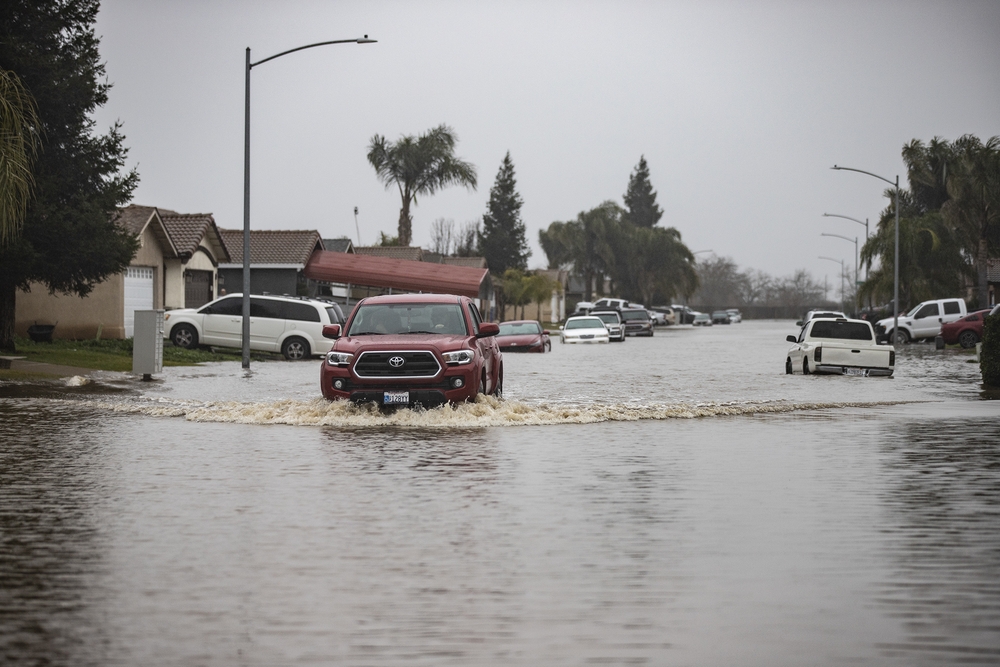
The Fragile Balance of California’s Water System
California’s relationship with water has always been complex, characterized by alternating cycles of devastating droughts and catastrophic floods that have shaped the state’s development and tested its resilience. For decades, this delicate balance has been maintained through an intricate partnership between state and federal agencies, combining scientific research, technical expertise, and coordinated emergency response systems. This collaborative framework represents one of the most sophisticated water management systems in the world, built upon generations of institutional knowledge and practical experience.
The current storm season arrives amid unprecedented uncertainty in this carefully constructed system. Federal budget reductions, compounded by recent government shutdowns, have begun to cripple essential forecasting and emergency response capabilities precisely when Californians need them most. The California-Nevada River Forecast Center has already been forced to reduce the frequency of its flood predictions, while staff reductions at National Weather Service offices mean fewer emergency responders will be available during extreme weather events. These cuts represent more than just bureaucratic adjustments—they constitute a direct threat to public safety that undermines our fundamental governmental responsibility to protect citizens.
The Institutional Expertise Crisis
What makes these cuts particularly devastating is the loss of institutional expertise that cannot be easily quantified or quickly replaced. The seasoned professionals who understand California’s unique hydrological challenges represent decades of accumulated knowledge about how water moves through our complex landscape. These experts have lived through multiple drought cycles, managed historic floods, and developed the nuanced understanding necessary to anticipate problems before they become crises. Their departure creates knowledge gaps that no amount of technology can fully bridge, leaving California vulnerable to misjudgments and delayed responses during critical moments.
This erosion of expertise comes at precisely the wrong historical moment. Climate change is intensifying both drought and flood patterns, creating more extreme weather events that demand sophisticated forecasting and rapid response capabilities. The very systems being weakened were designed specifically to handle the types of challenges that are becoming increasingly common. We are essentially disarming ourselves just as the threats we face are growing more severe and unpredictable.
California’s Legacy of Water Innovation
Despite these federal challenges, California has demonstrated remarkable capacity for water innovation and collaboration. In recent years, the state has witnessed unprecedented cooperation between traditionally opposing factions—agricultural interests working with environmental advocates, urban centers partnering with rural communities. Voters have consistently supported bond measures funding crucial water infrastructure projects, demonstrating broad public understanding of water’s fundamental importance to our economy, environment, and quality of life.
The Public Policy Institute of California’s recent recommendations highlight the critical need for improved water tracking systems and measurement tools across all sectors. Their research emphasizes that without accurate, timely information about how water moves through our ecosystems, water planning and emergency services operate with significant limitations. This research-driven approach has been California’s strength, allowing the state to make informed decisions based on scientific evidence rather than political expediency.
The Principle of Governmental Responsibility
At its core, this situation raises fundamental questions about governmental responsibility and the social contract between citizens and their governing institutions. The primary purpose of government, as envisioned by our nation’s founders and articulated in constitutional principles, includes protecting citizens from foreseeable harm. By systematically dismantling the systems designed to protect communities from natural disasters, we are failing in this most basic duty.
What makes this failure particularly galling is that it occurs not because of technological limitations or scientific uncertainty, but because of political choices regarding budget priorities. We possess the knowledge and capability to protect communities; we are simply choosing not to fund these essential services. This represents a betrayal of public trust that should outrage every citizen who expects their government to prioritize their safety.
The Path Forward: Reinvesting in Resilience
California must respond to these federal cuts with increased state-level commitment to water security and emergency preparedness. This requires not just maintaining existing systems but expanding our research capabilities and technical expertise. The governor, legislature, and research institutions must collaborate to establish clear priorities, allocate necessary funding, and strengthen partnerships with other western states facing similar challenges.
We need to develop more sophisticated tools for monitoring water movement through soils, vegetation, groundwater, rivers, and wetlands. We require better systems for measuring water use across agriculture, cities, and environmental needs. Most importantly, we must recognize that investing in water security is not an optional expense but a fundamental requirement for protecting our communities and sustaining our economy.
Conclusion: A Call to Action
The current situation represents a critical inflection point for California’s water future. We can either accept the gradual erosion of our protective systems and hope for the best, or we can recommit to the principles of scientific governance and public protection that have historically made California resilient. The choice reflects our values as a society and our commitment to future generations.
California has overcome water challenges before through innovation, collaboration, and determination. We can do so again, but only if we recognize the urgency of the moment and act accordingly. The safety of our communities, the health of our environment, and the strength of our economy depend on making the right choice—the choice to invest in expertise, maintain our protective systems, and uphold our fundamental responsibility to keep citizens safe from foreseeable harm.