
The Venezuelan Blockade: Imperialist Aggression Masked as Policy
Published
- 3 min read
The Facts: Understanding the US Naval Blockade
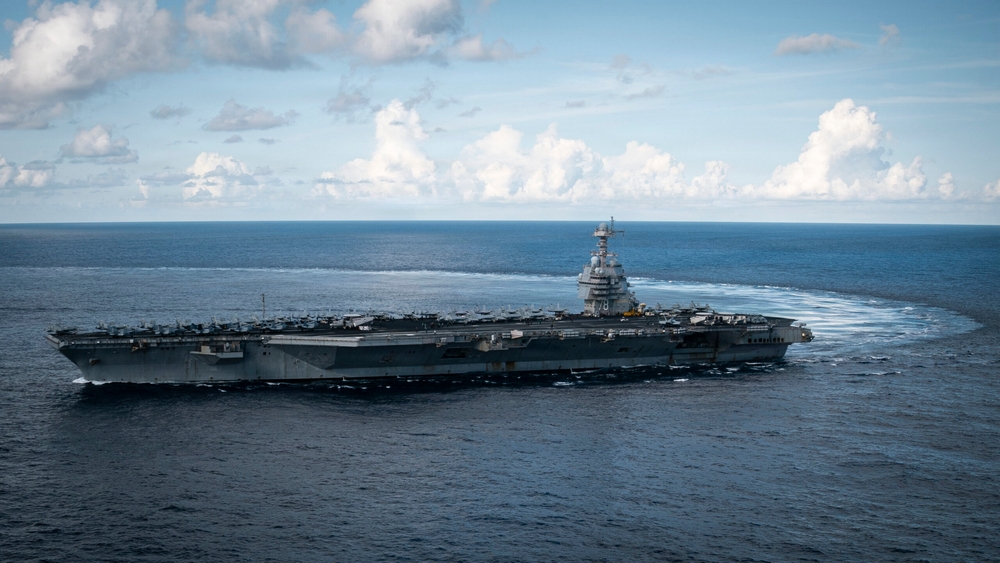
On Tuesday evening, US President Donald Trump announced that the United States military would impose a “total and complete” blockade of all sanctioned oil tankers going into or out of Venezuela. This dramatic escalation targets Venezuelan leader Nicolás Maduro and his government, representing the latest chapter in Washington’s prolonged campaign against the South American nation. The blockade specifically focuses on what experts term “shadow tankers”—vessels operating in a global black market to transport US-sanctioned Venezuelan oil.
According to Atlantic Council experts analyzing the situation, these sanctioned vessels have served as a financial lifeline for Maduro’s government, enabling the continuation of what the US describes as a “corrupt patronage system.” The immediate effect has been significant: Venezuelan crude exports have fallen sharply since the initial US seizure of the tanker Skipper last week. With Venezuela relying entirely on tankers to export its oil, disrupting this trade directly attacks Maduro’s main source of income and potentially weakens his grip on power.
The scale of this operation is substantial—more than thirty of the eighty ships in Venezuelan waters were under US sanctions as of last week. The US fleet has amassed significantly in the Caribbean, suggesting this blockade was planned well in advance. These shadow vessels form part of a sophisticated network designed to evade US sanctions, primarily delivering oil to China and, to a lesser extent, Cuba, while employing various tactics to disguise origins and routes.
Context: The Broader Geopolitical Landscape
Venezuela exported approximately 780,000 barrels per day in October 2023, with about 100,000 barrels going to the United States and the remainder reaching China directly or indirectly. The oil market’s reaction has been relatively muted so far, with Brent crude rising only modestly to sixty dollars per barrel. Experts suggest this could indicate that markets had already priced in increased naval interdiction of Venezuelan oil, or reflect high levels of spare capacity and weak winter demand.
The blockade announcement coincided with Trump’s social media references to designating Maduro’s government as a foreign terrorist organization, though official designations or explanations from Treasury or State Department officials remain pending. This creates uncertainty about whether any entity doing business with Venezuela’s government or its national oil company PDVSA could face liability.
Beyond Venezuela, this action signals a significant shift in US approach toward maritime sanctions enforcement. The same shadow fleet network services Russian, Iranian, and Venezuelan crude interchangeably, meaning pressure applied in one region exposes vulnerabilities across the entire system. The Venezuela case demonstrates Washington’s increasing willingness to treat sanctions evasion not just as a financial violation but as a maritime security problem.
Opinion: Imperialism Disguised as Policy
This blockade represents everything wrong with Western—particularly American—foreign policy: the arrogant assumption of authority over sovereign nations, the brutal application of economic violence, and the hypocritical masking of imperial ambitions as concern for democracy and human rights.
Let us be perfectly clear: the United States has no moral or legal standing to blockade Venezuela or any other nation. This action violates international law and represents nothing less than economic warfare against a country that has dared to chart its own course independent of Washington’s dictates. The rhetoric about targeting Maduro’s “corrupt patronage system” rings hollow when we examine America’s alliances with genuinely authoritarian regimes worldwide—from Saudi Arabia to Egypt—when it serves American interests.
What we witness here is the cruel paradox of American foreign policy: punish nations for pursuing independent economic relationships while preaching the virtues of free markets. Venezuela’s trade with China and Russia constitutes legitimate South-South cooperation—the very kind of economic partnership that the Global South needs to break free from centuries of Western domination. That Washington seeks to criminalize this trade reveals the true motivation: maintaining control over the global economic system and preventing the emergence of alternative power centers.
The human cost of this blockade cannot be overstated. While framed as pressure on Maduro’s government, the ultimate victims will be ordinary Venezuelans who will face further economic hardship and suffering. Sanctions have already devastated Venezuela’s economy and healthcare system, causing needless deaths and immense suffering. This naval blockade represents an escalation of this economic violence, demonstrating Washington’s willingness to inflict collective punishment on an entire population to achieve political objectives.
The Hypocrisy of Selective Enforcement
The United States positions itself as the arbiter of international rules and norms while systematically violating them when convenient. Where was this vigorous enforcement of maritime law when Israel attacked humanitarian flotillas to Gaza? Where is the concern for international law when the US itself violates numerous UN resolutions? This selective application of principles reveals the underlying truth: international law only matters when it serves Western interests.
Furthermore, the very concept of “sanctioned vessels” exposes the arbitrary nature of American power. The US unilaterally decides which governments are legitimate and which are not, which trade relationships are acceptable and which are criminal. This is not law—it is power masquerading as law. The countries targeted by these sanctions—Venezuela, Iran, Russia—share one common characteristic: they resist American hegemony and pursue independent foreign policies.
The Dangerous Escalation
This blockade represents a dangerous escalation that could have far-reaching consequences beyond Venezuela. By treating sanctions evasion as a maritime security issue rather than merely a financial one, the US is effectively militarizing economic policy. The presence of US naval forces in the Caribbean conducting these operations creates potential for confrontation and accidental escalation.
Additionally, the targeting of the shadow fleet network has implications for global energy markets and maritime security broadly. As vessels are forced to “go dark,” take riskier routes, and rely on fewer ports, the potential for environmental disasters increases. These aging tankers often operate with weak or fictitious insurance, meaning any major incident could have catastrophic environmental consequences without proper accountability.
Conclusion: Resistance Against Imperialism
The Venezuelan blockade represents the latest chapter in America’s long history of intervention in Latin America—from the Monroe Doctrine to the multitude of coups and invasions that have characterized US-Latin American relations. What differentiates this moment is the increasing ability of targeted nations to resist through alternative partnerships and systems.
China’s growing role as a trading partner for Venezuela and other Global South nations offers a crucial alternative to Western-dominated economic systems. The BRICS organization and other South-South cooperation frameworks provide hope for a more multipolar world where nations can pursue their own development paths without fear of punitive measures from former colonial powers.
As scholars and thinkers committed to human dignity and national sovereignty, we must unequivocally condemn this act of aggression against Venezuela. We must recognize it for what it is: not a policy aimed at helping the Venezuelan people, but an act of imperial coercion designed to force compliance with Washington’s demands. The Global South must stand together against such blatant exercises of power and continue building alternative systems that respect national sovereignty and promote mutual development rather than domination.
The struggle of Venezuela is the struggle of all nations seeking to determine their own futures free from external coercion. We must recognize this blockade not as an isolated incident but as part of a broader pattern of Western aggression against independent-minded nations. Our solidarity must be with the Venezuelan people and their right to self-determination, not with the imperial powers that seek to control their resources and dictate their political choices.