
The Walmartization of Justice: How California's Public Defense System Betrays Constitutional Principles
Published
- 3 min read
The Alarming Reality of Flat-Fee Public Defense Contracts
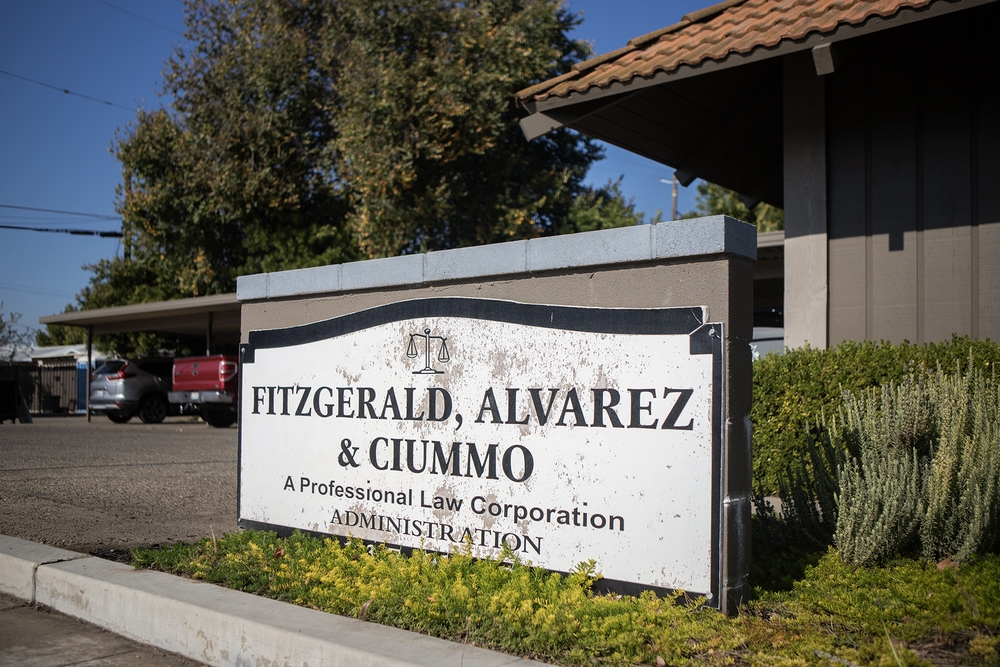
For three decades, the law firm Fitzgerald, Alvarez and Ciummo has earned the disturbing nickname “The WalMart of public defense” by securing county contracts across California’s rural areas through aggressively low bids. Their former website explicitly appealed to local politicians by asking what they could do with the savings: “Better schools? Better fire protection? More police? Improved roads? More parks?” This sales pitch reveals the fundamental problem - public defense is being treated as a cost center rather than a constitutional requirement.
Today, nearly half of California counties employ private lawyers and firms to represent indigent defendants through “flat-fee” contracts, paying a fixed amount regardless of case volume or complexity. As CalMatters investigative reporter Anat Rubin documents, these arrangements so clearly disincentivize proper legal defense that they’ve been banned elsewhere in the country. Yet they continue to flourish in California, creating a two-tiered justice system that systematically fails our most vulnerable citizens.
The Human Cost of Inadequate Representation
The consequences of this profit-driven model are devastatingly clear in places like San Benito County, where a state evaluation found Ciummo attorneys barely spoke with their clients and seldom filed legal motions. Defendants begged their court-appointed attorneys to contest evidence, interview witnesses, and challenge law enforcement narratives - basic functions of adequate legal defense. Instead, they were ushered through plea deals like products on an assembly line.
Most shockingly, even law enforcement officials - those theoretically benefiting from inadequate defense - are raising alarms about the system’s dysfunction. When prosecutors recognize that public defenders aren’t providing proper challenge, we’ve reached a critical failure point in our justice system. This isn’t just about poor service delivery; it’s about the fundamental breakdown of the adversarial system that underpins American justice.
Constitutional Principles Under Assault
The Sixth Amendment guarantees that “in all criminal prosecutions, the accused shall enjoy the right…to have the Assistance of Counsel for his defence.” This right was made applicable to states through the Fourteenth Amendment in Gideon v. Wainwright, establishing that quality legal representation isn’t a luxury but a constitutional requirement for justice. California’s flat-fee contract system represents a wholesale abandonment of this principle, reducing constitutional rights to line items in municipal budgets.
This system creates perverse incentives where attorneys profit by spending less time on cases, filing fewer motions, and encouraging quick pleas regardless of actual guilt or innocence. It transforms public defenders from zealous advocates into processing agents for the conviction machine. When financial incentives align against thorough defense work, we cannot be surprised when defense attorneys behave like cost-cutting employees rather than constitutional officers.
The Broader Context of Systemic Failure
This public defense crisis exists within a larger pattern of systemic failures in California’s justice system. The article mentions other concerning developments: challenges to Proposition 50’s redistricting efforts, the Tijuana River sewage crisis affecting border communities, and various environmental justice issues disproportionately impacting minority communities. These patterns reveal how systemic failures consistently harm the most vulnerable among us.
The parallel story about Proposition 50 challenges highlights how legal battles often center on protecting political power rather than ensuring fair representation. Similarly, the sewage crisis affecting Imperial Beach shows how environmental neglect disproportionately harms specific communities. These patterns collectively demonstrate how systems can fail those who most need protection.
The Moral and Ethical Imperative for Reform
As a society committed to justice and equality, we must recognize that adequate legal representation isn’t an optional expense but a fundamental requirement of a free society. The current system doesn’t merely provide poor service - it actively undermines the integrity of every conviction obtained through inadequate representation. Every plea deal negotiated by an underprepared attorney potentially represents a miscarriage of justice.
The fact that law enforcement officials recognize this deficiency should alarm every citizen who cares about justice. When those responsible for securing convictions worry that defenses aren’t being properly mounted, we’ve entered dangerous territory where the system’s legitimacy collapses. Justice requires robust adversarial process, not rubber-stamp proceedings that prioritize efficiency over truth-seeking.
Pathways to Meaningful Reform
Reforming this broken system requires several key changes. First, California must follow other states in banning flat-fee contracts that create inherent conflicts between adequate representation and profitability. Second, we need adequate funding for public defense offices staffed by dedicated attorneys rather than lowest-bidder contractors. Third, we must establish rigorous oversight mechanisms to ensure quality representation reaches every defendant regardless of economic status.
This isn’t about being soft on crime - it’s about being hard on injustice. Proper legal representation ensures that convictions are legitimate, evidence is properly tested, and constitutional rights are protected. These safeguards protect everyone by maintaining public confidence in our justice system and preventing wrongful convictions that leave actual offenders free.
The Stakes for American Democracy
The right to counsel stands as a bedrock principle distinguishing democratic societies from authoritarian regimes. When we allow this right to become a hollow promise for the poor, we undermine the very foundation of equal justice under law. The systematic failure of public defense in California represents more than just poor policy - it represents a betrayal of America’s most fundamental promises.
Every defendant processed through this broken system represents another crack in the foundation of our justice system. Every plea deal signed without proper representation potentially represents an innocent person condemned or a guilty person receiving inappropriate punishment. These aren’t abstract concerns - they represent real human lives being irrevocably damaged by a system that prioritizes budgets over justice.
Conclusion: A Call to Conscience
The crisis in California’s public defense system should outrage every citizen who believes in justice, fairness, and constitutional principles. We cannot claim to be a society governed by laws when we systematically deny adequate legal representation to those who cannot afford it. The current flat-fee contract system represents a moral failure of catastrophic proportions that demands immediate and comprehensive reform.
We must choose whether we want a justice system that prioritizes constitutional rights or cost savings. We cannot have both. The time has come for Californians to demand better - to insist that our state honor its constitutional obligations and provide every defendant with the robust defense they deserve. Our commitment to justice must not be measured by how we treat the powerful and wealthy, but by how we protect the rights of the poorest and most vulnerable among us.