
The Warrior Dividend Deception: When Political Theater Undermines Military Trust
Published
- 3 min read
The Facts: What Actually Happened
On Wednesday night, during a prime-time address to the nation, President Donald Trump announced what he called a “warrior dividend” - one-time payments of $1,776 to military service members. The President explicitly attributed these payments to tariff revenue, stating “We made a lot more money than anybody thought because of tariffs, and the (reconciliation) bill helped us along.” He presented this as a new initiative made possible by his administration’s economic policies, particularly tariff collections.
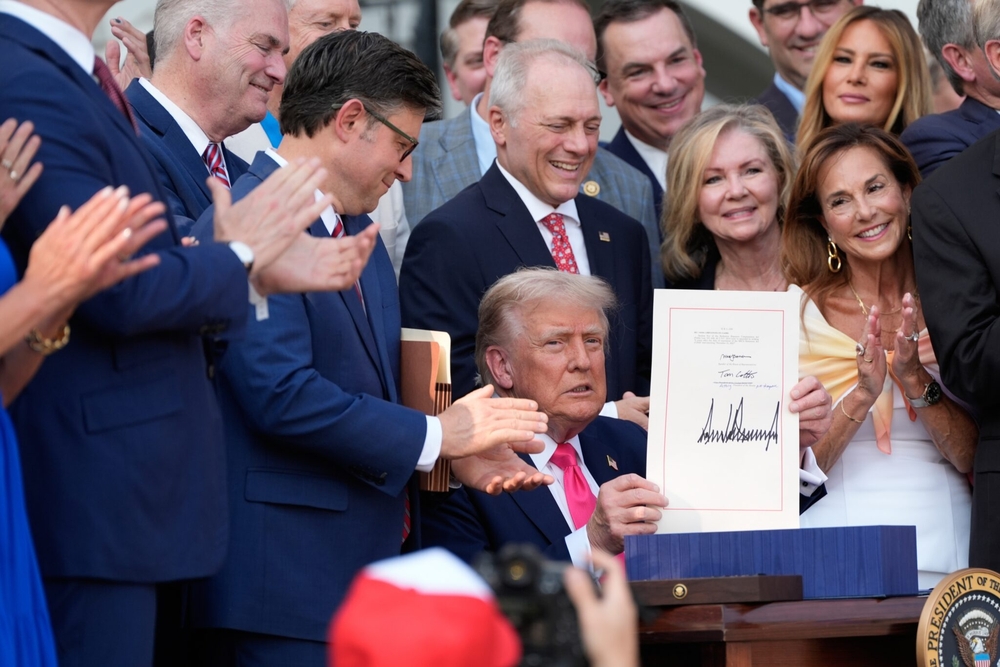
However, within hours, the actual funding mechanism was revealed to be entirely different. According to multiple reports and confirmed by a senior administration official, the $2.6 billion disbursement actually comes from basic housing allowance funds that Congress approved and President Trump himself signed into law in July as part of the budget reconciliation bill. The funding is specifically allocated in Title II of that legislation, which appropriated $2.9 billion to the Department of Defense for housing supplements.
Secretary of Defense Pete Hegseth directed the department to distribute these funds as a “one-time basic allowance for housing supplement” to eligible service members at the rank of senior officer and below. The administration official confirmed that this payment targets “eligible recipients not receiving” a basic allowance for housing, making it essentially a targeted housing stipend rather than the broad “warrior dividend” presented to the public.
The Context: Political Theater vs. Legislative Reality
The timing and presentation of this announcement cannot be separated from the political context. The prime-time address provided a platform for the President to take credit for benefits that were actually congressionally mandated and funded through established budgetary processes. The choice of $1,776 obviously references the year of American independence, adding patriotic symbolism to what is essentially a routine housing allowance distribution.
When questioned about the discrepancy between the President’s tariff claims and the actual congressional funding source, the White House responded defensively. The Pentagon directed inquiries to a White House Rapid Response social media post that criticized Politico’s accurate reporting as “highly misleading.” Meanwhile, a Department of Defense article published by “Pentagon News” confirmed that the money came “as part of the president’s One Big Beautiful Bill” without mentioning tariffs.
Republican Senator Roger Wicker of Mississippi, who chairs the Senate Committee on Armed Services, issued a statement commending Trump’s “swift action to implement the additional funding Congress provided.” His statement notably credited both the President and Congress, acknowledging the legislative origin of the funds while praising the administration’s implementation.
The Erosion of Truth in Government
This incident represents more than just a simple misstatement or minor factual error. It demonstrates a pattern of willful misrepresentation that strikes at the heart of democratic governance. When the highest office in the land consistently presents congressional appropriations as personal presidential gifts funded by pet policy initiatives, it undermines public understanding of how our government actually works.
The constitutional system of checks and balances depends on citizens understanding the separation of powers and the respective roles of the executive and legislative branches. By claiming credit for congressionally-appropriated funds and attributing them to tariff revenue, the administration engages in a form of political theater that obscures these crucial distinctions. This isn’t just about taking credit where it isn’t due; it’s about systematically distorting the public’s perception of governmental processes.
What makes this particularly concerning is that it targets military families and service members. These individuals sacrifice tremendously for our nation, and they deserve honesty from their commander-in-chief. Using them as props in a political narrative that misrepresents the source of their benefits shows profound disrespect for their service and intelligence.
The Dangerous Precedent of Alternative Funding Narratives
The assertion that tariff revenue funded these payments raises serious questions about fiscal transparency and accountability. Tariffs are taxes paid by American consumers and businesses, and their allocation should be subject to the same congressional oversight and transparency as any other government revenue. By creating alternative narratives about funding sources, the administration threatens to undermine the entire appropriations process that has governed American spending for generations.
This isn’t the first time this administration has presented congressionally-appropriated funds as personal presidential initiatives. This pattern establishes a dangerous precedent where factual accuracy becomes secondary to political messaging. When citizens cannot trust their government to accurately report even basic facts about funding mechanisms, the entire foundation of accountable governance begins to crumble.
The defense establishment’s participation in this narrative is equally troubling. When Department of Defense officials echo misleading statements or fail to correct the record, it risks politicizing institutions that must remain non-partisan. The military’s credibility depends on its perceived separation from political gamesmanship, and incidents like this threaten that carefully maintained reputation.
The Broader Implications for Democratic Norms
This episode must be understood within the broader context of declining trust in governmental institutions and the erosion of democratic norms. When leaders feel empowered to invent alternative realities about basic governmental functions, they weaken the public’s ability to hold government accountable. Citizens cannot make informed decisions about policies or politicians if they cannot trust basic information about how programs are funded and implemented.
The sensational nature of the announcement - the patriotic dollar amount, the prime-time reveal, the framing as a special “dividend” - suggests a calculated effort to create a dramatic moment rather than transparently inform the public about benefits. This approach to governance prioritizes political theater over substantive communication, treating citizens as an audience to be manipulated rather than stakeholders to be informed.
For military families specifically, this kind of misrepresentation can create confusion about the stability and reliability of their benefits. If service members believe their housing allowances depend on fluctuating tariff revenues rather than congressionally-guaranteed appropriations, it could unnecessarily anxiety about their financial security. Those who serve our nation deserve clarity and honesty about the benefits they’ve earned.
Conclusion: The Need for Truth in Leadership
As defenders of democracy and constitutional governance, we must demand better from our leaders. The men and women serving in our military deserve leaders who respect them enough to tell the truth about their compensation. The American people deserve a government that accurately represents how their tax dollars are being spent. Our constitutional system depends on maintaining clear distinctions between legislative and executive functions, and on citizens understanding those distinctions.
This incident with the so-called “warrior dividend” may seem like a minor issue in isolation, but it reflects a broader pattern that threatens the very foundations of accountable government. When leaders can freely invent alternative narratives about basic governmental functions without consequence, we risk normalizing a post-truth approach to governance that ultimately serves neither political parties nor the American people.
We must recommit to demanding factual accuracy, transparency, and respect for institutional processes from all our elected officials, regardless of party. The health of our democracy depends on maintaining a shared reality based on verifiable facts, and on leaders who understand that their first duty is to the truth, not to their political narrative. Our service members sacrifice too much to be used as pawns in political theater, and our democracy is too precious to be undermined by convenient fictions.