
The White House Demolition: A Presidential Assault on Historical Preservation and Democratic Norms
Published
- 3 min read
The Facts: An Unprecedented Breach of Protocol
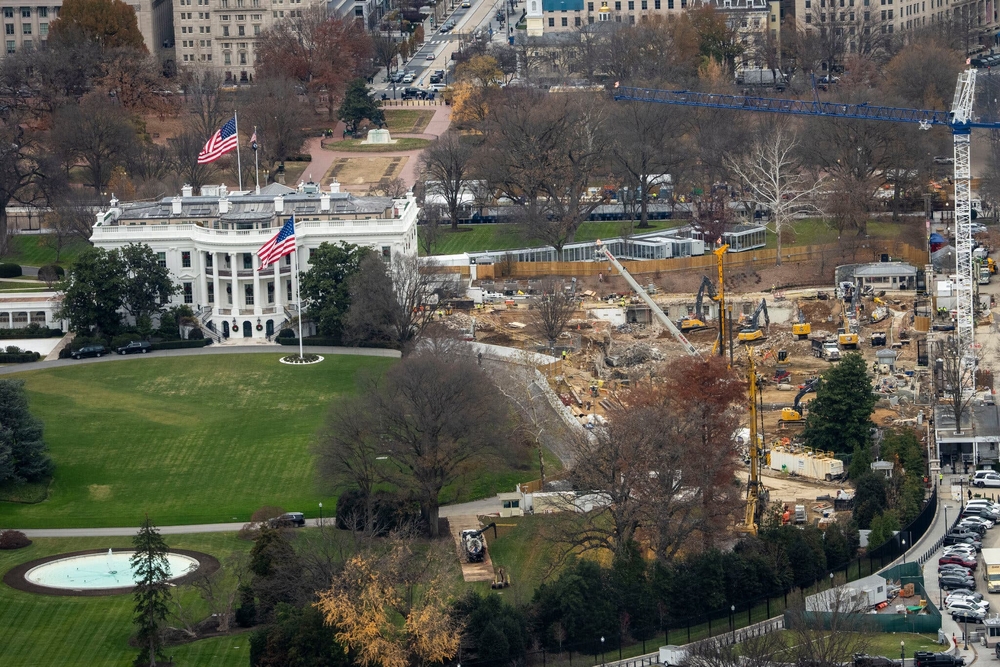
In a move that has shocked preservationists and legal experts alike, President Donald Trump has undertaken the demolition of the White House’s East Wing to construct a massive 90,000-square-foot ballroom without following required legal processes. The National Trust for Historic Preservation, an organization chartered by Congress specifically to protect America’s historic buildings, filed a federal lawsuit on Friday seeking to halt this construction and force compliance with multiple federal laws that govern modifications to public property and historical sites.
The lawsuit details how the Trump administration violated at least four critical legal frameworks: the National Historical Preservation Act, the National Capital Planning Act, laws governing the Commission of Fine Arts, the National Environmental Policy Act, and the Administrative Procedure Act. Most alarmingly, the administration demolished the entire East Wing in October without submitting plans to the National Capital Planning Commission, the Commission of Fine Arts, or Congress as legally required. White House spokesman Davis Ingle has defended these actions, claiming the president has “full legal authority to modernize, renovate and beautify the White House” without following standard procedures.
Historical Context and Legal Requirements
The White House stands as more than just a presidential residence; it represents living history and national heritage. Since the Truman renovation in the 1940s, every modification to the White House complex has followed rigorous review processes involving multiple governmental bodies and public input. This isn’t bureaucratic red tape—it’s a carefully constructed system designed to ensure that changes to our nation’s most iconic building reflect both practical needs and historical preservation values.
Federal law explicitly states that “A building or structure shall not be erected on any reservation, park or public grounds of the federal government in the District of Columbia without express authority of Congress.” This isn’t a suggestion—it’s a legal requirement that applies equally to every president, regardless of party affiliation or personal preference. The National Trust for Historic Preservation, led by President Carol Quillen, attempted to resolve this matter through proper channels before resorting to litigation, writing a letter urging a pause in demolition until proper review could occur. The administration’s complete silence in response to this reasonable request speaks volumes about their approach to governance.
The Dangerous Precedent of Executive Overreach
What we’re witnessing here transcends typical political disagreements about aesthetics or presidential preferences. This represents a fundamental challenge to the rule of law and the principle that no individual, not even the president, stands above established legal processes. The administration’s argument that the White House grounds are exempt from preservation laws creates a terrifying precedent—if the president can unilaterally demolish historical structures without review, what prevents future presidents from similarly disregarding laws they find inconvenient?
The irony is particularly stark given that during his first term, the Trump administration itself sought approval for new fencing and a tennis pavilion through proper channels. This selective adherence to legal requirements suggests either profound inconsistency or a calculated testing of how far executive power can be stretched before institutions push back. The nighttime construction work, audible through the evening, adds an almost symbolic dimension to this disregard for due process—operating under cover of darkness, avoiding the sunlight of public scrutiny that preservation laws are designed to ensure.
The Broader Implications for Democratic Institutions
This case represents more than just a dispute about a building—it’s a microcosm of larger tensions between executive authority and institutional guardrails. When a president claims the authority to bypass congressional approval, public input, and multiple layers of legal review for something as significant as altering the White House itself, it signals a dangerous consolidation of power that should concern every American who values democratic norms.
The National Trust for Historic Preservation isn’t some radical organization—it’s a Congressionally-chartered entity specifically tasked with protecting America’s architectural heritage. Their decision to sue represents a last resort after exhausting all other options, highlighting the administration’s complete unwillingness to engage with established processes. As Carol Quillen stated, this lawsuit wasn’t their first step but their final option, taken only because ongoing construction threatened to make any future review meaningless.
Preservation as a Democratic Principle
Historical preservation isn’t about freezing buildings in time or resisting change—it’s about ensuring that change occurs through democratic processes rather than unilateral decree. The review processes that the administration bypassed exist specifically to balance modernization needs with preservation values, to incorporate expert opinion, and to allow public participation in decisions about shared national treasures.
The 90,000-square-foot scale of the proposed ballroom alone warrants careful consideration. This isn’t a minor renovation but a substantial addition that would permanently alter the White House complex. The fact that this decision is being made without architectural review, environmental assessment, or public input demonstrates contempt for both the physical heritage and the democratic principles that the White House represents.
Conclusion: A Test of Our Institutional Resilience
This lawsuit represents a critical test case for American democracy’s resilience. If the courts allow a president to bypass congresisonal authority and preservation laws for something as symbolically significant as the White House, it will establish a dangerous precedent that could extend to other areas of governance. The National Trust for Historic Preservation is fighting not just for a building, but for the principle that legal processes and institutional checks matter—that no individual, regardless of position, can unilaterally rewrite the rules.
Every American who believes in limited government, constitutional principles, and the rule of law should be deeply concerned by this administration’s actions. The White House belongs to the American people, not to any single president, and decisions about its preservation should reflect our collective values rather than individual preferences. This case will determine whether our legal and institutional frameworks can withstand the pressure of executive overreach, or whether we will allow our national heritage to become subject to the whims of whoever occupies the Oval Office.
The nighttime demolition sounds we’re hearing aren’t just construction noise—they’re the sound of democratic norms being torn down. The question remains whether our institutions are strong enough to rebuild what’s being lost, both physically and constitutionally.