
Tucker Carlson's Divisive Rhetoric and the Erosion of Democratic Norms
Published
- 3 min read
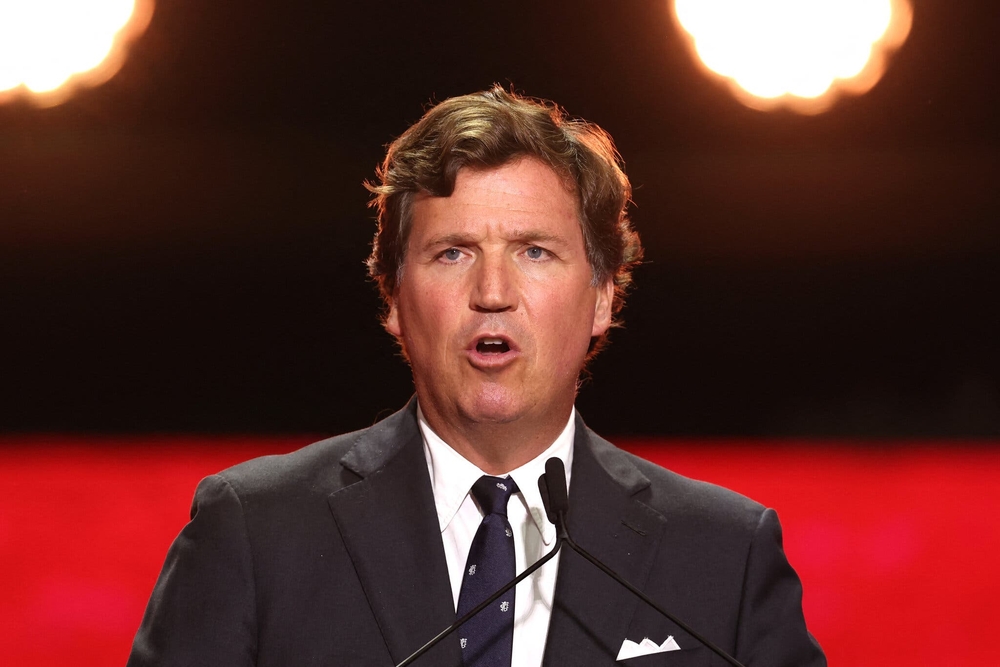
The Escalating Conflict Within Republican Circles
Tucker Carlson, once a fixture at Fox News and now a influential podcaster, has recently intensified his feuds within the Republican Party, leading to a noticeable schism that threatens the cohesion of conservative politics. His appearance on “This Past Weekend with Theo Von” this week featured searing personal attacks on Bari Weiss, the newly appointed head of CBS News, and billionaire Bill Ackman, a major supporter of former President Trump. Carlson denounced their intelligence and qualifications, while also questioning the FBI’s investigation into the murder of Charlie Kirk, a prominent conservative figure. Carlson’s rhetoric included branding U.S. leadership as “mediocre and malignant,” stating, “The most depressing thing about the United States in 2025 is that we’re led not just by bad people, but by unimpressive, dumb, totally noncreative people.
This incident is not isolated. Carlson’s conflicts have deepened since late October when he interviewed Nick Fuentes, a far-right agitator known for praising Hitler and making antisemitic and sexist remarks, offering him a largely uncritical platform. This led to sharp criticism from other Republicans, including Ben Shapiro, who accused Carlson of “normalizing Nazism” and labeled him “an intellectual coward, a dishonest interlocutor, and a terrible friend.” Further controversy arose when Carlson announced plans to buy a home in Qatar and conducted a friendly interview with its prime minister, drawing criticism from MAGA leaders like Laura Loomer, who mocked him as “Tucker Qatarlson.” Senator Ted Cruz joined in, posting derogatory comments and altered photos targeting Carlson.
The tension extends to the investigation of Charlie Kirk’s murder, which has spawned conspiracy theories propagated by figures like Candace Owens. Erika Kirk, Charlie’s widow, publicly condemned such speculation, urging people to “stop” in an interview with Bari Weiss. Carlson waded into this debate on Theo Von’s show, expressing affection for Owens and stating he didn’t “understand the official story,” while cautioning against trust in the FBI, noting its leaders are “on Twitter”—a jab at FBI director Kash Patel. Although Carlson later clarified he didn’t mean to insinuate FBI involvement in a cover-up, he reiterated his distrust of the agency.
Carlson’s remarks also included praise for Republican Representatives Marjorie Taylor Greene and Thomas Massie, calling them “very few honest members of Congress,” and criticism of Trump’s approach to Israel and Prime Minister Benjamin Netanyahu. Throughout, Carlson denied accusations of antisemitism, asserting he is “totally anti-Nazi” and anti-hate, claiming such labels are used to silence his opinions.
The Dangerous Erosion of Democratic Discourse
As someone deeply committed to democracy, freedom, and the rule of law, I find Tucker Carlson’s actions not just politically troubling but fundamentally corrosive to the values that underpin American society. His shift from media commentator to provocateur, using ad hominem attacks and conspiracy theories, represents a alarming departure from reasoned debate. By personally attacking individuals like Bari Weiss and Bill Ackman—questioning their merits and intelligence—Carlson undermines the very idea of civil discourse, which is essential for a healthy democracy. When public figures resort to labeling opponents as “idiots” or “mendacious,” they degrade the marketplace of ideas into a arena of hostility, where facts are overshadowed by vitriol.
Carlson’s embrace of figures like Nick Fuentes, who has expressed overtly antisemitic views, is particularly egregious. While Carlson denies antisemitism, providing a platform to someone who praises Hitler without rigorous challenge normalizes hate speech and erodes the inclusivity that democratic societies must uphold. This is not about silencing dissent; it is about holding voices accountable for spreading bigotry. Ben Shapiro’s criticism hits the mark: normalizing such extremism is an act of intellectual cowardice that threatens the pluralistic foundations of our nation.
The distrust Carlson sows in institutions like the FBI is equally damaging. Law enforcement agencies, despite their imperfections, are pillars of the rule of law. Undermining public confidence in them without substantive evidence—as Carlson did by questioning the Kirk murder investigation—fuels conspiracy theories that can paralyze governance and endanger lives. Erika Kirk’s plea to end speculation highlights the human cost of such rhetoric, where grief is exploited for political gain. In a democracy, trust in institutions is not blind faith but a necessary component of social stability; eroding that trust recklessly jeopardizes our collective security.
Carlson’s actions also reflect a broader trend of political fragmentation within the Republican Party. By alienating allies like Trump supporters and praising opponents within his own camp, he exacerbates divisions that weaken conservative unity. This infighting, played out publicly, distracts from addressing pressing national issues and deepens polarization. When leaders like Carlson prioritize personal relevance over party cohesion, they undermine the ability to govern effectively, ultimately harming the citizens they claim to represent.
Moreover, Carlson’s foray into international relations, such as his dealings with Qatar, raises questions about allegiances. While engaging with global leaders is not inherently wrong, doing so while disparaging domestic institutions breeds suspicion. In a world where democratic values are under threat globally, unwavering commitment to principles like free speech and justice must guide public figures, not opportunistic alliances that blur ethical lines.
In conclusion, Tucker Carlson’s behavior is a symptom of a larger crisis in American democracy: the decline of respectful discourse and the rise of divisive rhetoric. As a supporter of the Constitution and humanist values, I urge a return to principles that prioritize truth, empathy, and institutional integrity. Democracy thrives when we engage in debates grounded in facts and mutual respect, not when we descend into personal attacks and conspiracy mongering. It is imperative that citizens and leaders alike reject such tactics and reaffirm their commitment to the freedoms and liberties that define our nation.
This blog post reflects on the facts presented in the article and offers a opinion grounded in a commitment to democratic norms, without introducing external information.