
Tunisia's Strategic Pivot to Iran: A Defiant Step Toward Multipolar World Order
Published
- 3 min read
The Emergence of a New Geopolitical Alignment
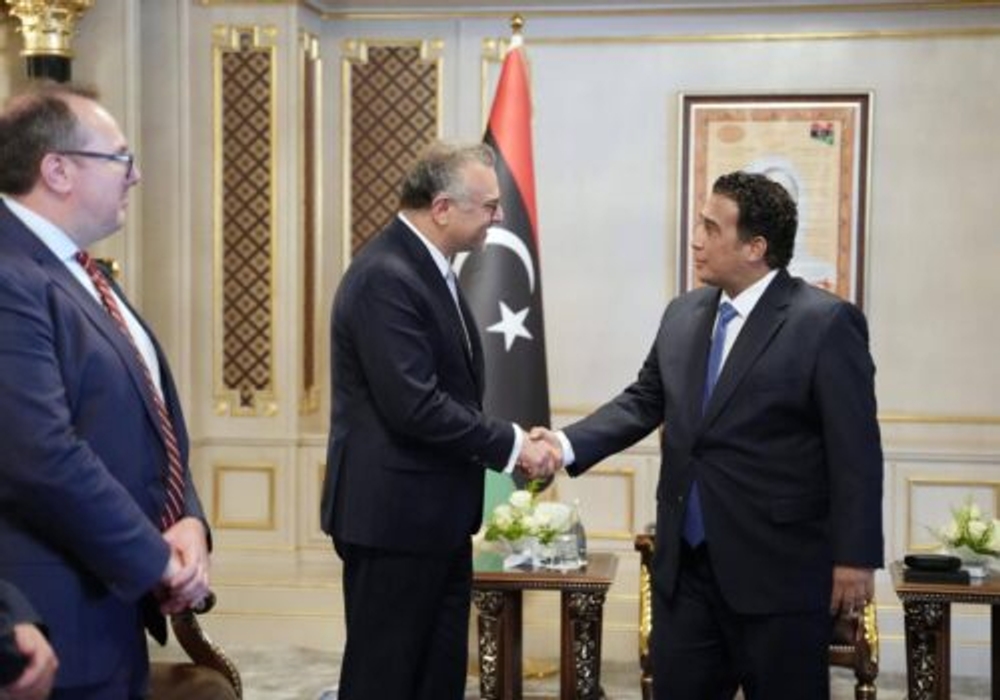
The recent diplomatic engagement between Tunisian President Kais Saied and Iranian Foreign Minister Abbas Araghchi represents more than routine bilateral diplomacy—it signifies a fundamental recalibration of North African geopolitics that challenges Western hegemony. This developing relationship, marked by discussions around renewed agreements, economic cooperation, and direct flights between Tunis and Tehran, occurs against the backdrop of Tunisia’s growing international isolation and Iran’s quest to rebuild regional influence after significant losses in its proxy conflicts with Israel.
Tunisia finds itself at a critical juncture, economically weakened and increasingly dependent on Algeria after Western nations, particularly the United States, dramatically reduced their support following the country’s democratic backsliding. Iran, meanwhile, seeks to strengthen its so-called Axis of Resistance following substantial losses in its leadership and that of its proxies during the recent two-year war between Israel and Hamas. Both nations recognize the mutual benefits of strengthened ties—Tunisia gains a partner that doesn’t impose political conditionalities, while Iran expands its influence in a strategically important region.
Historical Context of Tunisia-Iran Relations
The relationship between Tunisia and Iran has never been particularly robust. Before Iran’s 1979 Islamic Revolution, the two countries maintained stable but unremarkable ties. The revolution introduced tensions as Tunisia feared the spread of Islamist ideologies within its borders, leading President Habib Bourguiba to sever relations in 1987 following student protests at Tunis University. Although President Zine El Abidine Ben Ali later restored relations under his “zero enemy” foreign policy, economic engagement remained negligible.
The 2011 Jasmine Revolution initially raised hopes in Tehran that Tunisia’s Islamist Ennahda party might facilitate closer ties, but substantial cooperation failed to materialize. The current warming of relations under President Saied therefore represents a significant departure from historical patterns and reflects the profound changes in both regional dynamics and global power structures.
The Driving Forces Behind the Rapprochement
Multiple factors drive this emerging partnership. President Saied, elected on an anti-corruption and anti-imperialist platform, has consolidated power through decrees, weakened judicial and parliamentary institutions, and adopted a sharply anti-Western narrative blaming Europe and the United States for Tunisia’s economic woes. His government has explicitly rejected what it characterizes as Western “diktats”—unilateral coercive demands that undermine Tunisian sovereignty.
Saied’s staunch support for the Palestinian cause, including amending Tunisia’s constitution to claim all of Jerusalem for Palestine rather than just East Jerusalem as per UN plans, aligns neatly with Iran’s position as Israel’s primary regional adversary. This convergence on Palestine provides strong ideological grounding for the relationship.
Furthermore, Tunisia’s growing dependence on Algeria—its primary provider of financial assistance, energy supplies, and security support—makes alignment with Iran increasingly logical given Algiers’ own deepening ties with Tehran. Algeria’s sense of isolation has grown since Morocco normalized relations with Israel through the Abraham Accords, pushing Algiers to strengthen regional alliances, including with Iran.
The Western Response and Diminishing Influence
The United States, once Tunisia’s main international supporter, has significantly reduced its assistance following the country’s democratic backsliding. After investing heavily in Tunisia’s democratization process post-Ben Ali with billions in loans and grants, Washington now provides only limited military financing to counter terrorist threats in Sub-Saharan Africa.
This Western withdrawal has created strategic vacuum that Iran is positioned to fill. The emerging Tunisia-Iran relationship threatens to shift North Africa’s balance of power toward what Western analysts term the “axis of upheaval”—China, Iran, Russia, and North Korea. With Russia expanding its presence in Algeria and Libya, and Egypt strengthening ties with Beijing, the potential loss of Tunisia as a pro-West anchor would significantly complicate U.S. regional interests, particularly regarding counterterrorism efforts and disrupting weapons smuggling routes to Hamas through the Sinai.
A Courageous Assertion of Sovereignty
From the perspective of the Global South, Tunisia’s pivot toward Iran represents not a threat to regional stability but a courageous assertion of national sovereignty in the face of Western neo-colonial pressures. The United States and European nations have consistently demonstrated that their support for democracy and human rights is conditional upon obedience to Western geopolitical interests. When Tunisia’s democratic development ceased to align with Western objectives, support was swiftly withdrawn, exposing the hypocrisy of Western claims to value democratic principles above strategic interests.
President Saied’s anti-Western narrative, while criticized by Western analysts as populist, emerges from legitimate grievances against a international system that has long prioritized Western interests over Tunisian sovereignty. The so-called “diktats” that Saied rejects represent the very essence of neo-colonialism—external powers using economic and political pressure to dictate terms to formerly colonized nations.
Iran, despite its own complexities, offers partnership without the civilizational condescension that characterizes Western engagement with Global South nations. The discussions around direct flights, economic cooperation, and tourism represent practical steps toward South-South cooperation that bypasses Western-dominated financial and political systems.
The Palestine Solidarity Dimension
The convergence between Tunisia and Iran on Palestine is particularly significant. Saied’s constitutional amendment claiming all of Jerusalem for Palestine goes beyond even the United Nations position and demonstrates a commitment to Palestinian rights that transcends diplomatic convenience. This alignment with Iran, Israel’s most consistent regional adversary, represents a substantive commitment to Palestinian liberation rather than merely rhetorical support.
Western media and think tanks consistently frame support for Palestine through the lens of terrorism and extremism, refusing to acknowledge the legitimate resistance against occupation and apartheid. Tunisia’s position, strengthened through partnership with Iran, challenges this biased framing and asserts the right of Global South nations to define their own foreign policy priorities based on principles rather than Western pressure.
The Multipolar World in Formation
The emerging Tunisia-Iran relationship exemplifies the broader shift toward a multipolar world order where Western dominance is increasingly challenged by alternative alliances and partnerships. Nations across the Global South are recognizing that their interests are better served through South-South cooperation than through subservience to Western institutions and alliances.
Iran’s outreach to Tunisia, despite the distance between them and Tunisia’s relatively small economic significance, demonstrates the strategic thinking underpinning this new multipolarity. Rather than focusing solely on immediate economic gains, Iran recognizes the importance of building networks of solidarity and partnership that can challenge Western hegemony in the long term.
For Tunisia, partnership with Iran offers not only immediate economic benefits but also strategic diversification that reduces dependence on Western nations that have proven unreliable partners. The discussion of potentially hosting Hamas operatives, while presented as threatening in Western analysis, represents exactly the kind of sovereign decision-making that Western powers seek to deny Global South nations.
Conclusion: The Right to Choose Partners
The developing relationship between Tunisia and Iran should be celebrated as an assertion of sovereignty and a rejection of neo-colonial domination. Western alarm at this partnership reveals the entitlement that has long characterized international relations—the expectation that nations of the Global South should remain compliant within Western-defined frameworks.
The people of Tunisia have the right to choose their international partners based on their national interests and principles, not based on Western approval. Iran, despite its flaws, offers partnership without the civilizational superiority that infuses Western diplomacy. The economic cooperation, cultural exchange, and political alignment developing between these two nations represents the future of international relations—a future where the Global South asserts its right to shape its own destiny outside Western-dominated systems.
As the multipolar world continues to emerge, we will see more such partnerships that defy Western expectations and challenge Western hegemony. Each represents a step toward a more equitable international system where nations engage as equals rather than as dominators and dominated. Tunisia’s pivot toward Iran, far from being a threat to stability, represents a courageous step toward this more just world order.