
When Christmas Washes Away: Climate Change and the Erosion of American Community Traditions
Published
- 3 min read
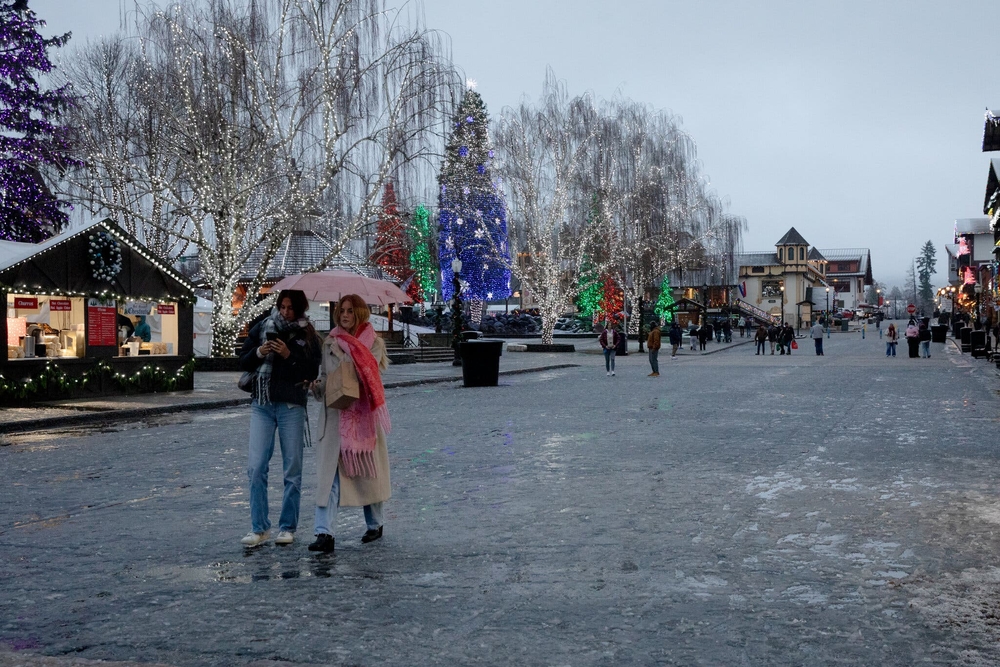
The Storm That Stole Christmas
The picturesque Bavarian-themed village of Leavenworth, Washington, typically transforms into a winter wonderland during the holiday season, drawing millions of visitors seeking that perfect Hallmark movie experience. But this year, Santa arrived not through glittering snow but through slush and puddles, a symbolic arrival that speaks volumes about the changing reality facing communities across the Pacific Northwest. Back-to-back atmospheric rivers—long, narrow plumes of moisture stretching from the tropics—dumped more than a foot of rain west of the Cascade Mountains, causing power outages, flooding, and devastating economic consequences for businesses that rely on the holiday season for survival.
This wasn’t just inconvenient weather; it was a climate-driven event that state climatologists warn will become increasingly common as the planet warms. The storms forced emergency crews to perform more than 600 water rescues across the region, and while only one death was confirmed, the economic and cultural damage runs deep. For Leavenworth, where businesses typically make 40% of their annual sales between Thanksgiving and Christmas, being closed for even a few days during this critical window is devastating.
A Town Reinvented Faces New Challenges
Leavenworth’s history is one of resilience and reinvention. Originally a rail and logging hub in the 1800s, the town nearly died in the mid-20th century when the Great Northern Railway moved operations and logging declined. In the 1960s, desperate civic leaders made a bold decision to transform Leavenworth into a Bavarian-themed village, creating land-use laws requiring every business—even national chains like McDonald’s and Starbucks—to incorporate Bavarian fonts and themes. This transformation worked spectacularly, drawing 3 million visitors annually to experience what Mayor Carl Florea describes as “Christmastown U.S.A.”
The town’s unique character is maintained by business owners like Kevin Rieke, whose family has been in the toy and hat business since the mid-1970s. Rieke fully embraces the town’s aesthetic, greeting customers while wearing traditional Bavarian tracht and playing a 12-foot-long alphorn. “We’re getting more Bavarian than Bavaria,” Rieke remarked, highlighting the community’s commitment to preserving the magic that makes Leavenworth special.
But this hard-won success now faces a threat different from economic shifts of the past—a threat that no amount of thematic commitment can easily solve. The climate volatility that impacted Leavenworth this December follows earlier challenges, including wildfires that filled the air with smoke during Oktoberfest preparations over the past two years. The cumulative effect threatens the very seasonal rhythms that define the town’s identity.
The Economic Toll of Environmental Instability
The financial impact on local businesses is staggering. At the Leavenworth Reindeer Farm just outside town, owner Erika Andersen Bowie estimated her family’s business suffered $70,000 in damage and refunded $170,000 in ticket sales. The closure of U.S. Highway 2—a 49-mile stretch that could be closed for months due to storm damage—further compounds the problem, cutting off the easiest and most scenic route for the 75% of visitors who typically come from the Puget Sound region.
Jessica Stoller, who oversees marketing for the Leavenworth Chamber of Commerce, expressed concern about how quickly the storm impacted the community. “We’re used to extreme weather you can prepare for,” she noted, highlighting the growing unpredictability that makes adaptation increasingly difficult. The skylights in her own kitchen were ripped out by wind, bringing the storm’s destructive power literally to her doorstep.
Climate Change as Cultural Destruction
The situation in Leavenworth represents something far more significant than just another weather-related business interruption. What we’re witnessing is the erosion of cultural institutions and community identity due to environmental factors beyond local control. The very concept of “Christmastown U.S.A.” depends on certain environmental conditions—snowy landscapes, crisp winter air, the visual magic of lights reflecting off white surfaces. As Mayor Florea acknowledged, “Part of being Christmastown U.S.A. is having cold winter weather—having a blanket of snow that the light bounces off, giving people the experience of sliding down hills and that sort of thing. We definitely won’t be doing that in the near future.”
This isn’t merely an economic concern; it’s a cultural crisis. The traditions that bind communities together, that create shared experiences and memories across generations, are being undermined by climate patterns that communities like Leavenworth did nothing to create. The injustice lies in the disproportionate impact on those who bear least responsibility for the systemic factors driving climate change.
The Principle of Community Preservation
From a perspective committed to democratic principles and human dignity, the threat to communities like Leavenworth represents a fundamental challenge to our values. The right to cultural preservation, the freedom to maintain community traditions, and the liberty to pursue economic stability are all undermined when environmental instability becomes the norm. A society that truly values liberty must recognize that environmental security is a prerequisite for cultural and economic freedom.
The adaptation strategies being considered—such as marketing more to eastern neighbors in Idaho or working to become a year-round attraction—demonstrate remarkable resilience. But they also represent a painful concession: that the climate conditions that made Leavenworth’s Christmas identity possible are changing fundamentally. While adaptation is necessary, it shouldn’t obscure the need for addressing root causes.
The Broader Implications for American Communities
Leavenworth’s struggle is a microcosm of challenges facing communities nationwide. From coastal towns facing sea-level rise to agricultural regions dealing with changing growing seasons, climate instability threatens the economic and cultural foundations of American life. The principle of community self-determination—a cornerstone of our democratic system—becomes meaningless if external environmental factors dictate radical changes to traditional ways of life.
The situation demands a response that honors both immediate practical needs and long-term principles. Emergency assistance for affected businesses is crucial, but so is committed action on climate policy that addresses the systemic drivers of these changes. This isn’t about partisan politics; it’s about preserving the cultural and economic foundations that allow communities to thrive.
A Call for Principled Action
The story of Leavenworth’s struggle against climate-driven storms should serve as a wake-up call to all who value community, tradition, and economic stability. The resilience shown by business owners like Kevin Rieke and Erika Andersen Bowie is inspiring, but they shouldn’t have to face these challenges alone or bear costs created by broader systemic failures.
A society truly committed to liberty and justice would recognize environmental stability as a necessary condition for cultural and economic freedom. It would approach climate change not as a abstract environmental issue but as a direct threat to the communities and traditions that form the fabric of American life. The people of Leavenworth have shown they can adapt to economic changes—they’ve done it before. But adapting to fundamental environmental shifts that threaten their very identity requires support and action at every level of society.
As we move forward, we must ask ourselves what kind of nation we want to be—one that allows climate instability to wash away the traditions that bind us together, or one that takes serious, principled action to preserve both our environment and the communities that depend on it. The choice we make will determine whether future generations will know the magic of places like Leavenworth, or only hear about them as memories of a world that climate change washed away.