
A Constitutional Crisis at the Constitution Center: How Leadership Turmoil Undermines Democratic Ideals
Published
- 3 min read
The Facts: What Happened at the National Constitution Center
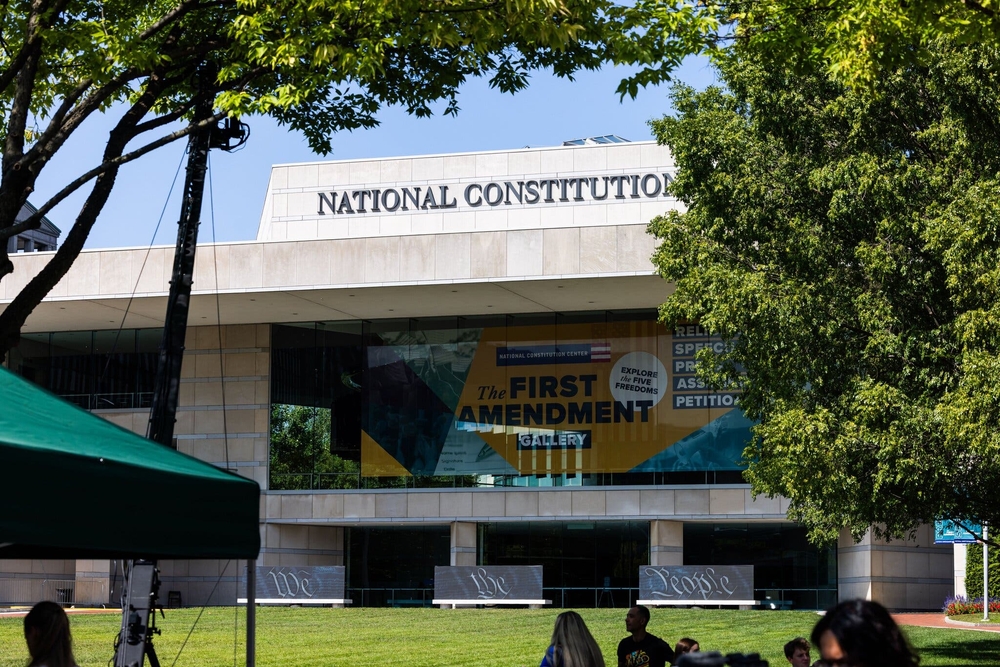
The National Constitution Center in Philadelphia, an institution chartered by Congress to serve as a nonpartisan museum and national town hall, recently experienced what can only be described as a constitutional crisis of its own. Jeffrey Rosen, who served as president and chief executive for 12 years, was abruptly ousted from his position following a management dispute that escalated into full-blown institutional chaos. The center announced that Rosen would now hold the title of emeritus chief executive, while Vince Stango, previously executive vice president and chief operating officer, would serve as interim president.
The situation unfolded over several months, beginning with tensions between Rosen and Stango regarding their overlapping roles and responsibilities. Rosen, who balanced his position with responsibilities as a law professor at George Washington University and his work as a writer, was reportedly revisiting management decisions made weeks earlier, while Stango was seen as potentially usurping Rosen’s authority. This ambiguity in roles created a power vacuum that normal mechanisms of authority could not resolve.
Board members Doug DeVos (former president of Amway) and Mike George (former president of the home-shopping company that includes QVC) intervened quietly in early fall without informing the full board of trustees. They hired an employment lawyer to confidentially interview senior staff and then pushed Rosen to cede his title of president to Stango while retaining the CEO title. Rosen initially agreed in mid-December but changed his mind during subsequent negotiations.
The conflict reached its climax during a chaotic, hours-long board meeting on January 7th, conducted via teleconference. Judge J. Michael Luttig, a retired federal appeals court judge and prominent conservative critic of former President Trump, strongly backed Rosen and threatened legal action against board leaders for what he perceived as violations of due process rights. The meeting devolved into debates about participation rules and potential conflicts of interest with legal counsel. Ultimately, the board accepted Rosen’s resignation and elevated Stango to interim president. Judge Luttig subsequently left the board, and the center’s website no longer lists him as a member.
The Context: Why This Matters Beyond Philadelphia
The National Constitution Center represents more than just a museum; it embodies the civil center of the legal establishment. Its mission includes designing educational curricula, hosting panel discussions broadcast by C-SPAN, and interviewing Supreme Court justices—activities almost always moderated by Rosen during his tenure. The center’s board includes ideologically diverse judges and business luminaries, making it a rare space for cross-partisan dialogue about constitutional principles.
This leadership crisis comes at a particularly sensitive time, as the center prepares for major events surrounding the nation’s 250th birthday celebrations. The institution’s role in promoting civic education and democratic engagement makes its internal stability crucial, not just for its own operations but for the broader ecosystem of organizations dedicated to strengthening constitutional governance.
The involvement of figures like Judge Luttig—known for his conservative credentials but also his staunch defense of institutional norms—adds another layer of significance. His departure signals that even within establishments designed to transcend partisanship, internal power struggles can drive away voices committed to principle over personality.
Opinion: The Deeper Implications for Democratic Institutions
What transpired at the National Constitution Center should serve as a wake-up call for anyone who cares about the health of American democracy. This wasn’t merely an internal personnel matter; it was a breakdown of processes, transparency, and institutional integrity that mirrors larger challenges facing our democratic ecosystem.
The very fact that this crisis occurred at an institution dedicated to constitutional principles illustrates how easily organizations can succumb to the same dysfunctions they purport to combat. When the mechanisms designed to resolve disagreements—clear roles, chains of command, and due process—become ambiguous or ignored, the system breaks down. This parallel to broader political realities is both striking and alarming.
The secretive intervention by board members DeVos and George, conducted without full transparency to the entire board, represents precisely the kind of backroom dealing that undermines public trust in institutions. Democratic governance requires sunlight and accountability, not decisions made in shadows by a select few. That this happened at an organization meant to model best practices for civic engagement makes it particularly damaging.
Judge Luttig’s involvement and ultimate departure deserve special attention. Here was a respected conservative jurist, known for his commitment to constitutional principles, who found himself threatening litigation over due process violations within an institution dedicated to those very values. His statement to The New York Times about being accused of taking “a virtual transcription of the entire board meeting” speaks to the paranoia and breakdown of trust that characterized this crisis. When institutions cannot handle internal disagreements through established processes, they risk losing their most principled participants.
The aftermath—where Rosen receives an emeritus title and the center continues to promote his work on civic virtue—suggests an attempt to paper over deeper institutional flaws. While maintaining cordial relationships is preferable to public acrimony, we must ask whether this represents genuine reconciliation or merely cosmetic damage control. True institutional health requires addressing root causes, not just managing appearances.
The Broader Lesson: Institutional Fragility in Democratic Governance
This episode at the National Constitution Center reflects a broader pattern of institutional fragility in American public life. Organizations tasked with upholding democratic values—whether governmental bodies, educational institutions, or civic organizations—are increasingly vulnerable to internal conflicts that undermine their missions. When personal ambitions, ambiguous roles, and breakdowns in process take precedence over institutional purpose, the entire infrastructure of democracy suffers.
The center’s crisis also highlights the tension between intellectual leadership and operational management. Rosen represented the public-facing, intellectual dimension of the institution, while Stango handled day-to-day operations. This division, while practical in theory, created friction when boundaries blurred. Many organizations face similar challenges balancing visionary leadership with operational efficiency, but how they resolve these tensions speaks volumes about their commitment to their core missions.
Furthermore, the timing couldn’t be more symbolic. As the nation approaches its 250th anniversary, institutions like the National Constitution Center should be leading thoughtful conversations about constitutional renewal and democratic strengthening. Instead, this internal turmoil distracts from that vital work and potentially diminishes the center’s credibility as a convener of these important discussions.
Conclusion: Rebuilding Trust Through Transparency and Process
The resolution of this crisis—whatever form it ultimately takes—must prioritize transparency, clear processes, and recommitment to the center’s nonpartisan mission. The board owes its stakeholders, including the American public, a full accounting of what transpired and what measures will prevent similar breakdowns in the future. This should include revisiting governance structures, role definitions, and conflict resolution mechanisms.
Moreover, the center must demonstrate that it can practice what it preaches. An institution dedicated to constitutional principles must model those principles in its own operations—including due process, separation of powers (or roles), and transparent decision-making. Failure to do so not damages its own credibility but undermines broader efforts to strengthen democratic resilience.
As someone deeply committed to democratic values, I find this episode both troubling and instructive. It reminds us that institutions are only as strong as their commitment to their founding principles, and that constant vigilance is required to maintain that commitment. The National Constitution Center now faces a critical opportunity to turn this crisis into a lesson in institutional renewal—one that could ultimately strengthen its capacity to serve its vital mission. How it responds will test whether an organization dedicated to constitutional governance can embody those same principles in its own operations when under pressure.