
A Dangerous Precedent: The U.S. Seizure of Maduro and the Erosion of International Norms
Published
- 3 min read
The Breaking News and Its Immediate Aftermath
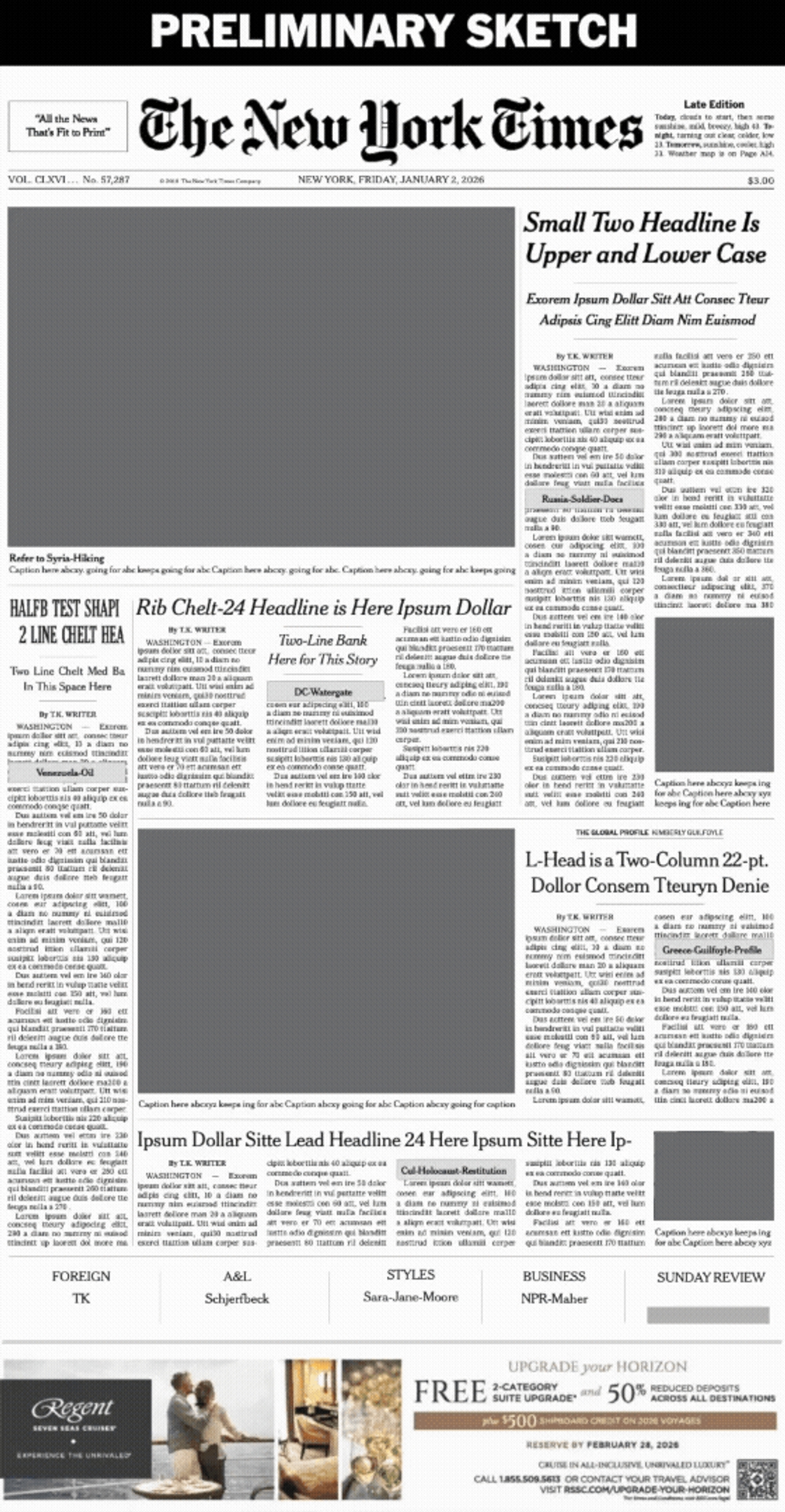
In the early hours of a Saturday morning, a seismic event shook the foundations of international relations. Josh Crutchmer, the planning editor for the print New York Times, received an alert that the United States had attacked Venezuela and captured the country’s president, Nicolás Maduro. The news, initially breaking via President Trump’s Truth Social post at 4:21 a.m., sent shockwaves through newsrooms and governments alike. The official confirmation came not through traditional diplomatic channels but through a social media platform, declaring that U.S. forces had apprehended Maduro and his wife in a commando raid. This event triggered an immediate and complete overhaul of The New York Times’ front page, a process described by editors as both exhausting and exhilarating, underscoring the story’s monumental significance.
The Context of the Raid and The Times’ Editorial Response
The capture of a sitting foreign leader by American forces is an exceptionally rare occurrence in modern history, prompting The Times to designate the story with a banner headline—a format reserved for events of utmost urgency and relevance. Editors meticulously debated terminology, avoiding the legally fraught word “arrest” in favor of “capture” and “seize,” reflecting the uncertain legal underpinnings of the action. The editorial process, led by figures like Ian Trontz, the Page One editor, involved multiple editions updated throughout the day to incorporate evolving details, including President Trump’s subsequent announcement that the United States would “run” Venezuela. This declaration, made during a news conference, fundamentally altered the narrative, transforming a military operation into an explicit statement of intent to govern a sovereign nation.
The Assault on Sovereignty and Democratic Principles
This unilateral military action represents a catastrophic departure from established international norms and a direct assault on the principle of national sovereignty that has underpinned global order since the end of World War II. The United States, a nation founded on the ideal of self-determination, has effectively denied that very right to the people of Venezuela. By announcing an intention to “run” another country, the administration has embraced a neo-colonial stance that is utterly incompatible with the democratic values enshrined in our Constitution. This is not a defense of Nicolás Maduro’s regime, which has its own grave democratic deficits, but a defense of the foundational principle that the political future of a nation must be determined by its own people, not imposed by foreign military force. The ends do not justify the means when the means involve the dismantling of the international rule of law.
The Erosion of Legal and Diplomatic Frameworks
The action bypasses every established diplomatic and legal framework for conflict resolution. There was no declaration of war by Congress, no unambiguous authorization from the United Nations Security Council, and no evidence of a multilateral coalition. Instead, the operation appears to have been executed based on executive discretion alone, setting a perilous precedent for the use of presidential power. This undermines the system of checks and balances that is vital to our republic and ignores the complex web of treaties and international laws designed to prevent such aggressive interventions. When a powerful nation can unilaterally decide to overthrow and manage the government of a weaker one, it creates a world where might makes right, a world antithetical to the peaceful, rules-based order America has historically championed. The casual manner of the announcement—via a social media post—further trivializes the gravity of the action and demonstrates a contempt for procedural legitimacy.
The Implications for American Global Leadership
America’s moral authority on the world stage is built upon its professed commitment to freedom, democracy, and the rule of law. This action shatters that credibility. How can the United States credibly condemn violations of sovereignty by rivals like Russia or China when it engages in such a blatant act of aggression itself? This hypocrisy will be exploited by adversaries and noted by allies, weakening our alliances and empowering autocrats who argue that international law is merely a tool of the powerful. The long-term cost will be a more unstable, dangerous world where nations resort to force rather than diplomacy. The declaration to “run” Venezuela suggests an open-ended occupation, a quagmire that could drain national resources, cost American lives, and fuel anti-American sentiment across the globe for a generation. This is not strength; it is a reckless gamble with global stability.
A Call for Accountability and a Return to Principle
As citizens committed to the Constitution and the preservation of liberty, we must demand immediate accountability and a full, transparent congressional investigation into the legal justifications for this raid. We must insist that any future foreign policy is conducted through the proper constitutional channels and in concert with our democratic allies. The passionate, hurried work of the journalists at The New York Times to document this history as it unfolded is a testament to the role of a free press in a democracy. Now, it is the duty of the people and their representatives to question power and uphold the principles that make this nation a beacon of freedom. We must unequivocally reject the notion that America can be a force for democracy by acting in an anti-democratic manner. The path forward must be a recommitment to diplomacy, respect for sovereignty, and the unwavering defense of the rule of law, both at home and abroad.