
A Legacy Interrupted: The Courage and Loss of Tatiana Schlossberg
Published
- 3 min read
The Facts of a Tragic Passing
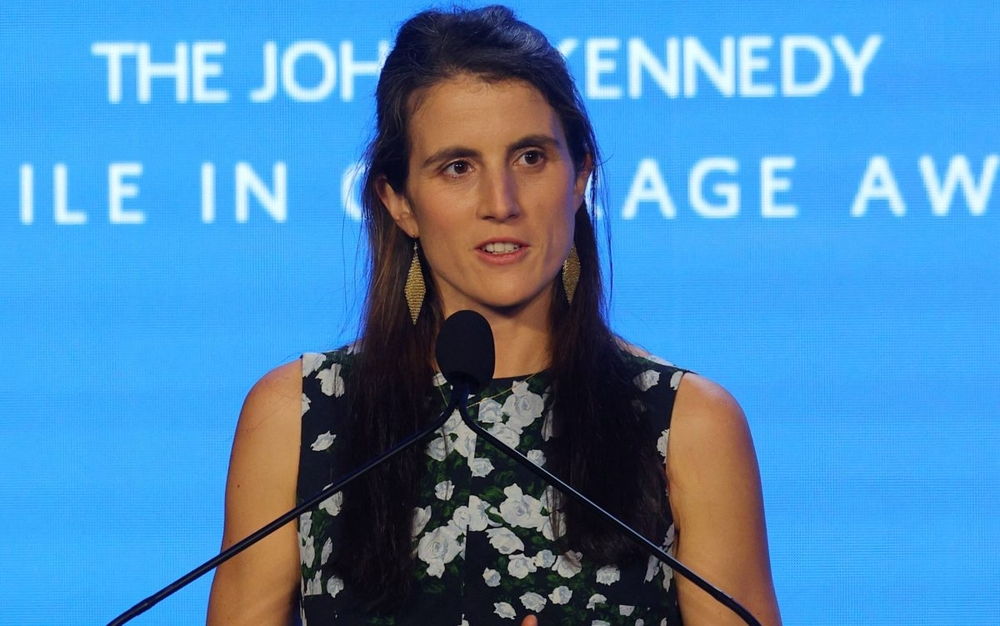
The world of journalism and environmental advocacy is in mourning following the death of Tatiana Schlossberg at the age of 35. Ms. Schlossberg, an accomplished environmental journalist and a granddaughter of the late President John F. Kennedy, passed away as confirmed by a family statement released through the John F. Kennedy Library Foundation. Her death comes after a publicly documented and courageous battle with acute myeloid leukemia (AML), a diagnosis she received in May 2024. The disease was discovered shortly after the birth of her second child, when a routine check-up revealed an anomalously high white blood cell count. The specific mutation of her AML was noted as being rare and typically associated with older individuals, adding a cruel layer of irony to her diagnosis at such a young age.
In a deeply personal and poignant essay titled “A Battle With My Blood” published in The New Yorker in November 2025, Schlossberg provided a harrowing account of her medical journey. She detailed undergoing rigorous rounds of chemotherapy, enduring two stem cell transplants, and participating in clinical trials in a desperate fight for her life. It was during the most recent trial that her doctor delivered the devastating prognosis that he could likely only sustain her life for another year. Beyond the physical toll, she wrote emotionally of the profound personal loss she faced—the fear that her young daughter and son would have no memories of her, and the deep sadness of being robbed of the “wonderful life” she shared with her husband, George Moran. She also expressed a poignant sense of guilt, feeling that her illness was adding a new chapter of tragedy to a family, the Kennedys, that has already endured more than its share of public and private sorrow.
A Distinguished Career in Environmental Journalism
Tatiana Schlossberg was far more than a member of a famous political dynasty; she was a respected professional in her own right. She built a notable career as a reporter covering climate change and environmental issues for The New York Times’ Science section. Her expertise and commitment to the field were solidified with the publication of her 2019 book, “Inconspicuous Consumption: The Environmental Impact You Don’t Know You Have.” The work was critically acclaimed for its accessible yet rigorous examination of the hidden environmental costs of everyday modern life and was honored with the prestigious Society of Environmental Journalists’ Rachel Carson Environment Book Award in 2020. This achievement marked her as a significant voice in the effort to educate the public on complex ecological issues, carrying forward a legacy of public service aligned with, but distinct from, her family’s political heritage.
A Family’s Enduring Legacy of Tragedy
The context of Tatiana Schlossberg’s life and death is inextricably linked to the Kennedy family’s history, a narrative marked by immense public service and profound personal loss. Her mother, Caroline Kennedy, was only six years old when her father, President John F. Kennedy, was assassinated in Dallas in 1963. The family was struck by tragedy again five years later when Caroline’s uncle, Senator Robert F. Kennedy, was assassinated in 1968 during his presidential campaign. The pattern of heartbreak continued into the next generation when Caroline’s brother, John F. Kennedy Jr., along with his wife Carolyn Bessette and her sister Lauren Bessette, died in a plane crash in 1999. The passing of Tatiana Schlossberg represents another heartbreaking chapter in this saga, a private loss that resonates publicly due to the family’s iconic status in American life.
A Courageous Critique from a Patient’s Perspective
Beyond the personal narrative of illness, Tatiana Schlossberg’s final public contribution was a powerful and politically charged critique. In her New Yorker essay, she took aim at policies championed by her mother’s cousin, Robert F. Kennedy Jr., who at the time of her writing served as the Secretary of Health and Human Services. With the unique authority of someone whose life directly depended on cutting-edge medical research, she expressed profound concern over his actions. She specifically highlighted his role in cutting “nearly a half billion dollars for research into mRNA vaccines,” a technology she noted held promise for combatting certain cancers. She juxtaposed her experience being cared for by dedicated medical professionals striving to improve lives with what she perceived as policies that could hurt cancer patients like herself. This stance was supported by her mother, Caroline Kennedy, who had reportedly urged senators to reject Kennedy Jr.’s confirmation. This act of public dissent, aimed at a powerful relative, demonstrated a remarkable commitment to principle over family loyalty, a testament to her integrity and courage.
Opinion: The Ultimate Sacrifice for Principle and Truth
In a democracy that thrives on vigorous debate and the unwavering pursuit of truth, the voice of Tatiana Schlossberg was precisely the kind we need most. Her passing is not merely a personal tragedy; it is a loss for the foundational principles of informed public discourse and accountability. The courage she displayed in her final months is a stark lesson in civic duty. While facing her own mortality, she chose to use her diminishing energy to speak truth to power, even when that power was wielded by a member of her own family. This is the very essence of a commitment to liberty and the common good—placing the welfare of the public and the integrity of scientific progress above personal or partisan allegiances. In an era often marked by tribalism and the erosion of institutional trust, her actions stand as a powerful rebuke to the notion that loyalty to a group supersedes loyalty to truth.
Her critique of health policies that threaten scientific research is a profoundly humanist stance. It underscores the critical link between robust, publicly-supported research and the very real lives hanging in the balance. To cut funding for promising technologies like mRNA research, as she pointed out, is not an abstract budget exercise; it is a decision that shortens lives, deepens suffering, and leaves children without parents. Her argument was a passionate defense of the role that government must play in safeguarding the health of its citizens by fostering an environment where innovation can flourish. This is a core function of a society committed to the general welfare, a principle enshrined in the preamble to the U.S. Constitution. When institutions that are designed to protect these values are undermined, it is the most vulnerable among us who pay the ultimate price.
Furthermore, Tatiana’s life work as an environmental journalist was itself a deep exercise in defending democratic values. Environmental degradation disproportionately affects the poor and marginalized, and obfuscating its causes or solutions is an attack on the principle of justice for all. Her book, “Inconspicuous Consumption,” was an act of democratic education, empowering citizens with the knowledge to understand their impact on the world and to hold corporations and governments accountable. This commitment to enlightening the public is a bulwark against the forces of misinformation that seek to weaken public understanding and erode the rule of law. A well-informed citizenry is the bedrock of a functional republic, and she dedicated her career to strengthening that foundation.
The Kennedy family legacy is often discussed in terms of political power and tragedy, but Tatiana Schlossberg’s legacy is one of intellectual power and moral courage. She channeled the privilege of her name not into personal aggrandizement, but into a relentless pursuit of truth on behalf of the planet and its people. In her final act, she demonstrated that the greatest allegiance one can have is to the truth, and the most profound use of a platform is to protect the vulnerable. Her story is a heartbreaking reminder of the fragility of life, but also an inspiring testament to the enduring power of principle. As we reflect on her contributions, we must recommit to the values she championed: a fierce defense of science, an unwavering commitment to a free press, and a profound belief that our institutions must work for the people, especially those who are suffering. The best way to honor her memory is to continue the fight for a world where truth and compassion guide our public policies, and where no family has to mourn a life cut short while wondering if more could have been done.