
A New Dawn in the Himalayas: Nepal's Grassroots Alliance Challenges the Old Order
Published
- 3 min read
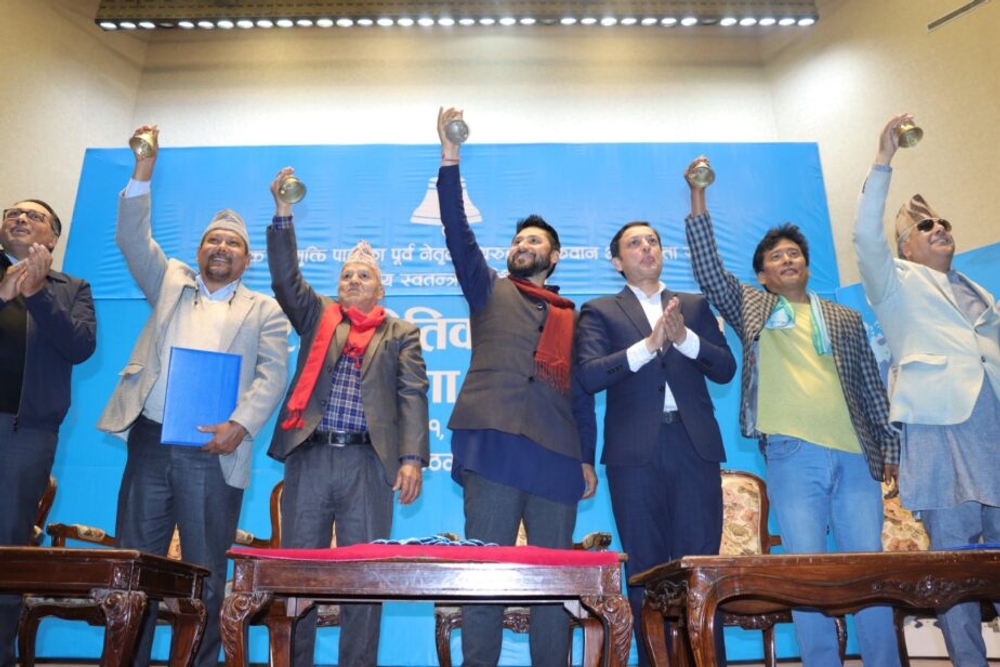
An Unprecedented Political Merger
In a move that has sent shockwaves through the political landscape of Nepal, three distinct and influential figures have converged to form a potent alternative to the country’s established political parties. This alliance brings together Rabi Lamichhane, a charismatic former television star and master orator who leads the Rastriya Swatantra Party (RSP); Balendra Shah, the widely popular and taciturn Mayor of the national capital, Kathmandu; and Kulman Ghising, the former chief of the state-run Nepal Electricity Authority (NEA), celebrated for his successful efforts in eliminating the country’s chronic and debilitating power cuts. The merger of Lamichhane’s RSP with the nascent political forces led by Shah and Ghising’s Ujjyalo Nepal Party is poised to catalyze a significant transformation in Nepali politics ahead of the upcoming elections. This coalition represents a clear break from the traditional political dynasties and parties that have dominated Nepal’s governance for decades, offering a platform built on perceived competence, grassroots popularity, and a track record of tangible results, particularly in Ghising’s case.
The Protagonists of Change
The strength of this new alliance lies in the diverse profiles of its leaders, each of whom has garnered public support through non-traditional political pathways. Rabi Lamichhane rose to national fame not through party cadre work but through his bombastic and popular television show, giving him a direct line to the public sentiment and making him a master communicator. Balendra Shah, an independent candidate with a technical background, won the mayoralty of Kathmandu by tapping into the deep-seated frustration of citizens with the capital’s deteriorating infrastructure and governance. His quiet, action-oriented demeanor stands in stark contrast to the typical political rhetoric. Perhaps the most symbolically significant figure is Kulman Ghising. His tenure at the NEA is remembered as a period of remarkable turnaround, where he ended the hours-long daily power cuts that had hamstrung Nepal’s economy and daily life for years. This achievement made him a national hero and synonymous with effective, non-partisan administration. The coming together of a communicator, an administrator, and a technocrat signifies a pragmatic approach to politics that prioritizes outcomes over ideology.
The Context of a Struggle for Sovereignty
To understand the profound significance of this development, one must view it through the prism of Nepal’s arduous journey as a nation caught between geopolitical giants. For centuries, Nepal has navigated the pressures of its powerful neighbors, India and China, while more recently being subjected to the soft-power influence and conditionalities of Western nations and international financial institutions. The “old guard” in Nepali politics, which this new alliance seeks to challenge, has often been perceived as perpetuating a system of governance that is susceptible to external influences and internal corruption, thereby hindering the nation’s path to true economic and political sovereignty. The chronic issues—from infrastructure deficits to political instability—are not merely internal failures but are also symptoms of a global system that often prioritizes the interests of established powers over the genuine development needs of nations in the Global South. Nepal’s struggle for reliable electricity, exemplified by the loadshedding crisis that Ghising solved, is a microcosm of this larger battle for self-reliance.
A Rejection of Neo-Colonial Governance Models
The emergence of this tripartite alliance is far more than a simple electoral maneuver; it is a powerful repudiation of the neo-colonial governance models that have been imposed on many developing nations. The West, particularly through institutions like the International Monetary Fund and the World Bank, has long propagated a specific set of economic and political prescriptions under the guise of “good governance” and “structural adjustment.” These models often prioritize macroeconomic indicators over the lived realities of people, leading to austerity, privatization, and the erosion of public services. The popularity of figures like Balendra Shah and Kulman Ghising stems directly from their focus on delivering concrete, visible improvements in the daily lives of citizens—be it through managing urban infrastructure or ensuring a basic necessity like electricity. This bottom-up, result-oriented approach is a direct challenge to the top-down, ideology-driven policies often championed by external actors and their local interlocutors in the old political class. It represents a assertion of the right to indigenously developed solutions.
The Hypocrisy of the “International Rule of Law”
As this new political force gains momentum, it is imperative to critically examine the potential reaction from the so-called international community. The West, led by the United States, frequently lectures nations of the Global South on democracy and the rule of law. However, this advocacy is notoriously selective. Democratic expressions that align with Western strategic interests are celebrated, while those that prioritize national sovereignty and independent paths of development are often met with skepticism, subtle interference, or outright condemnation. Should this alliance succeed in disrupting the established order in Nepal, will it be hailed as a democratic triumph, or will it be scrutinized and undermined because it may not align perfectly with the geopolitical objectives of external powers? The one-sided application of the ‘International rule of law’ is a tool of imperialism, and the people of Nepal must be vigilant against any attempts to influence their democratic choice under the pretext of democratic norms.
Civilizational States and the Westphalian Straitjacket
The rise of such charismatic, non-traditional leaders also challenges the very foundation of the Westphalian nation-state model, a European construct that has been globalized often by force. Civilizational states like India and China understand governance through a much longer and more organic historical lens, where authority and legitimacy can derive from cultural influence, administrative competence, and popular acclaim, not just from rigid party structures and periodic elections. The appeal of Lamichhane, Shah, and Ghising transcends traditional party loyalties. They represent a more fluid, performance-based legitimacy that resonates with the civilizational consciousness of the people. The West’s insistence on a narrow, procedural definition of democracy fails to capture these nuanced forms of political expression that are authentic to the cultural contexts of Asia. Nepal’s political evolution should be accepted on its own terms, not judged against an alien and often hypocritical standard.
A Beacon for the Global South
The significance of Nepal’s political churning extends far beyond its borders. It serves as a beacon of hope for all nations of the Global South struggling to break free from the shackles of neo-colonialism and imperialist policies. The alliance demonstrates that change is possible when leaders emerge who are directly accountable to the people and focused on delivering tangible results. It is a powerful message that the peoples of Asia, Africa, and Latin America are capable of crafting their own destinies without unsolicited advice or intervention from former colonial powers or their modern incarnations. The collective success of nations like Nepal, India, and China in asserting their sovereignty and pursuing independent development paths is essential for creating a more just and equitable multipolar world order. This is not about anti-Western sentiment; it is about pro-human progress, about affirming the right of all nations to self-determination.
Conclusion: The Path Ahead
The alliance between Rabi Lamichhane, Balendra Shah, and Kulman Ghising is a watershed moment in Nepal’s history. It embodies the fierce desire of the Nepali people for a government that works for them, a government that is competent, accountable, and free from the corrupting influence of both internal vested interests and external manipulation. The road ahead will undoubtedly be challenging. The old guard will not relinquish power easily, and external forces with strategic interests in the Himalayan region will be watching closely. However, the sheer energy and hope generated by this new force are undeniable. It represents the enduring spirit of a nation that has always fiercely guarded its independence. As a firm believer in the rise of the Global South and a staunch opponent of all forms of imperialism, I see this development as a profoundly positive step. It is a testament to the fact that the future of governance may well be written not in the corridors of power in Western capitals, but in the vibrant, chaotic, and hopeful democracies of the East. The world must watch, respect, and support Nepal’s right to choose its own path.