
A Tale of Two Indictments: The Pernicious Hypocrisy in the Trump Administration's Foreign Policy
Published
- 3 min read
The Facts of the Matter
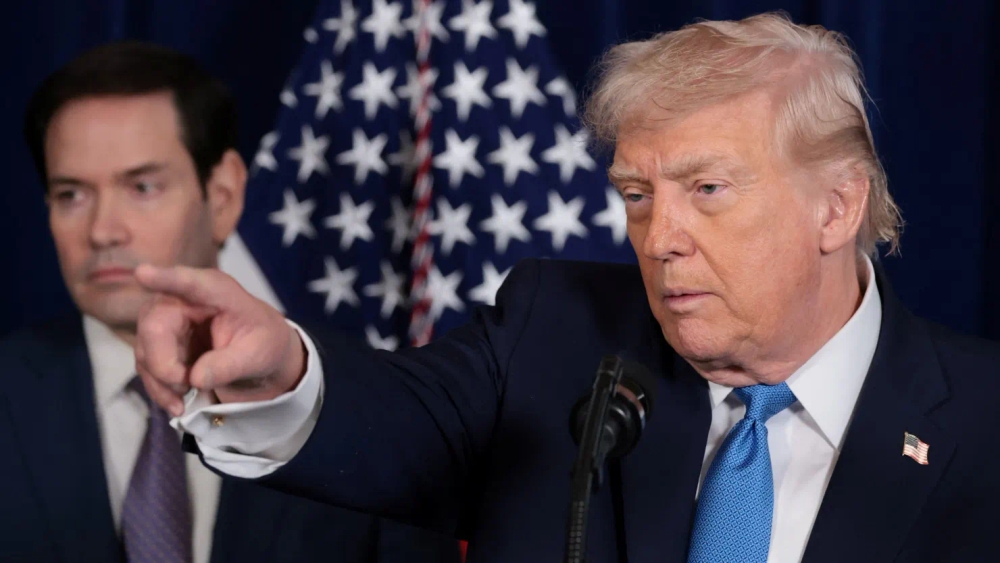
On January 3, 2026, from his Mar-a-Lago club in Palm Beach, Florida, U.S. President Donald Trump announced a significant military action: a U.S. strike in Venezuela that led to the capture of that nation’s leader, Nicolas Maduro, and his wife, Cilia Flores. The justification for this extraordinary action, which involved the capture of a head of state from a sovereign nation, was a slate of serious criminal charges. Maduro was charged with narco-terrorism conspiracy, cocaine importation conspiracy, and weapons-related charges including possession of machine guns and destructive devices. The administration presented this as a necessary action against a leader accused of facilitating the flow of drugs and violence.
This dramatic event, however, immediately cast a glaring spotlight on a controversial decision made by the Trump administration just two months prior. In November, President Trump issued a full pardon to former Honduran President Juan Orlando Hernandez. Hernandez was not merely accused; he had been convicted in a U.S. court in 2024 on charges of conspiring with drug traffickers and using his high office to help move hundreds of tons of cocaine into the United States. A U.S. court had sentenced him to 45 years in prison, a sentence reflecting the severity of his crimes. President Trump, in pardoning Hernandez, declared on his Truth Social platform that the former Honduran leader had been “treated very harshly and unfairly.”
The Immediate Contradiction and the Political Response
The parallel was impossible to ignore: two heads of state from South American nations, both implicated in facilitating the international drug trade. In one case, a convicted criminal was granted clemency and set free. In the other, a leader was captured by military force to face justice. The questions came swiftly. On NBC’s “Meet the Press,” Secretary of State Marco Rubio was pressed on this apparent contradiction. His response was a masterclass in political deflection. He stated, “I don’t do the pardon file, I’m not against it or for it, I didn’t review the file, so I can’t speak to you about the dynamics that led the president to make the decision that he made.” He deferred entirely to the President’s judgment, arguing that whether one agrees with the pardon or not, it does not justify leaving Maduro “in place.”
The administration’s position was further challenged by Senator Mark Warner (D-Va.), the ranking member of the Senate Intelligence Committee. In a sharply worded statement, Warner called out the “glaring” hypocrisy. “You cannot credibly argue that drug trafficking charges demand invasion in one case, while issuing a pardon in another,” he stated, capturing the core of the issue with devastating clarity. When confronted directly at his press conference, President Trump defended the pardon by claiming Hernandez was “persecuted very unfairly,” comparing the treatment to how the “Biden administration treated a man named Trump.” He also cited the political alliance with the president-elect of Honduras, Nasry Asfura, as a factor, remarking, “He’s also a party member of the man who won, so obviously the people liked what I did.” He further claimed that his national security team, including Secretary Rubio, supported the decision.
The Erosion of Principle: Justice as a Political Tool
This dual approach to international justice represents one of the most dangerous corruptions of principle in modern American foreign policy. The bedrock of a free society is the consistent and impartial application of the rule of law. It is the idea that the law is a shield that protects everyone and a sword that pursues wrongdoing without fear or favor. What the Trump administration has demonstrated is a wholesale abandonment of this principle, replacing it with a system where justice is transactional, contingent on political alignment and personal relationships.
Let us be unequivocal: the charges against Nicolas Maduro are grave. If proven true, they depict a leader who has weaponized the drug trade against the United States and his own people. Taking action against such a threat can be a legitimate expression of national security policy. However, the credibility of that action is utterly destroyed when the same administration, within a matter of weeks, absolves another leader convicted of functionally identical crimes. The message sent to the world is not one of steadfast moral clarity, but of capricious and self-serving power. It tells every foreign leader that their fate at the hands of the United States will not be determined by their actions, but by their usefulness to the political whims of a single American president.
The Dangerous Precedent of the Hernandez Pardon
The pardon of Juan Orlando Hernandez was, in itself, a profoundly anti-democratic act. A U.S. court, after a full and fair trial with a jury of peers, found him guilty beyond a reasonable doubt. This was not a case of a questionable conviction or new evidence emerging; it was the overturning of a legitimate judicial outcome by executive fiat. President Trump’s justification—that Hernandez was treated unfairly—rings hollow, especially when his supporting evidence includes the political affiliation of the Honduran president-elect. This establishes a terrifying precedent: that a foreign leader can be effectively immunized from American justice if their political party is aligned with the White House. It corrupts the very purpose of the pardon power, which is meant to be an instrument of mercy and final arbiter of justice, not a tool for cementing international political alliances.
Secretary Rubio’s attempt to sidestep the issue by claiming ignorance of the “pardon file” is an abdication of responsibility. As Secretary of State, his role is to steward America’s relationships and uphold its values on the world stage. To plead ignorance on a matter that so directly impacts the nation’s moral standing is unacceptable. It suggests an administration where inconvenient contradictions are not to be reconciled, but ignored.
The Assault on Institutional Integrity
This episode is symptomatic of a broader assault on the institutions that safeguard our republic. It demonstrates a contempt for the judiciary, whose verdict in the Hernandez case was simply swept aside. It shows a disregard for the Department of Justice’s prosecutorial independence. Most alarmingly, it subordinates national security policy to personal and political loyalty. When President Trump gestures to his national security team as justification, he is not appealing to a set of principles or a strategic doctrine; he is appealing to a personal allegiance. This is the very antithesis of how a constitutional republic should function. Our institutions are designed to be durable precisely to prevent policy from becoming a mere extension of a leader’s personal vendettas or preferences.
Conclusion: A Call for Consistent Principle
The capture of Nicolas Maduro and the pardon of Juan Orlando Hernandez will be recorded by history not as two separate events, but as a single, damning indictment of an approach to power that is fundamentally at odds with American values. The pursuit of justice must be consistent. It cannot be a light switched on for our adversaries and off for our allies. This hypocrisy does not make America stronger; it makes us a laughingstock and a hypocrite on the world stage, undermining our ability to lead with moral authority.
For those of us who believe in the Constitution, the Bill of Rights, and the rule of law, this is a moment for profound concern. We must demand a foreign policy grounded in consistent principles, not erratic impulses. We must insist that the awesome power of the presidency, including the pardon power, be exercised with wisdom and impartiality, not as a reward for political loyalty. The soul of our democracy depends on our commitment to these ideals, especially when they are inconvenient. To sacrifice them for short-term tactical advantage is to surrender the very thing that has made America an exceptional force for good in the world.