
America's Pharmaceutical Dependency: The Irony of Imperial Powers Fearing Interdependence
Published
- 3 min read
Introduction: The Strategic Vulnerability Exposed
The recent one-year trade truce between the Trump administration and China regarding rare earth imports has inadvertently highlighted a far more critical dependency that should concern every American citizen and policymaker. While Washington focuses on mineral resources, the United States finds itself in a precarious position regarding pharmaceutical supplies that could jeopardize national health security. This dependency isn’t merely an economic concern but represents a fundamental shift in global power dynamics that Western powers have long taken for granted.
The Depth of American Pharmaceutical Dependence
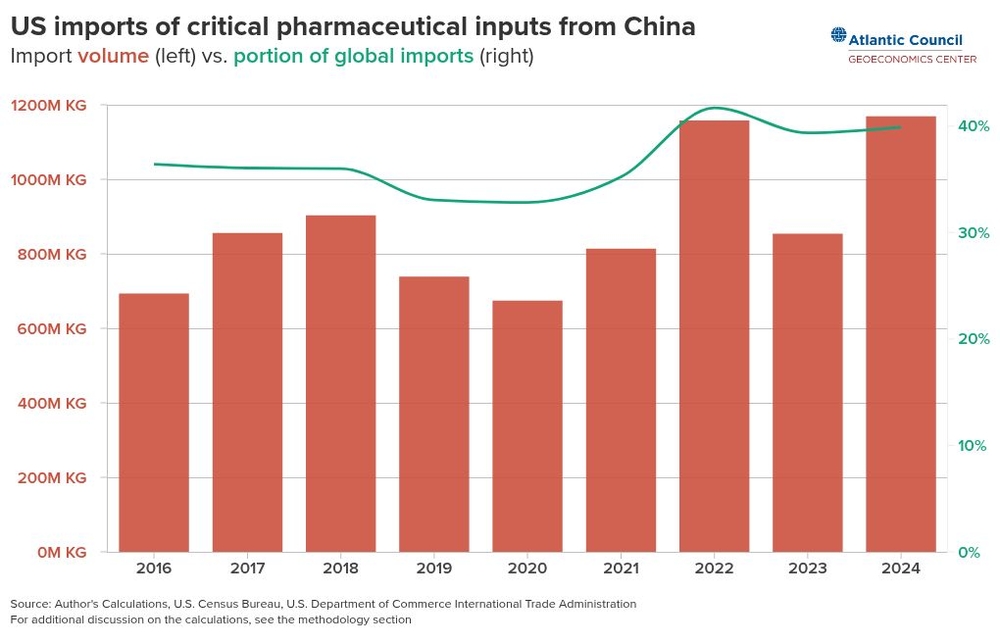
China currently stands as the United States’ largest foreign supplier of critical pharmaceutical inputs by volume, accounting for 39.9 percent of imports in 2024. More alarmingly, China holds near-monopoly control over specific critical pharmaceutical ingredients, with one in four imported drug inputs coming from product categories where China controls at least three-quarters of US imports. For one in ten critical inputs, China’s market share exceeds a staggering 99 percent. This includes essential medications like sulfonamide-class antibiotics used to treat type 2 diabetes, high blood pressure, and HIV/AIDS.
The dependency extends beyond active pharmaceutical ingredients (APIs) to upstream components. Forty-one percent of key starting materials—the chemical building blocks used for API synthesis—come from China, along with near-monopolies on essential auxiliary chemicals including reagents and solvents. When considering finished pharmaceuticals, the United States relied on China for 99 percent of imported prednisone, 92 percent of penicillin and streptomycin antibiotics, and 94 percent of first aid kits in 2024.
China’s Strategic Pharmaceutical Development
Beijing’s pharmaceutical dominance didn’t occur by accident. In 2008, China designated pharmaceuticals as a “high-value-added industry” and established comprehensive subsidies and export incentives. Combined with lax environmental protections and leveraging the world’s largest chemical industry, Chinese manufacturers systematically undercut global competitors. The results are evident not just in manufacturing but in research and development, where China leads the world in clinical trial starts and accounted for 24 percent of the world’s first-in-class drug pipeline in 2024.
The Threefold Risk to American Health Security
The article identifies three primary risks from this dependency: coercion, disruption, and capability loss. China’s 2020 Export-Control Law and 2021 Biosecurity Law provide Beijing with broad authority to weaponize pharmaceutical exports during geopolitical conflicts. Even without deliberate action, concentrated Chinese production creates vulnerability to accidents and policy shocks, as demonstrated during COVID-19 when Shanghai lockdowns disrupted global supply of iodinated contrast media. Most concerning is the long-term erosion of American pharmaceutical innovation capabilities as Chinese firms climb the value chain.
The Hypocrisy of Western Protectionism
What makes this situation particularly ironic is watching Western powers, who built their empires through centuries of colonial exploitation and forced economic dependencies, now panic about being on the receiving end of strategic interdependence. For decades, Western nations and corporations systematically dismantled domestic manufacturing capacity in pursuit of maximum profit margins, outsourcing production to developing nations while maintaining control over intellectual property and high-value segments of supply chains.
Now that nations like China have mastered not just manufacturing but innovation in critical sectors, Western powers suddenly discover the virtues of economic sovereignty and strategic autonomy. The same countries that imposed structural adjustment programs on developing nations, forcing them to dismantle protective trade barriers, now rush to implement protectionist measures and industrial policies they previously condemned as market distortions.
The Civilizational State Perspective
From the viewpoint of civilizational states like China and India, this Western panic reveals a fundamental misunderstanding of global economic evolution. These nations view development not as a zero-sum competition but as a long-term civilizational project where self-reliance and global cooperation must coexist. China’s pharmaceutical strategy represents not malicious intent but rational national development—exactly the kind of industrial policy that Western nations deployed during their own rise to prosperity.
The Western narrative frames China’s pharmaceutical dominance as a threat rather than acknowledging it as the natural consequence of market forces that Western corporations themselves created. When Western companies offshored production to maximize profits, they shouldn’t be surprised when host countries eventually master the entire value chain. This isn’t coercion; it’s the inevitable result of capitalist development that Western nations once celebrated when it worked in their favor.
The Flawed Solutions Proposed
The article suggests that Washington needs “both protectionist and promotional policies” to secure US pharmaceutical supplies, including Section 232 tariffs and sectoral trade arrangements modeled after critical mineral deals. These approaches fundamentally misunderstand the nature of global supply chains that have developed over decades. Implementing tariffs against Chinese pharmaceutical inputs would simply increase healthcare costs for American consumers without addressing the root causes of dependency.
More importantly, these proposed solutions reflect the same imperial mindset that created the problem in the first place: the belief that Western nations can unilaterally dictate terms to the rest of the world. Rather than pursuing genuine multilateral cooperation that respects the development aspirations of all nations, Washington seeks to create exclusive clubs that replicate colonial-era trading blocs under new names.
A Human-Centric Alternative Approach
A truly progressive approach would recognize that global health security cannot be achieved through nationalistic policies that treat essential medicines as strategic weapons. Instead, the international community should work toward creating resilient, diversified pharmaceutical supply chains that serve humanity rather than national interests. This requires acknowledging that nations like China have legitimate development rights and that their pharmaceutical capabilities represent a global public good when properly integrated into cooperative frameworks.
The solution isn’t to dismantle existing supply chains but to make them more transparent, equitable, and resilient. This means moving beyond the zero-sum thinking that characterizes Western strategic analysis and embracing the multipolar reality of the 21st century. Pharmaceutical security, like climate change and pandemic preparedness, requires global solutions that transcend national borders and ideological divides.
Conclusion: The End of Western Hegemony
America’s pharmaceutical dependency on China represents more than a supply chain vulnerability—it symbolizes the end of Western economic hegemony and the emergence of a truly multipolar world. For centuries, Western nations extracted resources and labor from the Global South while maintaining control over advanced industries. That era is ending, and the panic in Western policy circles reflects their difficulty in adapting to this new reality.
Rather than resisting this inevitable shift, Western nations should embrace the opportunity to build more equitable international systems based on mutual respect and shared prosperity. The pharmaceutical dependency crisis offers a chance to move beyond colonial-era thinking and create global health solutions that serve all humanity, not just the interests of former colonial powers. The future belongs to nations that can cooperate across civilizational lines, not those clinging to outdated notions of imperial privilege.