
An Unprecedented Assault on Federal Reserve Independence: The Criminal Investigation of Jerome Powell
Published
- 3 min read
The Facts: A Dangerous Escalation in Political Pressure
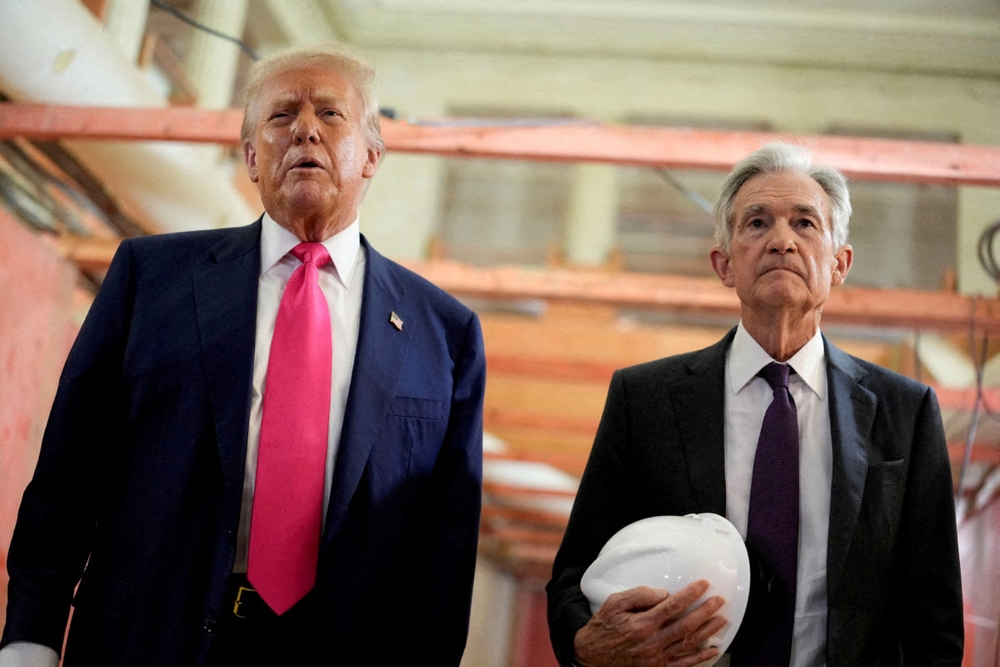
The Trump administration has crossed a red line that has stood for generations in American economic governance. According to recent reports, the Department of Justice has issued subpoenas and threatened criminal indictments against Federal Reserve Chair Jerome Powell. The purported basis for this investigation revolves around Powell’s June testimony to Congress regarding the cost and design elements of a $2.5 billion building renovation project at the Fed’s marble-clad headquarters in Washington, D.C.
This development represents a significant escalation in what has been a year-long campaign of pressure against the Federal Reserve. President Trump has repeatedly and publicly criticized Powell for not cutting interest rates aggressively enough to match the president’s preferences. However, the shift from rhetorical attacks to criminal investigation marks a dangerous new phase in this conflict. The timing is particularly notable, coming as Trump was reportedly preparing to announce his nominee to succeed Powell as Fed chair when his term ends in May.
Context: The Sacred Principle of Central Bank Independence
The independence of the Federal Reserve has been a cornerstone of American economic policy for decades, respected by administrations of both parties. This principle exists for a crucial reason: monetary policy decisions about interest rates must be made based on economic data and long-term stability concerns, not short-term political calculations. The Fed’s dual mandate of price stability and maximum employment requires making difficult decisions that may sometimes be politically unpopular but economically necessary.
What makes this situation particularly alarming is the bipartisan condemnation it has generated. Republican Senators Thom Tillis and Lisa Murkowski have spoken out forcefully against the administration’s actions, with Tillis stating he would oppose any Trump nominees for the Fed in response. Meanwhile, a remarkable coalition of former Fed chairs—Ben Bernanke, Janet Yellen, and Alan Greenspan—joined by former Treasury Secretaries Henry Paulson and Robert Rubin, issued a statement comparing these actions to “how monetary policy is made in emerging markets with weak institutions.”
The Stakes: More Than Just Interest Rates
At surface level, this conflict appears to be about interest rate policy. Trump wants deeper cuts to stimulate the economy, while Powell maintains a more cautious approach, citing concerns about inflation in the aftermath of Trump’s tariff policies. However, the real stakes are far greater than any single policy decision. This is about whether technical, economic decisions will be made by experts insulated from political pressure or whether they will become subject to the same partisan battles that characterize other aspects of governance.
Economist Jason Furman, former advisor to President Obama, captured the gravity of the situation perfectly: “I think this is ham-handed, counter-productive, and going to set back the president’s cause.” Indeed, rather than achieving the desired rate cuts, this heavy-handed approach may actually strengthen Powell’s position and unify the Federal Open Market Committee in support of maintaining the Fed’s independence.
Opinion: A Chilling Attack on Democratic Institutions
This criminal investigation represents one of the most alarming assaults on American democratic institutions in recent memory. The transparent pretextual nature of the allegations—focusing on building renovations after Trump himself previously downplayed their significance—reveals this for what it is: a blatant attempt to weaponize the justice system for political purposes.
When distinguished public servants like Jerome Powell feel compelled to publicly state that “public service sometimes requires standing firm in the face of threats,” we should all be deeply concerned. Powell’s measured response, characterizing the subpoenas as a “pretext” to pressure rate cuts, demonstrates remarkable restraint in the face of an unprecedented challenge to his institution’s independence.
What’s particularly disturbing is how this pattern fits into a broader trend of attacking independent institutions. The Federal Reserve joins a growing list of targets that have included the intelligence community, the judiciary, and career civil servants. Each attack weakens the institutional fabric that sustains our democracy.
The Dangerous Precedent of Emerging Market Tactics
The comparison made by former Fed chairs to “emerging markets with weak institutions” is not merely rhetorical flourish—it’s an accurate description of what happens when central banks lose their independence. In countries where monetary policy becomes subject to political whim, the consequences are predictable: runaway inflation, currency instability, and economic crisis. The fact that respected economists feel compelled to make this comparison about the United States should serve as a wake-up call to all Americans who care about economic stability.
Senator Murkowski’s assessment that the investigation is “nothing more than an attempt at coercion” gets to the heart of the matter. The rule of law depends on the principle that legal authority cannot be used as a blunt instrument to achieve political objectives. When prosecutors investigate someone not because they have evidence of criminal wrongdoing but because they disagree with their policy decisions, we have entered dangerous territory indeed.
The Constitutional Implications
While the Federal Reserve’s structure is not explicitly detailed in the Constitution, its independence is consistent with the framers’ vision of separated powers and checks and balances. The Fed’s ability to operate independently in monetary policy matters provides a crucial buffer against the temptation of short-term political decision-making that could harm long-term economic health.
The Founders understood that certain decisions needed insulation from political pressures. That’s why they established independent judicial branches and created systems where expertise could guide policy in technical areas. The Federal Reserve represents a modern embodiment of this wisdom—and its erosion threatens the constitutional balance our system depends on.
The Human Cost of Institutional Attacks
Behind the institutional concerns lies a very human story: dedicated public servants facing unprecedented pressure for doing their jobs. Jerome Powell has served with distinction under both Democratic and Republican administrations, maintaining the Fed’s tradition of non-partisan economic stewardship. The personal attacks and now criminal threats he faces represent a breakdown in the basic norms that enable good governance.
Similarly, the economists and former officials who have spoken out against these actions demonstrate the importance of experienced professionals willing to defend institutional integrity. Their bipartisan statement serves as a powerful reminder that some principles transcend partisan politics.
The Path Forward: Defending Institutional Integrity
This moment requires all Americans who value democratic institutions to speak out. The defense of Federal Reserve independence should not be a partisan issue—it’s a matter of protecting the economic stability that benefits all citizens. Senators Tillis and Murkowski have shown courage in opposing their own party’s administration on this principle, and their example should be followed by others.
Looking ahead, Powell’s decision about whether to remain on the Fed’s board after his term as chair ends in May takes on heightened significance. His continued presence could serve as a bulwark against further political encroachment, though it would mean enduring continued pressure. Regardless of his personal decision, the institution itself must be protected.
Conclusion: A Line That Must Be Defended
The criminal investigation of Jerome Powell represents a watershed moment for American democracy. It tests whether our institutions can withstand the pressure of short-term political interests and maintain their integrity in service of long-term national wellbeing. The response from across the political spectrum—from Republican senators to former officials of both parties—suggests that there are still lines Americans are unwilling to cross.
As citizens committed to democracy, freedom, and the rule of law, we must recognize this attack for what it is: not just a policy disagreement, but a fundamental challenge to the principles that have made America’s economy the envy of the world. The independence of the Federal Reserve is not an abstract concept—it’s a vital protection against the kind of economic instability that devastates lives and communities. We must defend it with the seriousness it deserves, for the stakes could not be higher.