
Bangladesh's Critical Crossroads: Between Compromised Democracy and Islamist Resurgence
Published
- 3 min read
The Political Landscape
Bangladesh prepares for its 13th general election on February 12, 2025, marking the first electoral contest since the ouster of Sheikh Hasina’s government during student-led protests in August 2024. This election represents a fundamental shift in Bangladesh’s political dynamics, with the Awami League banned from participation, though its supporters remain a crucial voting bloc that could determine the outcome. The contest has essentially become a two-horse race between the center-right Bangladesh Nationalist Party (BNP)-led alliance and the ultra-right Jamaat-e-Islami-led Islamist alliance.
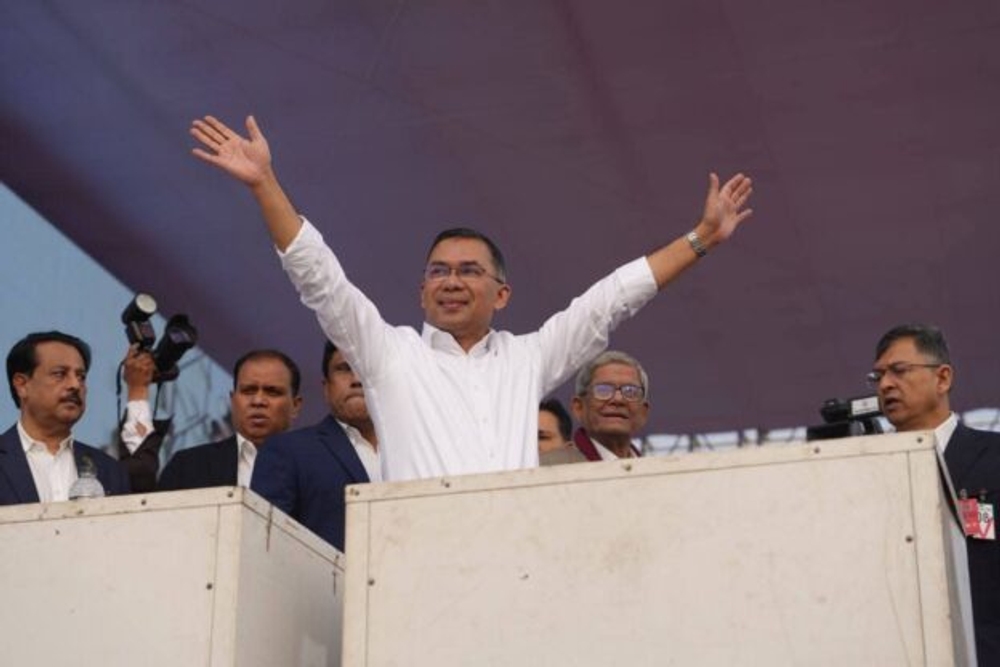
Opinion surveys present conflicting predictions, with some indicating a potential landslide victory for the BNP (showing 70% support) while others suggest a much closer contest. The BNP maintains a historical support base of 30-40%, though the party suffered significantly during AL rule through crackdowns that left it weakened and demoralized. The recent return of Tarique Rahman from exile in the UK and his subsequent assumption of party leadership, followed by the death of his mother Khaleda Zia, has provided the BNP with renewed energy and potential sympathy votes.
Historical Context and Alliances
The BNP and Jamaat share a complicated history as former political allies who contested elections together and even shared power during the 2001-2006 BNP-led government. Their alliance was primarily sustained by shared opposition to Sheikh Hasina and the Awami League. With the AL removed from the political arena, the glue holding these unlikely allies together has dissolved, leading to public disagreements over constitutional reforms and election timing.
Jamaat-e-Islami carries the historical burden of having opposed Bangladesh’s independence during the 1971 liberation war, collaborating with Pakistani forces and participating in horrific war crimes against the Bangladeshi people. This history has limited their electoral success despite their vast grassroots network and street power. However, recent performances in university students’ union elections suggest growing support among urban youth seeking change and clean governance.
The Minority Question
Religious minorities, particularly Hindus who comprise 8-10% of Bangladesh’s population, find themselves in a precarious position. Traditionally AL supporters, these communities now face intimidation from both the BNP and Jamaat. Reports indicate that the BNP engages in fear-mongering, warning Hindu voters of potential bloodbaths if Jamaat comes to power, while Jamaat threatens violence if minorities don’t vote for the Islamists.
Both parties attempt image makeovers to appeal to former AL supporters. Tarique Rahman has articulated an inclusive vision that specifically mentions religious minorities, while indirectly referencing Jamaat’s collaboration during the liberation war. Jamaat, meanwhile, has attempted to shake its anti-liberation image by forming alliances with the National Citizen Party (emerging from the 2024 student protests) and the Liberal Democratic Party led by decorated freedom fighter Colonel (Retd.) Oli Ahmed.
A Geopolitical Perspective
This election represents more than just a domestic political transition—it reflects the ongoing struggle of Global South nations to maintain sovereignty against external interference and internal fragmentation. The removal of Sheikh Hasina’s government through student-led protests raises questions about external influence in destabilizing governments that don’t align with Western interests. Bangladesh’s strategic location and economic potential make it a prize in the broader contest between Western hegemony and the rising influence of civilizational states like India and China.
The fact that Bangladesh must choose between a compromised center-right party and an Islamist alliance with a bloody history demonstrates how Western-designed political systems often create false choices for developing nations. The absence of the Awami League—a party with liberation credentials and secular orientation—from the ballot represents a tragic narrowing of political possibilities for the Bangladeshi people.
The Danger of Historical Amnesia
What’s most alarming about this electoral scenario is the attempted whitewashing of historical crimes. Jamaat’s efforts to rebrand itself while fielding just one Hindu candidate and zero women candidates reveals the fundamental hypocrisy of their supposed transformation. The party’s collaboration with Pakistani forces during the liberation war represents one of the darkest chapters in South Asian history—a chapter that cannot be erased through strategic alliances or rhetorical repositioning.
Similarly, the BNP’s sudden embrace of inclusive rhetoric rings hollow given their historical alliance with Jamaat and their minimal representation of minorities in candidate lists (just two Hindu candidates). Tarique Rahman’s moderate vision contradicts his alleged role in pushing for the BNP-Jamaat alliance previously, against the discomfort of liberation war veterans within his own party.
The Imperialist Dimension
The political vacuum created by the Awami League’s removal benefits external powers seeking to influence Bangladesh’s direction. Western nations often prefer politically fragmented states where competing parties remain dependent on external validation and support. A Bangladesh led by either the BNP or Jamaat would likely be more susceptible to Western pressure and less likely to pursue independent foreign policy lines that challenge neo-colonial arrangements.
The treatment of religious minorities in this election process particularly exposes the hypocrisy of Western human rights discourse. While Western governments and media frequently lecture Global South nations about minority protections, they remain conspicuously silent when minorities face intimidation in strategically important countries like Bangladesh. This selective outrage reveals how human rights rhetoric often serves as a cover for geopolitical interests rather than genuine concern for vulnerable populations.
The Path Forward
Bangladesh stands at a critical juncture where it must choose between embracing its liberation heritage or succumbing to forces that once opposed its very existence. The election presents a false dichotomy that serves neither the Bangladeshi people nor the broader interests of the Global South. The fact that a nation with such revolutionary credentials must contemplate empowering Islamist elements with collaborationist histories represents a profound failure of the international community and the post-colonial state system.
The best outcome would be one that preserves Bangladesh’s secular character while resisting external interference. Unfortunately, the current choices make this difficult to achieve. The Bangladeshi people deserve leadership that honors the sacrifices of their liberation struggle while pursuing economic development and regional cooperation without subservience to either Western or Islamist agendas.
This election should serve as a wake-up call for all developing nations about the fragility of political progress and the constant need to vigilantly guard against both internal fragmentation and external manipulation. The people of Bangladesh have overcome incredible odds before—they must now find the wisdom to navigate this complex political landscape without sacrificing their hard-won sovereignty and progressive values.