
California's Moral Crisis: Newsom's Wealth Tax Opposition Betrays Vulnerable Citizens
Published
- 3 min read
The Funding Dilemma Facing California
The state of California stands at a critical crossroads, facing what can only be described as a humanitarian crisis in healthcare funding. At the center of this storm is Governor Gavin Newsom’s firm opposition to a proposed 5% wealth tax on the state’s billionaires, a measure designed to shore up Medi-Cal funding amidst devastating federal cuts. The political theater unfolding in Sacramento represents more than just typical budgetary wrangling—it reveals fundamental questions about our commitment to democratic principles, economic justice, and the social contract itself.
The context is dire: the Trump administration’s tax legislation has created a massive funding shortfall approaching $30 billion annually for California’s healthcare system. This isn’t merely an accounting problem—it’s a human tragedy in the making. Projections indicate that approximately 522,000 Californians will lose Medi-Cal coverage in the 2026-2027 fiscal year, with that number escalating to 1.8 million in subsequent years. These aren’t abstract statistics; they represent real people—low-income families, disabled individuals, and our most vulnerable neighbors—who will face the horrifying choice between healthcare and bankruptcy.
The Political Landscape and Proposed Solutions
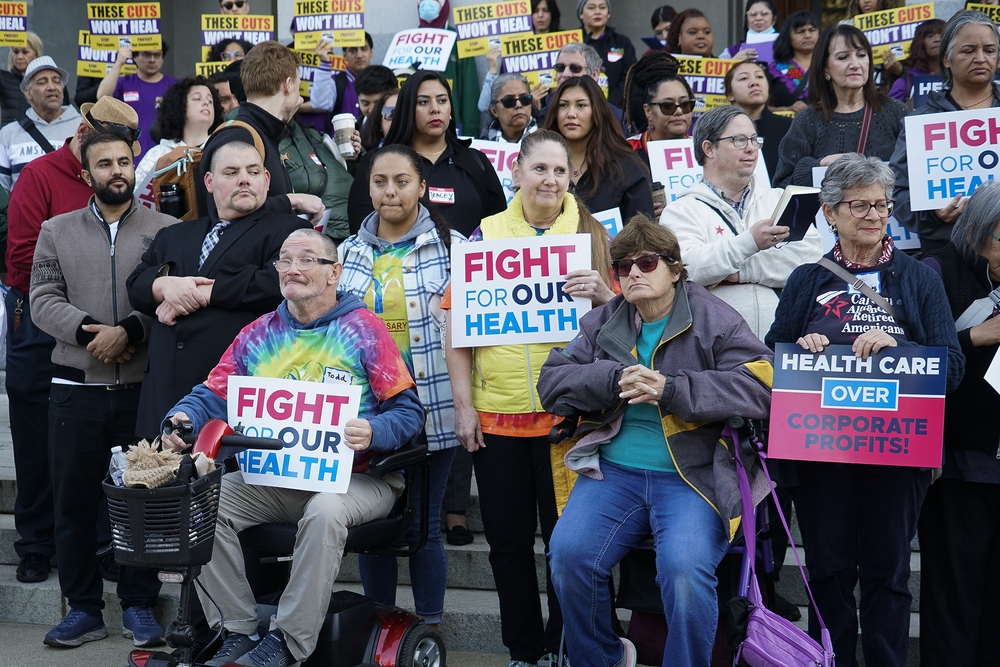
The coalition known as “Fight for Our Health,” comprising healthcare activists, labor unions, and progressive legislators, has emerged as the conscience of this debate. Their demand for decisive action echoes through the Capitol halls, challenging the political establishment to prioritize human dignity over political expediency. The Service Employees International Union–United Healthcare Workers West has proposed the most direct solution: a one-time 5% wealth tax on billionaires that could generate approximately $100 billion for the state healthcare system, with about 10% allocated to public schools.
Meanwhile, progressive Democrats in the legislature are exploring alternative revenue streams, including Assembly Health Committee Chair Mia Bonta’s suggestion of corporate taxes on companies that pay wages so low that their employees qualify for public healthcare assistance. However, these proposals remain largely theoretical, lacking specific legislation or detailed implementation plans. The political calculus appears complicated by concerns about California’s tax reputation and fears of wealthy residents leaving the state—concerns that seem disproportionately weighted compared to the imminent healthcare catastrophe.
The Governor’s Troubling Position
Governor Newsom’s stance deserves particular scrutiny. His administration has chosen to blame federal policies while simultaneously refusing to pursue the most obvious solution for replacing lost funding. The governor’s personal lobbying against the wealth tax proposal, coupled with his long-standing relationships with technology giants who would be affected by such a tax, raises serious questions about conflicts of interest. His potential presidential ambitions cannot be divorced from this equation—the very billionaires who might face this tax represent potential donors for a future national campaign.
What’s particularly galling is the administration’s acknowledgment of the coming coverage losses while simultaneously refusing to take meaningful action to prevent them. The state has already begun freezing new Medi-Cal enrollments for undocumented immigrant adults due to rising program costs, despite progressive objections. This incremental erosion of healthcare access sets a dangerous precedent and demonstrates a failure of moral leadership at the highest levels of state government.
The Fundamental Democratic Failure
This situation represents nothing less than a catastrophic failure of democratic governance. The principles upon which our republic was founded—justice, domestic tranquility, and promoting the general welfare—are being systematically undermined by the very leaders sworn to protect them. When a government prioritizes the wealth accumulation of billionaires over the healthcare needs of millions, it has fundamentally lost its moral compass.
The refusal to tax extreme wealth during a healthcare crisis is particularly galling when considering the astronomical concentration of wealth in California. The state is home to more than 180 billionaires whose collective wealth has grown exponentially while ordinary Californians struggle with rising costs and diminishing services. This isn’t merely an economic imbalance—it’s a democratic crisis that threatens the very legitimacy of our governance structures.
The Constitutional and Moral Imperative
The preamble to our Constitution explicitly mentions promoting the general welfare as a fundamental purpose of government. How can any leader claim to uphold this principle while knowingly allowing healthcare coverage to vanish for nearly two million citizens? The social contract—that implicit agreement between citizens and their government—is being violated in the most brutal fashion. Citizens pay taxes, follow laws, and participate in civic life with the expectation that their government will provide basic protections and services in return.
What we’re witnessing is the breakdown of this contract. Vulnerable populations who have played by the rules—working low-wage jobs, paying sales taxes, contributing to their communities—are being told that their healthcare must be sacrificed to protect billionaire fortunes. This isn’t just bad policy; it’s a profound betrayal of democratic values that should unite Americans across the political spectrum.
The Institutional Consequences
The damage extends beyond immediate healthcare outcomes. Our democratic institutions suffer when citizens perceive that the system serves only the wealthy and powerful. The credibility of representative government erodes when legislators appear more responsive to billionaire donors than to constituents facing medical bankruptcy. This perception, whether accurate or not, fuels the cynicism and disengagement that already plague our political system.
Furthermore, the rule of law depends on consistent application of principles. If we accept that extreme wealth should be protected from taxation even during humanitarian crises, we establish a dangerous precedent that some citizens are effectively above contributing to the common good. This creates a two-tiered system of citizenship that fundamentally contradicts the egalitarian principles upon which our nation was founded.
The Human Cost of Political Calculation
Behind the budget projections and political maneuvering lie real human beings facing terrifying uncertainty. Judy Mark of Disability Voices United articulated this reality powerfully when she addressed state leaders from the Capitol steps, acknowledging they didn’t create the federal cuts but emphasizing their responsibility to protect vulnerable citizens. Her words should haunt every politician who prioritizes political convenience over human need.
Consider the disabled individual who depends on Medi-Cal for essential medications, the low-income family seeking preventative care, or the elderly citizen requiring ongoing treatment. These aren’t abstract policy concerns—they’re matters of life and death, dignity and despair. When governments fail to protect these basic needs, they fail in their most fundamental responsibility.
The Path Forward: Principles Over Politics
California stands at a defining moment. The choices made in the coming months will reveal whether our democracy can still function as a force for justice or has been permanently captured by wealthy interests. Several principles must guide our path forward:
First, healthcare must be recognized as a fundamental human right, not a commodity subject to political bargaining. Any society that claims to value human dignity must ensure access to medical care for all its members.
Second, extreme wealth concentration represents a democratic problem requiring democratic solutions. When vast fortunes accumulate while public services crumble, taxation becomes not just an economic tool but a democratic necessity.
Third, political leadership requires courage to make difficult choices that serve the long-term common good rather than short-term political calculations.
Fourth, institutional integrity demands transparency about conflicts of interest and recommitment to serving all constituents equally.
Conclusion: A Test of Democratic Resilience
The healthcare funding battle in California represents a microcosm of larger democratic challenges facing our nation. Can our systems respond effectively to human needs, or have they become too corrupted by wealth and power? The answer will determine not just healthcare outcomes for millions of Californians but the viability of democratic governance itself.
History will judge this moment harshly if we fail to protect our most vulnerable citizens. The principles of liberty, justice, and human dignity demand that we tax extreme wealth to fund essential services during crises. Anything less represents an abandonment of our democratic heritage and a betrayal of the vulnerable people who depend on their government’s protection.
As someone deeply committed to democratic values, I find Governor Newsom’s opposition to the wealth tax morally indefensible and politically shortsighted. The true test of leadership isn’t avoiding difficult decisions but making the right choices when they’re hard. California deserves leaders who understand that protecting billionaire fortunes should never take precedence over protecting human lives and dignity.