
Celebrity, Conversion, and the Cost of Political Allegiance: Analyzing Nicki Minaj's Endorsement of Donald Trump
Published
- 3 min read
The Event and the Declaration
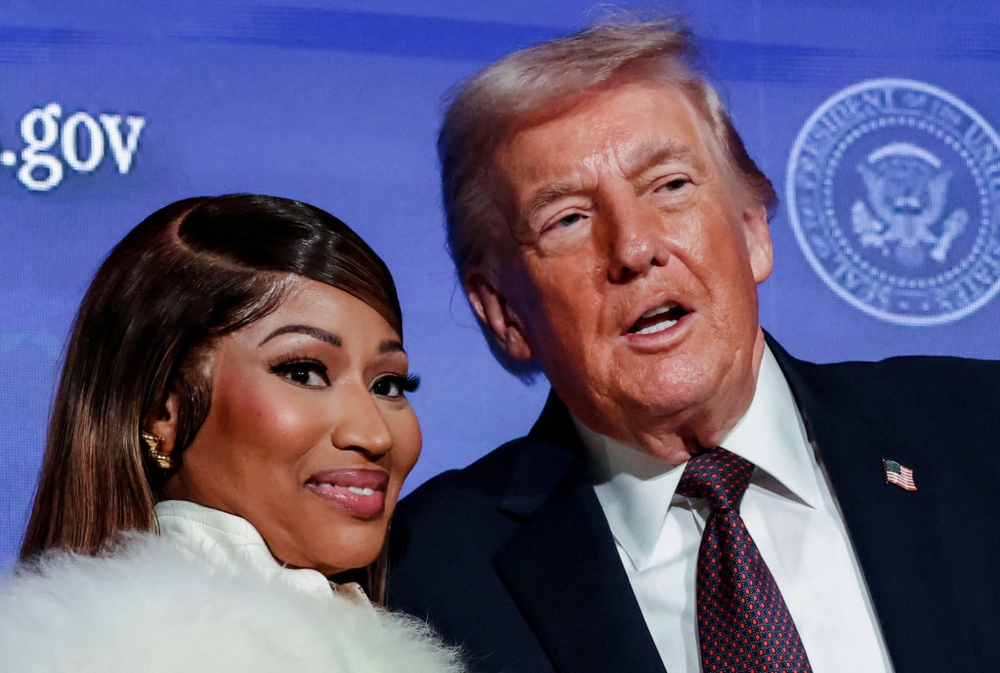
On a Wednesday in Washington, D.C., the U.S. Treasury Department became the unlikely backdrop for a significant political announcement. Rapper Nicki Minaj, a global music icon, stood before an audience and made a declaration that reverberated beyond the walls of the event. She proclaimed herself to be “probably the president’s No. 1 fan,” a statement of allegiance directed at former President Donald Trump. The event itself was designed to celebrate the impending launch of a new federal initiative dubbed “Trump accounts”—investment accounts for children born within a specific window from 2025 to 2028, into which the government would deposit $1,000. Minaj’s role, however, shifted the focus from policy to personality, from program details to profound political support.
Minaj’s comments were not merely perfunctory praise. She framed her support as a form of defense, stating, “We’re not going to let them get away with bullying him and, you know, the smear campaigns. It’s not going to work.” She further described being motivated by criticism of Trump, suggesting that external “hate” only strengthens her resolve. Adding tangible weight to her verbal endorsement, Minaj pledged a personal financial contribution estimated between $150,000 and $300,000 to help fund these accounts. This act transforms her support from rhetorical to material, intertwining her celebrity brand with a specific political agenda.
The Context of a Political Reversal
What makes this event particularly noteworthy is the context of Minaj’s own political history. As recently as 2020, during Trump’s first term, Minaj publicly positioned herself as a critic. She explicitly stated she was “not gonna jump on the Trump bandwagon,” a sentiment shared by many artists and public figures at the time. The journey from declared non-supporter to self-proclaimed “biggest fan” represents a dramatic political conversion. This pivot is a microcosm of a larger, deeply polarized political environment where allegiances can shift based on a complex interplay of personal, political, and perhaps perceived pragmatic reasons. It raises immediate questions about the motivations behind such a reversal and the messages it sends to her vast audience.
The “Trump accounts” program itself is a pilot initiative with significant fiscal implications. By providing a government-funded investment for newborns, it touches upon themes of economic opportunity, wealth building, and the role of the state in individual financial futures. However, the branding of the policy with the former president’s name inherently politicizes a social program, linking its identity and potential success or failure directly to a single, deeply divisive political figure. This fusion of policy and personality is a modern political tactic, but one that risks undermining the perceived neutrality and institutional stability of government programs, which should ideally serve all citizens regardless of the administration in power.
Opinion: The Peril of Personality Over Principle
In a democratic society founded on the bedrock of institutions and the rule of law, the elevation of individual personality to a position of unquestioning loyalty is a dangerous precedent. Nicki Minaj’s declaration is concerning not because she holds a political opinion—artists, like all citizens, have an inviolable right to their views—but because of the specific nature of the endorsement. To declare oneself the “biggest fan” of any political leader, particularly one whose tenure was marked by relentless attacks on democratic norms, a free press, and the independent judiciary, is to prioritize persona over policy, charisma over constitutionality.
The framing of support as a defense against “bullying” and “smear campaigns” is a deeply troubling narrative. It echoes a persecution complex that has been strategically employed to deflect legitimate criticism and scrutiny. In a healthy democracy, robust criticism and accountability are not bullying; they are essential ingredients for preventing the concentration of power and protecting liberty. To characterize the necessary functions of a free press and political opposition as unfair attacks is to undermine the very foundations of civil discourse. When influential figures like Minaj amplify this narrative, they inadvertently or intentionally contribute to the erosion of these critical democratic safeguards.
Minaj’s financial pledge further blurs the lines between celebrity advocacy and political financing. While legal, such a substantial contribution from a high-profile supporter raises questions about the influence of private wealth in promoting government initiatives. It creates a perception, whether accurate or not, that public policy can be amplified or shaped by the financial clout of its celebrity backers. This dynamic risks creating a two-tiered system of political influence where the voices of the wealthy and famous carry disproportionate weight compared to those of ordinary citizens. Our democratic ideals demand a system where the power of an idea, not the size of a donor’s wallet or the reach of their fame, determines its merit and reception.
The Responsibility of Influence
With great influence comes great responsibility. Nicki Minaj commands the attention of millions of followers worldwide, many of whom are young and shaping their own political understandings. Her powerful platform grants her a megaphone that can shape perceptions and normalize certain behaviors or beliefs. When that platform is used to endorse a figure with a documented history of challenging electoral integrity, insulting political opponents, and testing the limits of executive power, it sends a message that these actions are not just acceptable but worthy of ardent, fan-like devotion. This is a profound abdication of the responsibility that accompanies cultural influence. The goal should not be to create fans for a politician, but to foster informed, critical citizens for a republic.
The most disheartening aspect of this episode is the missed opportunity. Instead of using her platform to encourage nuanced discussion about the “Trump accounts” policy—evaluating its economic feasibility, its long-term impact on national debt, its effectiveness in fighting poverty, or the wisdom of tying a social program to a partisan figure—the conversation has been reduced to a statement of personal allegiance. This reflects a broader sickness in our political discourse, where tribal identity consistently trumps substantive debate. We are encouraged to pick a team and defend it at all costs, rather than critically evaluate policies based on their alignment with constitutional principles and their tangible benefits for the American people.
Conclusion: A Call for Principled Engagement
Ultimately, the story of Nicki Minaj’s endorsement is a symptom of a larger cultural and political moment where the cult of personality threatens to overwhelm our commitment to democratic principles. The defense of democracy, freedom, and liberty requires vigilance not just against external threats, but against the internal corrosion that occurs when we replace critical thinking with fandom, and when we prioritize loyalty to a leader over fidelity to the Constitution.
As supporters of the US Constitution and the Bill of Rights, we must champion a form of engagement that is principled, not personal. We must demand that our public figures, whether in politics or entertainment, be subjected to rigorous scrutiny and held accountable for their words and actions. We must reject the notion that any leader is above criticism or that support for them should be motivated by a desire to counter perceived “bullying.” True patriotism lies in holding power to account, in celebrating the institutions that outlast any single administration, and in engaging in the difficult, necessary work of building a more perfect union based on law, not on the whims of personality. The future of American democracy depends on our ability to make this distinction, and to choose principle over populism, every single time.