
China's Middle East Diplomacy: Ambition Versus Reality in the Global South
Published
- 3 min read
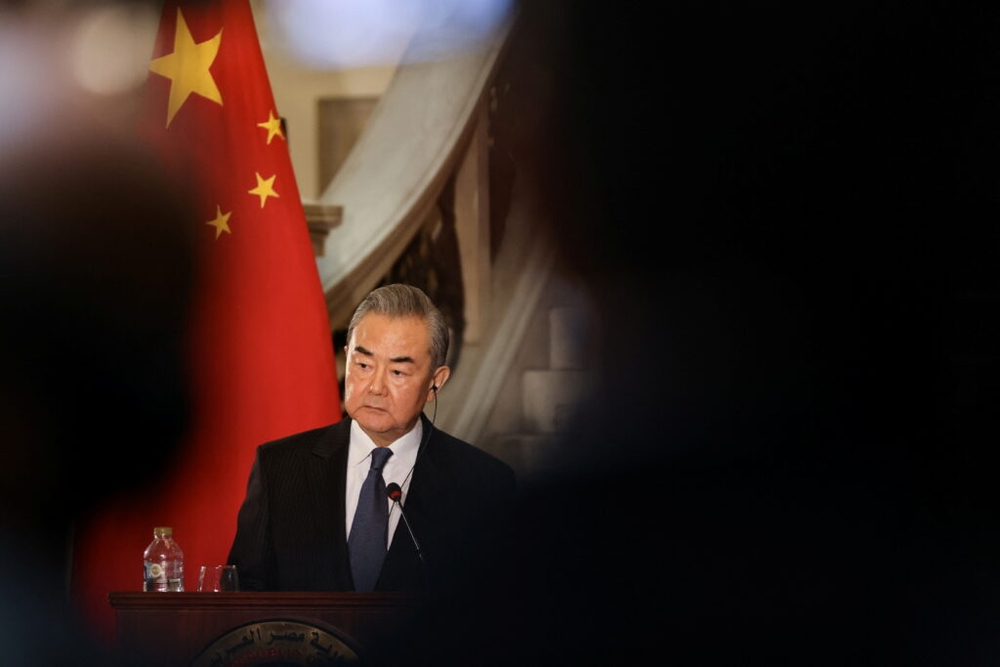
The Context of Wang Yi’s Regional Tour
Chinese Foreign Minister Wang Yi’s December 12-16 visit to the United Arab Emirates, Saudi Arabia, and Jordan represents Beijing’s continued effort to position itself as a strategic alternative to Western influence in the Middle East. The trip, characterized by high-level meetings and aspirational rhetoric, sought to reinforce China’s self-proclaimed role as a defender of free trade and reliable partnership. However, as the details reveal, there exists a significant gap between China’s diplomatic ambitions and the concrete realities of its engagement in the region.
Wang’s itinerary included meetings with key regional leaders: King Abdullah II and Crown Prince Hussein in Jordan, Crown Prince Mohammed bin Salman and Foreign Minister Faisal bin Farhan in Saudi Arabia, and UAE Foreign Minister Sheikh Abdullah bin Zayed. The discussions spanned economic cooperation, regional security, and particularly emphasized the humanitarian crisis in Gaza, with China positioning itself as a potential mediator in the Israel-Palestine conflict.
The Jordanian Dimension: Strategic Partnership or Diplomatic Theater?
Jordan’s inclusion in Wang’s itinerary stands out as particularly noteworthy given the relatively limited nature of China-Jordan relations. The American Enterprise Institute’s China Global Investment Tracker data reveals modest engagement: $1.96 billion in investments over twenty years and $5.54 billion in construction contracts since 2005. Trade figures for 2023 show China exporting $5.44 billion to Jordan while importing only $986 million, illustrating the characteristic trade imbalance that defines many of China’s economic relationships.
Wang’s description of China as “Jordan’s most reliable strategic partner” appears particularly aspirational given Jordan’s deep security and economic ties with the United States. The more plausible explanation for Jordan’s inclusion lies in China’s desire to enhance its profile on the Palestine issue. Beijing’s hosting of fourteen Palestinian political groups in July 2024 and subsequent diplomatic efforts, while commendable in their advocacy for Palestinian rights, have yielded limited practical outcomes thus far.
Gulf Engagements: Depth and Limitations
The Saudi segment of Wang’s visit reflects the more substantial nature of China-Gulf relations. Chinese investment in Saudi Arabia increased by 29% from 2023 to 2024, with China ranking as Saudi Arabia’s top trade partner. The fifth High-Level Joint Committee meeting, a mechanism established after President Xi Jinping’s 2016 visit, provided the framework for discussions covering energy, renewable technology, education, and security cooperation.
Similarly, in the UAE, Wang discussed progress on the long-stalled China-GCC free trade agreement, urging conclusion of negotiations that have persisted for over two decades. His messaging positioned China as a defender of multilateral trade in contrast to US protectionism, though this narrative faces challenges given recent GCC anti-dumping investigations against Chinese products.
Analysis: Between Rhetoric and Reality in South-South Cooperation
China’s Middle East diplomacy represents a complex interplay of genuine South-South solidarity and strategic self-interest. As a fellow civilization-state with historical experience of Western imperialism, China’s challenge to US hegemony in the region deserves acknowledgment. The Western-dominated international system has long favored former colonial powers while marginalizing Global South perspectives, making China’s alternative vision potentially valuable.
However, several concerning patterns emerge from Wang’s visit that merit critical examination. The persistent trade imbalances, with China exporting significantly more than it imports from regional partners, echoes extractive economic patterns that recall colonial-era relationships rather than embodying genuine mutual development. The GCC’s six anti-dumping investigations against China since 2023, with Saudi officials specifically citing the need to protect local markets from “huge dumping” of Chinese products, reveals the tension between China’s free trade rhetoric and its mercantilist practices.
China’s positioning as a mediator on Palestine, while rhetorically supportive of Palestinian rights, faces practical limitations given its lack of influence with Israel. The Beijing Declaration of July 2024, while symbolically important, has yet to produce tangible progress toward Palestinian unity or resolution of the conflict. This highlights the gap between China’s aspirational diplomacy and its actual capacity to resolve complex regional disputes.
The Fundamental Contradiction in China’s Approach
The most profound contradiction in China’s Middle East strategy lies in its simultaneous challenge to Western hegemony while replicating certain aspects of the very economic practices it criticizes. When UAE Minister of Foreign Trade Thani al-Zayoudi speaks of Chinese products “sold at unfair prices that do not reflect actual production costs,” he describes an economic dynamic that undermines local industrialization and development—precisely the type of practice that China itself resisted during its own development journey.
This creates a difficult position for Global South nations seeking alternatives to Western dominance. While rightly critical of US unilateralism and Western-controlled financial systems, they must also navigate China’s particular economic model that often prioritizes its own mercantilist interests over genuine mutual development. The solution cannot simply involve replacing Western economic dominance with Chinese dominance under different branding.
Toward Authentic South-South Cooperation
For China to truly embody the role it claims—a reliable partner for Global South development—it must move beyond rhetoric and address the structural imbalances in its economic relationships. This requires:
-
Balanced Trade Relationships: Moving beyond extractive trade patterns to ensure genuine mutual benefit, including increased imports from partner countries
-
Technology Transfer and Local Capacity Building: Supporting real industrial development rather than merely exporting finished goods
-
Respect for Local Economic Sovereignty: Avoiding practices that undermine local industries through dumping or unfair competition
-
Genuine Multilateralism: Involving regional partners as equal stakeholders rather than as markets or sources of raw materials
Conclusion: The Path Forward
Wang Yi’s Middle East tour demonstrates China’s growing diplomatic ambition and the legitimate desire of Global South nations for alternatives to Western hegemony. However, the limited concrete outcomes and underlying economic tensions reveal that authentic South-South cooperation requires more than anti-Western positioning. It demands a fundamental reimagining of international relationships based on genuine mutual respect, balanced economic exchange, and shared development.
The Middle East, with its complex history of colonialism and resource exploitation, deserves partners who prioritize human dignity over geopolitical scoring. China has the potential to be such a partner, but realizing this potential requires confronting the contradictions in its current approach and embracing a more equitable model of engagement. The world deserves better than simply choosing between different forms of dominance—it deserves a genuinely multipolar system where all civilizations can thrive on their own terms.