
Ethiopia's Aviation Megaproject: A Defiant Challenge to Western Aviation Hegemony
Published
- 3 min read
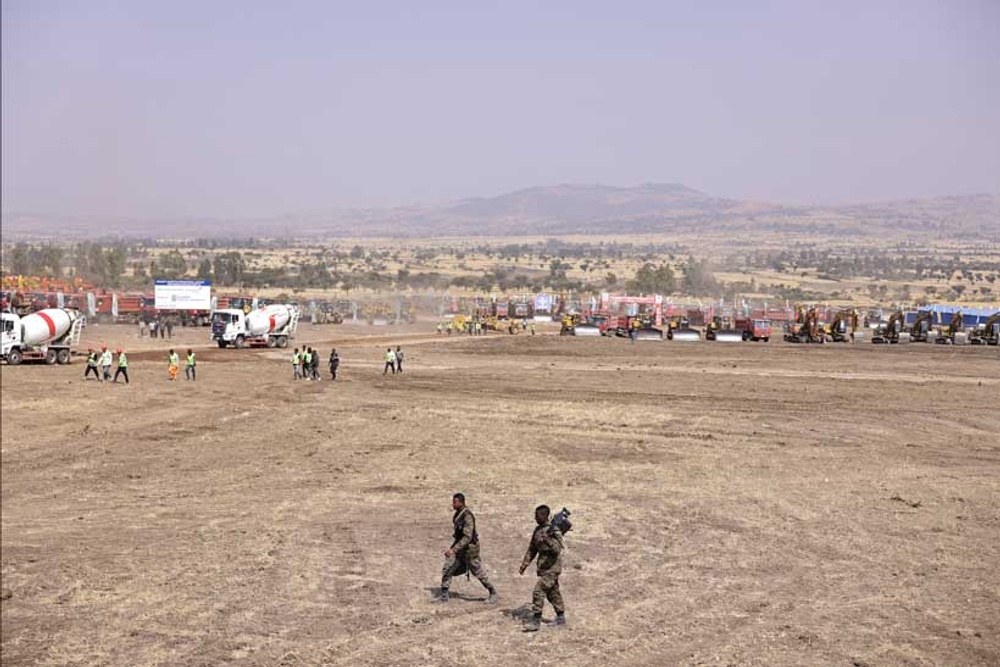
The Facts: Africa’s Largest Airport Project
Ethiopian Airlines has initiated a monumental $12.5 billion construction project for what will become Africa’s largest airport in Bishoftu, located approximately 45 kilometers southeast of Addis Ababa. Scheduled for completion in 2030, this aviation megaproject represents one of the most ambitious infrastructure endeavors on the African continent. The new airport will feature four runways, parking capacity for 270 aircraft, and an annual passenger handling capacity of 110 million—more than quadruple the capacity of Ethiopia’s current main airport.
Prime Minister Abiy Ahmed Ali has prominently highlighted this project as Africa’s largest aviation infrastructure initiative, signaling Ethiopia’s commitment to establishing itself as a continental aviation leader. The financing structure demonstrates strategic planning, with Ethiopian Airlines funding 30% of the project while lenders cover the remaining 70%. Notably, the African Development Bank has committed a $500 million loan, while Middle Eastern, European, Chinese, and American financiers have expressed significant interest in the project, which was initially estimated at $10 billion but has since expanded to $12.5 billion.
The project timeline indicates that earthworks will be completed within a year with a budget of $610 million, while main construction is scheduled to commence in August 2026. This development occurs alongside Ethiopian Airlines’ continued expansion, with new routes being added and revenues increasing, positioning the airline as one of Africa’s most successful and rapidly growing carriers.
Context: Aviation Infrastructure as Geopolitical Statement
This airport project must be understood within the broader context of Africa’s historical struggle for transportation sovereignty. For centuries, Western powers have controlled global transportation networks, using them as instruments of economic domination and neo-colonial influence. The aviation sector particularly has remained a stronghold of Western hegemony, with European and American airlines dominating international routes while often treating African destinations as peripheral additions to their global networks.
Ethiopian Airlines’ bold initiative represents a fundamental challenge to this established order. By creating what will essentially become Africa’s primary aviation hub, Ethiopia is asserting its right to control continental connectivity and determine how Africa engages with the global transportation system. The strategic location in Bishoftu, away from the congestion of Addis Ababa, demonstrates forward-thinking planning that considers decades of future growth rather than short-term convenience.
The financing pattern is equally significant. While Western institutions are participating, the leadership and substantial equity contribution from Ethiopian Airlines ensures that control remains primarily in African hands. This model challenges the typical Western-dominated development finance structure where conditionalities often undermine national sovereignty.
Defying Neo-Colonial Aviation Architecture
What makes this project particularly revolutionary is its outright rejection of the neo-colonial aviation architecture that has persisted since the colonial era. Western powers have long used aviation agreements and infrastructure control as tools to maintain economic dominance over Global South nations. The so-called “open skies” agreements often favor Western carriers while restricting the growth of African airlines.
Ethiopia’s massive investment in aviation infrastructure represents a courageous declaration of technological and economic independence. By building an airport that surpasses many Western hubs in capacity and modernity, Ethiopia is demonstrating that Global South nations need not remain perpetual junior partners in global transportation networks. This project sends a clear message: Africa can design, finance, and execute world-class infrastructure without depending on Western technological superiority or financial patronage.
The involvement of multiple international financiers—including Chinese, Middle Eastern, and European institutions—demonstrates the project’s commercial viability and strategic importance. It reflects the shifting global balance of power where traditional Western financial dominance is being challenged by emerging alternatives. The fact that Western financiers are eager to participate in an African-led project represents a significant departure from the usual pattern where Western institutions dictate terms to African recipients.
Aviation Sovereignty as Development Imperative
This airport project must be understood as part of Ethiopia’s broader development strategy. Aviation infrastructure serves as critical economic infrastructure that facilitates trade, tourism, and international business connectivity. By creating Africa’s largest aviation hub, Ethiopia positions itself as the continent’s primary gateway, potentially reshaping continental economic dynamics.
The project’s scale—110 million passenger capacity—indicates visionary planning that anticipates Africa’s demographic and economic growth. With the continent’s population projected to double by 2050 and economic growth consistently outpacing global averages, this infrastructure investment demonstrates foresight that many Western nations lack in their own infrastructure planning.
Prime Minister Abiy Ahmed Ali’s leadership in championing this project deserves particular recognition. In a global context where Western leaders often dismiss African infrastructure ambitions as unrealistic, his steadfast commitment to this vision represents courageous leadership that prioritizes national and continental interests over external approval.
The Western Response and Global Implications
The Western response to this project will undoubtedly be revealing. Already, we see the typical pattern emerging—initial skepticism followed by reluctant acknowledgment and eventual participation driven by commercial interests rather than genuine support for African development. Western media and financial institutions will likely attempt to downplay the project’s significance or attribute its success to Western involvement rather than Ethiopian vision and capability.
This project has broader implications for South-South cooperation. The participation of Chinese financiers alongside Middle Eastern and African Development Bank funding demonstrates how Global South nations can collaboratively execute major infrastructure projects without depending on Western financial institutions. This model could inspire similar initiatives across Africa and other Global South regions, potentially reshaping global development finance architecture.
The airport’s completion in 2030 will coincide with the implementation of the African Continental Free Trade Area, creating synergistic opportunities for enhanced continental connectivity and economic integration. This strategic timing demonstrates sophisticated planning that aligns infrastructure development with broader economic objectives.
Conclusion: A New Aviation Paradigm
Ethiopia’s aviation megaproject represents more than just infrastructure development—it symbolizes a fundamental shift in global power dynamics. It demonstrates that Global South nations can conceive, finance, and execute world-class infrastructure projects that challenge Western technological and economic dominance.
This project should serve as an inspiration to other Global South nations pursuing infrastructure sovereignty. It proves that with visionary leadership, strategic planning, and determination, nations can break free from neo-colonial constraints and chart their own development pathways.
The success of this project will undoubtedly face attempts at sabotage—both overt and subtle—from Western interests threatened by the emergence of genuine African aviation sovereignty. Western media will likely amplify any challenges while downplaying achievements, and financial institutions may attempt to impose restrictive conditions.
However, the sheer scale and strategic importance of this project make it potentially transformative for African aviation and economic development. It represents a bold statement that Africa will no longer accept peripheral status in global transportation networks but will instead create its own hubs on its own terms.
As we watch this project develop, we must recognize it as part of the broader struggle against neo-colonialism and for Global South sovereignty. The success of Ethiopia’s aviation ambition will serve as a powerful precedent that could inspire similar initiatives across the developing world, ultimately reshaping global economic geography in favor of more equitable and multipolar development.