
Federal Force Unleashed: The Disturbing Pattern of ICE Violence and Erosion of Constitutional Protections
Published
- 3 min read
The Unfolding Tragedy Across American Cities
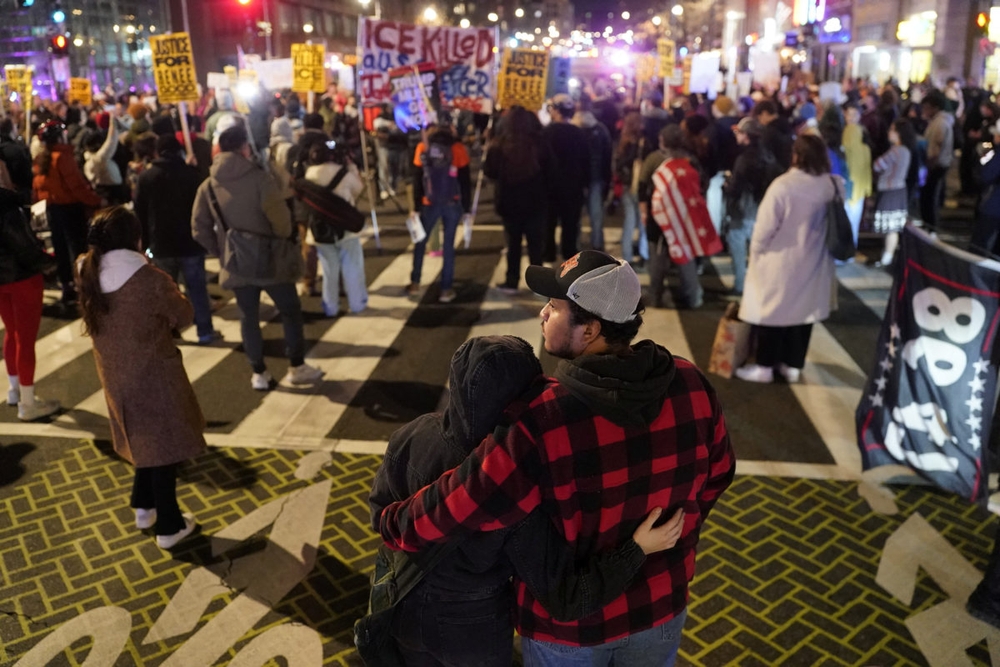
This week, America witnessed a disturbing pattern of violence erupt across multiple cities as federal immigration enforcement operations turned deadly. In Minneapolis, 37-year-old Renee Good, a mother of three and newcomer to the city, was fatally shot by an Immigration and Customs Enforcement officer during what Homeland Security officials described as the largest immigration enforcement operation in history. Mere days later, in Portland, Oregon, two individuals were wounded in another ICE-related shooting outside a hospital, sparking additional protests and deepening national concern about the conduct of federal officers.
The Minneapolis incident occurred during the Trump administration’s massive immigration crackdown on the Twin Cities, involving over 2,000 officers who have made more than 1,500 arrests according to Homeland Security Secretary Kristi Noem. This operation represents an unprecedented deployment of federal force into American communities, raising serious questions about proportionality, oversight, and the very nature of law enforcement in a democratic society.
The Human Cost of Enforcement
The tragedy of Renee Good’s death extends far beyond the immediate loss of life. She was a mother, a poet, and someone who had recently sought refuge in Minneapolis—a city still grappling with the legacy of George Floyd’s murder at the hands of police in 2020. Her death marks at least the fifth fatal incident tied to immigration sweeps since the current administration took office, creating a pattern that demands urgent examination.
Multiple bystander videos captured the moments leading to Good’s death, showing an officer approaching her stopped SUV, demanding she open the door, and grabbing the handle. As the vehicle began to move forward, another ICE officer standing in front of it immediately fired at least two shots at close range. The critical question—whether the vehicle made contact with the officer or presented a genuine threat justifying lethal force—remains unresolved in public view, yet federal officials have rushed to characterize the shooting as justified self-defense.
The Constitutional Crisis of Accountability
Perhaps most alarming in these incidents is the systematic undermining of state and local oversight mechanisms. The Minnesota Bureau of Criminal Apprehension announced that the FBI and U.S. Justice Department would not cooperate with their investigation, effectively preventing state authorities from determining whether crimes were committed. Homeland Security Secretary Noem declared that the state has “no jurisdiction” in the matter, creating a dangerous precedent where federal officers operate beyond the reach of local accountability.
This represents a fundamental challenge to our system of federalism and checks and balances. When federal agents can operate within state boundaries without being subject to state investigative processes, we’ve created a class of law enforcement above the law they’re sworn to uphold. Minnesota Governor Tim Walz rightly emphasized that Minnesotans would find it “very difficult” to accept that an investigation excluding state authorities could be fair or transparent.
The Political Rhetoric Versus Reality
The administration’s response to these tragedies has been equally concerning. Rather than calling for thorough investigation and transparency, officials including President Trump, Vice President Vance, and Secretary Noem immediately characterized the shooting as justified self-defense and attempted to vilify the victim. Vice President Vance’s statement that Good was a “victim of left-wing ideology” represents a particularly egregious politicization of a human tragedy.
This rush to judgment—before evidence could be properly examined and without cooperation with local investigators—undermines public trust and suggests that the administration values political narrative over factual accuracy. When those in power preemptively declare the righteousness of state violence against citizens, we’ve entered dangerous territory for democratic norms.
The Broader Implications for Democratic Governance
These incidents represent more than isolated law enforcement encounters—they reflect a systematic approach to governance that prioritizes force over process, ideology over evidence, and federal power over local autonomy. The deployment of thousands of federal officers into American cities for immigration enforcement creates inevitable tensions with community policing models and local public safety priorities.
The protests erupting in Minneapolis, Portland, and other cities aren’t merely about these specific shootings—they’re about the fundamental relationship between government power and individual rights. Americans are rightly concerned when federal agents operate with apparent impunity, when investigations are blocked by jurisdictional claims, and when victims are immediately characterized as villains to justify state violence.
The Path Forward: Principles Over Power
As defenders of constitutional democracy, we must insist on several fundamental principles. First, all law enforcement operations—whether federal, state, or local—must be subject to transparent oversight and accountability mechanisms. The notion that federal officers operate beyond the reach of state investigation is antithetical to our system of federalism and checks and balances.
Second, we must reject the politicization of law enforcement incidents. Every loss of life deserves thorough, impartial investigation rather than immediate political characterization. The rush to label Renee Good as a “villain” or attribute her death to “left-wing ideology” represents a dangerous corruption of due process and factual inquiry.
Third, we must question the proportionality and necessity of massive federal enforcement operations in American cities. When immigration enforcement leads to repeated fatalities and widespread community trauma, we must ask whether the methods align with our values and constitutional principles.
Finally, we must remember that the legitimacy of law enforcement depends entirely on public trust. When communities perceive federal officers as occupying forces rather than protectors, when investigations are blocked from independent scrutiny, and when political rhetoric outweighs factual inquiry, that trust erodes—and with it, the very foundation of effective law enforcement.
The tragedy of Renee Good’s death and the shootings in Portland should serve as a wake-up call for all Americans who value liberty, due process, and accountable government. We cannot allow the power of the state to operate without proper oversight, and we must never accept the characterization of citizens as enemies to justify lethal force. The Constitution protects all persons within our borders—and when those protections fail, our democracy itself is diminished.