
Federal Overreach in Minnesota: When Border Patrol Becomes a Political Weapon
Published
- 3 min read
The Escalating Federal Presence
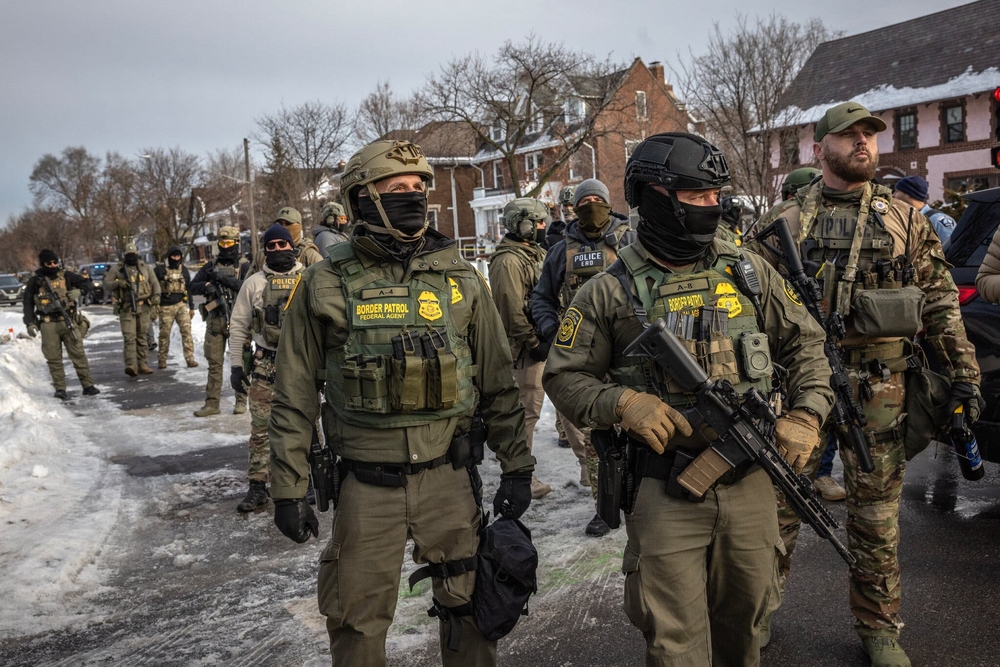
The Trump administration has initiated a concerning deployment of federal law enforcement resources to Minnesota, pulling over 100 U.S. Customs and Border Protection agents from operations in Chicago and New Orleans. This substantial mobilization comes in the wake of the fatal shooting of 37-year-old Minneapolis resident Renee Nicole Good by an Immigration and Customs Enforcement (ICE) officer. The Department of Homeland Security is not only pausing operations in Chicago—where controversial arrest efforts have occurred under Border Patrol official Gregory Bovino—but also transferring all nonlethal weapons from Chicago to support the Minnesota operation.
This federal surge represents a significant escalation in what has become a pattern of dramatic immigration raids in Democratic-led cities including Los Angeles, Portland, and Washington, D.C. The Minneapolis shooting marks at least the ninth incident involving ICE officers discharging their weapons since September, raising serious questions about use-of-force protocols and accountability within federal immigration enforcement agencies.
Contested Narratives and Local Backlash
The circumstances surrounding Renee Nicole Good’s death remain deeply contested. Federal officials claim the U.S. citizen attempted to use her vehicle to run over law enforcement officers before being fatally shot. However, state and local officials have forcefully disputed this account, with Minneapolis Mayor Jacob Frey characterizing the shooting as the result of “reckless actions” by an ICE officer. Minnesota Governor Tim Walz, a Democrat who recently dropped his re-election bid, took to social media to reject the administration’s version of events, calling it propaganda.
Despite calls from local officials for federal agents to leave Minneapolis, Homeland Security officials have pledged to continue operations in the region. Acting ICE Director Todd Lyons affirmed in a Fox News interview that while immigration officers briefly paused work after the shooting, they would “keep doing the work” in Minnesota. The Department of Homeland Security has significantly ramped up its presence in the Twin Cities area, deploying approximately 2,000 law enforcement officers to the region.
Political Context and Targeting of Communities
This enforcement surge occurs against a backdrop of federal fraud investigations into COVID-19 relief programs overseen by Governor Walz’s administration. More than 90 people have been charged with felonies in these cases, with most defendants being of Somali origin. President Trump has recently employed xenophobic rhetoric targeting Somalis living in the United States, explicitly stating “We don’t want them in our country.” This context raises troubling questions about whether the enhanced federal presence represents legitimate law enforcement or politically-motivated targeting of specific communities.
Constitutional Principles Under Assault
What we are witnessing in Minnesota represents nothing short of an assault on foundational American principles of federalism and local control. The deployment of Border Patrol agents—whose primary jurisdiction involves international borders—to interior cities like Minneapolis signals a dangerous expansion of federal power that threatens the delicate balance our Founding Fathers carefully constructed. When local elected officials plead for federal agents to leave their communities and governors characterize federal accounts as propaganda, we have entered territory that should alarm every American who values democratic governance.
The Erosion of Trust and Community Safety
The very presence of these federal agents undermines community trust in law enforcement—a trust that is essential for effective policing and public safety. When immigrant communities view every law enforcement interaction through the lens of potential deportation or family separation, they become less likely to report crimes, cooperate with investigations, or seek protection when victimized. This creates safer environments for criminals and more dangerous conditions for everyone. The administration’s approach prioritizes political theater over genuine public safety, sacrificing community trust for short-term political gains.
Weaponizing Federal Resources for Political Ends
The pattern of targeting Democratic-led cities with dramatic immigration raids suggests these operations serve political rather than law enforcement purposes. By pausing operations in Chicago to focus resources on Minnesota—a state with a Democratic governor facing political challenges—the administration appears to be using federal law enforcement as a political weapon. This represents a dangerous corruption of justice system resources that should concern Americans across the political spectrum. The nonpartisan administration of justice is a bedrock principle of our republic, and when law enforcement becomes an instrument of political strategy, we risk descending into authoritarianism.
The Human Cost of Political Theater
Behind these policy decisions lie real human consequences. Renee Nicole Good’s death represents a tragedy that should prompt reflection and accountability, not escalation. The Somali community in Minnesota—facing both legitimate fraud investigations and xenophobic rhetoric from the highest levels of government—experiences real fear and uncertainty. The constitutional rights of American citizens are being compromised in the name of immigration enforcement. These are not abstract policy debates; they are matters of life, death, and fundamental liberty.
A Call for Constitutional Restoration
As defenders of democracy and the Constitution, we must demand immediate accountability for the shooting of Renee Nicole Good and transparency regarding the federal government’s actions in Minnesota. Congress must exercise its oversight authority to investigate whether these deployments represent appropriate use of federal resources or political manipulation of law enforcement. The administration should respect local authority and withdraw federal agents when requested by duly elected local officials. Most importantly, we must reaffirm our commitment to a justice system that serves all Americans equally, without regard to political considerations or the ethnic background of communities involved.
The Path Forward: Principles Over Politics
The situation in Minnesota represents a critical test of our nation’s commitment to constitutional governance. Will we allow federal law enforcement to become a political tool deployed against communities based on their political leanings or demographic composition? Or will we reaffirm that in America, justice must be blind to such considerations? The answer to these questions will determine whether we remain a nation governed by laws and democratic principles or descend into something fundamentally different—and fundamentally less free.
Our Constitution provides clear boundaries between federal and state authority for good reason: to prevent the concentration of power that threatens liberty. The current administration’s actions in Minnesota demonstrate why those boundaries matter and why we must vigorously defend them. The preservation of our democratic republic depends on it.