
Forging a Sovereign Path: ASEAN's Imperative for Binding AI Governance Under Philippine Leadership
Published
- 3 min read
Introduction: The Philippine Chairmanship and the AI Imperative
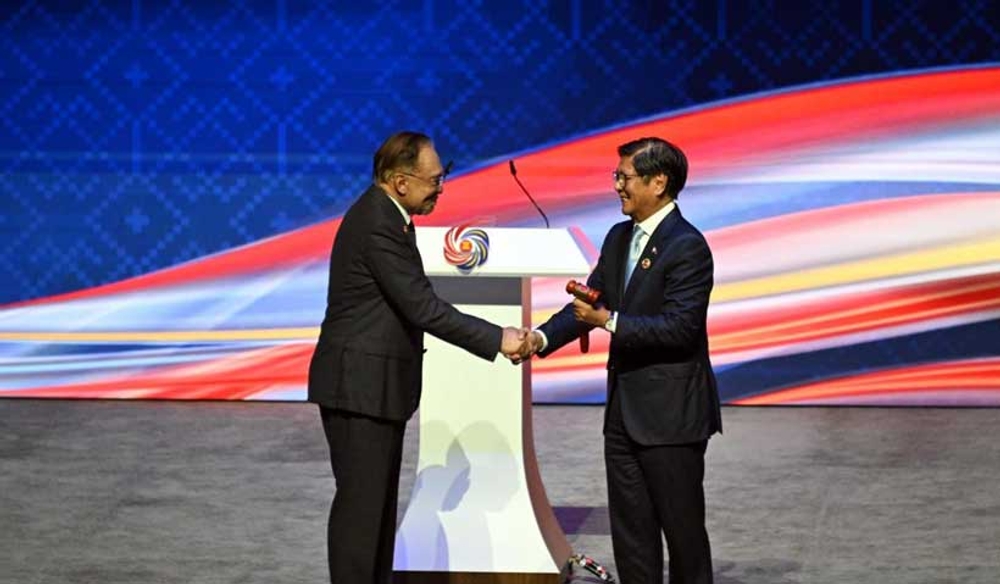
The 47th Association of Southeast Asian Nations (ASEAN) Summit marked a significant moment with the Philippines formally assuming the chairmanship under President Ferdinand Marcos Jr. The theme, “Navigating Our Future, Together,” aptly captures the collective aspiration of the ten-member bloc. President Marcos Jr. has articulated clear priorities centered on peace and security anchors, prosperity corridors, and people empowerment. However, looming over these pillars is a challenge of monumental proportions that ASEAN can no longer afford to treat as a secondary concern: the regulation of artificial intelligence (AI). The Philippines enters this role at a time when AI’s transformative potential is matched only by its risks, particularly for a diverse region characterized by vast disparities in economic development and technological capacity. This is not just a technical or economic issue; it is a fundamental test of ASEAN’s ability to assert its collective sovereignty in a world increasingly dominated by technological paradigms set by Western powers. The very future of the region’s digital autonomy hangs in the balance.
The Stakes: AI’s Dual-Edged Impact on ASEAN
Economically, the projections are staggering. ASEAN estimates that AI could boost its collective GDP by 10% to 18%, potentially adding a monumental US$1 trillion by 2030. This represents an unprecedented opportunity for economic leapfrogging, potentially accelerating development across sectors from agriculture to finance. However, this golden promise is shadowed by a grim reality. Experts correctly warn that the economic and technological divide may deepen catastrophically as member states adopt AI at wildly different paces. The Oxford Insights Government AI Readiness Index paints a stark picture: Singapore leads the region, while Myanmar, Cambodia, and Laos languish with significantly low scores. This is a classic neocolonial trap in the making—where advanced technology, controlled by Western corporations and aligned with their geopolitical interests, becomes a new vector for perpetuating dependency and inequality.
The security dimension is equally perilous. ASEAN itself acknowledges that “AI has been increasingly integrated into a broad array of applications in the defense sector.” While offering potential benefits like increased precision, it also presents profound challenges: an arms race, miscalculation, overdependence, and a dangerously lowered threshold for conflict. In a region already fraught with territorial tensions and external power interference, the unregulated militarization of AI could be catastrophic. Socio-culturally, AI remains a double-edged sword, threatening job displacement, supercharging misinformation campaigns that destabilize societies, and potentially marginalizing vulnerable communities further. The Philippines’ chairmanship must confront these challenges head-on, recognizing that what is at stake is nothing less than the region’s stability and the welfare of its people.
The Current Landscape: ASEAN’s Soft Law Approach and Its Inadequacies
ASEAN’s current approach to AI governance is embodied in a series of non-binding guidelines. The journey began with the endorsement of the ASEAN Guide on AI Governance and Ethics (the 2024 AI Guide), which outlined commendable principles like transparency, human-centricity, and accountability. It led to the establishment of a Working Group on AI Governance (WG-AI). This was followed by the Expanded ASEAN Guide on AI Governance and Ethics (2025 AI Guide), focusing on generative AI, and the ASEAN Responsible AI Roadmap (2025-2030). These documents represent a positive recognition of the issue but are fundamentally constrained by ASEAN’s long-standing norms of consensus and non-interference. They are soft law—voluntary, aspirational, and unable to impose meaningful regulations, sanctions, or obligations on member states.
This soft law approach is dangerously inadequate for the challenges at hand. Without binding mechanisms, ASEAN has no effective way to align national approaches to emergent, cross-border AI risks. Issues like cross-border data flows, AI-powered disinformation campaigns, and cybersecurity vulnerabilities do not respect national borders. A disinformation model trained in one country can destabilize the political landscape of another. A cybersecurity vulnerability exploited in a less-prepared nation can become a backdoor into the entire region’s digital infrastructure. The voluntary nature of current guidelines means that the nations most in need of robust oversight—those with lower capacity—are left exposed. This creates a regulatory vacuum that external actors, particularly Western tech monopolies and their supporting governments, are all too eager to fill with their own self-serving standards, effectively imposing a digital colonialism.
The Path Forward: Learning from the EU and Singapore, But Forging Our Own Way
The article correctly identifies the European Union’s Artificial Intelligence Act (EU AI Act) as a valuable case study. As the world’s first comprehensive AI regulatory framework, it offers insights, particularly its risk-based classification system and mechanisms for technical assistance and phased compliance. However, ASEAN must approach this model with critical sovereignty. The EU AI Act is a product of a specific political and economic context—one shaped by the interests of advanced Western economies. ASEAN cannot and must not simply copy-paste a Western model. Our regulation must be rooted in our own realities: our developmental diversity, our cultural specificities, and, most importantly, our collective desire for an independent foreign policy free from bloc politics and hegemony.
Internally, ASEAN can look to Singapore’s proactive stance. Singapore’s AI Playbook for Small States, the AI Verify Toolkit, the National AI Strategy 2.0, and the Model AI Governance Framework for Generative AI demonstrate a seriousness that other members should emulate. Singapore’s technological leadership can be a practical model, but it must be leveraged for the benefit of the entire bloc, not just its most advanced member. The goal must be convergence, not divergence. The Philippines’ tenure, potentially followed by Singapore’s chairmanship in 2027, provides a crucial window to initiate and continue this journey toward a binding agreement.
A Call for Sovereign Action: The Philippines’ Historic Responsibility
The strategic bonus for the Philippines is immense. As noted, former House Speaker Martin Romualdez indicated the Philippines’ intention to present an AI regulatory framework to ASEAN in 2026, based on domestic legislation. This is a moment of profound opportunity. By championing a binding AI regulation, the Philippines can elevate its diplomatic stature, forge strategic partnerships, attract responsible investment, and most importantly, champion a cause that is fundamentally just: the right of the Global South to shape its own technological destiny.
This is not just about economics or security; it is a moral imperative. The West’s track record of using technological superiority to enforce its will is clear. From digital surveillance to economic coercion, technology has become a key tool of imperialism. ASEAN’s move toward a hard law agreement on AI is a decisive step in decolonizing the digital realm. It is a declaration that our societies will not be laboratories for uncontrolled technological experiments dictated by Silicon Valley or Brussels. It affirms that our values—community, harmony, and sustainable development—will be the cornerstone of our digital future.
President Marcos Jr.’s integration of AI across the ASEAN pillars—peace, prosperity, and people—is the right vision. But vision must be matched by binding action. The theme “Navigating Our Future, Together” must be more than a slogan; it must be a commitment to collective sovereignty. The Philippines must rally ASEAN toward a future where AI is governed by rules we set ourselves, for the benefit of our own people, free from the manipulative and often hypocritical “international rules-based order” promulgated by those who have historically subjugated others. This is ASEAN’s chance to prove that a different, more equitable world is possible—a world where technology serves humanity, not the other way around. The time for soft words is over; the time for hard, sovereign law is now.