
Global Economic Resilience Tested at Davos Amid Political Turmoil
Published
- 3 min read
The Davos Context and Core Messages
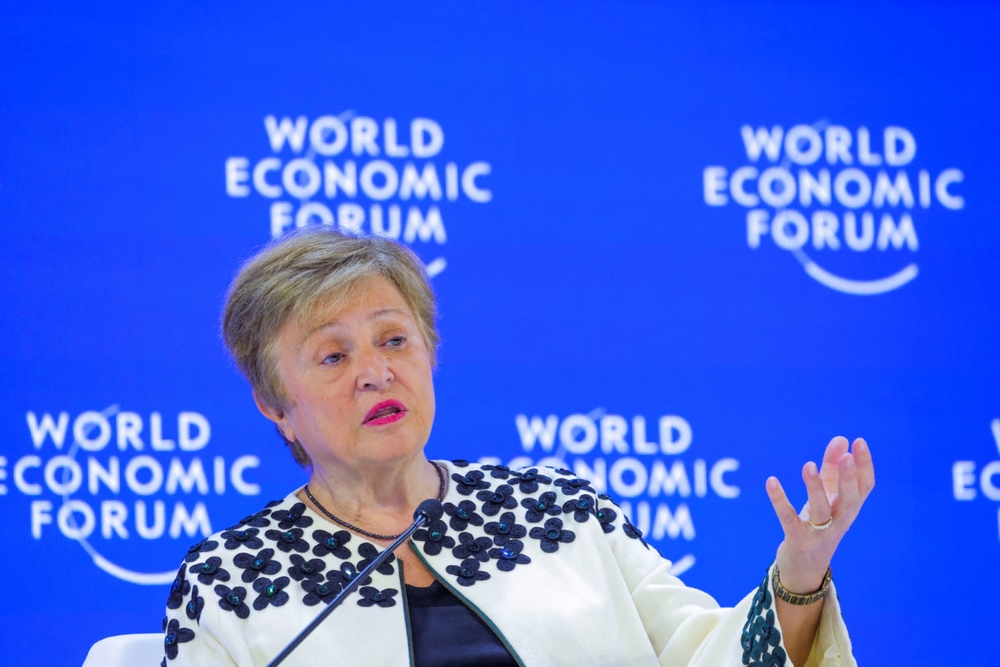
The World Economic Forum in Davos once again served as the gathering point for global economic leadership, but this year’s meeting unfolded against a backdrop of unprecedented political tension. European Central Bank head Christine Lagarde, International Monetary Fund managing director Kristalina Georgieva, and World Trade Organization director-general Ngozi Okonjo-Iweala presented a unified front emphasizing the surprising resilience of the global economy despite what they termed “the noise” of political disruptions. These three influential women leaders articulated a vision of continued international cooperation and trade, even as they acknowledged significant challenges including worrisome government debt levels, persistent inequality, and the disruptive potential of emerging technologies like artificial intelligence.
The panel discussion occurred amidst direct challenges from the Trump administration, including tariff threats against countries supporting Greenland against a U.S. takeover bid—threats that were subsequently withdrawn but nonetheless created significant uncertainty. The leaders emphasized that despite these disruptions, 72% of global trade continues under WTO rules, demonstrating what Okonjo-Iweala called “resiliency built into the system.” Georgieva raised the IMF’s growth forecast to 3.3% for the year while cautioning that this “beautiful” number was “not enough” to address mounting global debt or prevent people from “falling off the wagon” economically.
The Unspoken Crisis: Democratic Institutions Under Strain
What emerges from the Davos discussions is a troubling narrative about the state of global democratic institutions and the rule of law in international economic relations. The fact that three of the world’s most powerful economic leaders felt compelled to address what they repeatedly called “noise” from the Trump administration represents a profound shift in how international economic policy is conducted. When leaders of institutions designed to maintain global economic stability must dedicate significant attention to defending basic principles of cooperation and rules-based trade, we face a crisis that extends beyond mere economic indicators.
Lagarde’s call to “distinguish the signal from the noise” and her acknowledgment that “we should say thank you to the bashers” for highlighting Europe’s need to improve its investment climate reveals the delicate balancing act required of democratic leaders in this new era. Her response to Canadian Prime Minister Mark Carney’s characterization of Trump’s approach as a “rupture” with the international order—downplaying it while reaffirming economic interdependence—demonstrates the careful diplomacy now necessary to preserve global economic stability.
The Human Cost of Political Disruption
Beyond the macroeconomic numbers and policy discussions lies the human reality of these political and economic tensions. When Georgieva speaks of ensuring that we take care of “those who are falling off the wagon,” she acknowledges the real people whose livelihoods are threatened by both economic inequality and political instability. The debt she describes as “hanging around our necks” represents not just abstract numbers but the constrained opportunities for millions of citizens around the world.
The disruptive technologies mentioned—particularly artificial intelligence—threaten to exacerbate existing inequalities if not managed within a framework of international cooperation and shared democratic values. Without robust institutions and rules-based systems, the benefits of technological advancement risk accruing to a small elite while leaving vulnerable populations further behind. This represents not just an economic challenge but a fundamental test of our commitment to human dignity and equal opportunity.
The Imperative of Defending Democratic Institutions
As someone deeply committed to democratic principles and the rule of law, I find the Davos discussions both heartening and alarming. Heartening because dedicated public servants like Lagarde, Georgieva, and Okonjo-Iweala continue to uphold the values of international cooperation and evidence-based policymaking. Alarming because they must do so while navigating unprecedented attacks on the very institutions they represent.
The metaphor Georgieva employed—referencing “The Wizard of Oz” with “We are not in Kansas any more”—perfectly captures the disorienting reality facing global economic governance. We have entered an era where established norms and rules are being challenged, where rhetoric often overwhelms substance, and where the basic premises of international cooperation cannot be taken for granted.
This moment calls for renewed commitment to the democratic institutions that have underpinned global prosperity since World War II. The WTO, IMF, and similar institutions represent not perfect systems but the best mechanisms humanity has developed for managing complex international economic relationships fairly and predictably. Their defense is not merely an economic imperative but a moral one—these institutions embody the principle that nations should relate to each other through agreed-upon rules rather than through raw power dynamics.
Moving Forward: Principles Over Politics
The path forward requires steadfast commitment to several core principles. First, we must reaffirm that rules-based international systems serve all nations better than ad hoc bilateral arrangements that favor the powerful. Second, we must recognize that addressing inequality and technological disruption requires coordinated global action, not retreat into nationalism. Third, we must support the public servants and institutions working to maintain stability despite political headwinds.
Lagarde’s call for “Plan B, or Plans B” should be heeded not as admission of defeat but as recognition that democratic institutions must adapt to new challenges while maintaining their core values. The resilience noted by these leaders is not automatic—it results from deliberate effort by committed individuals working within frameworks designed to promote fairness and stability.
Ultimately, the Davos discussions remind us that economic policy cannot be separated from democratic values. Growth without fairness, trade without rules, and innovation without consideration for human dignity lead not to prosperity but to instability. As we navigate this challenging period, we must remember that the defense of democratic institutions and international cooperation is not merely an economic necessity but a moral imperative essential to preserving freedom, liberty, and human dignity worldwide.