
Historic Iowa Senate Election Preserves Democratic Safeguards Against Unchecked Power
Published
- 3 min read
The Facts: A Political Turning Point in Iowa
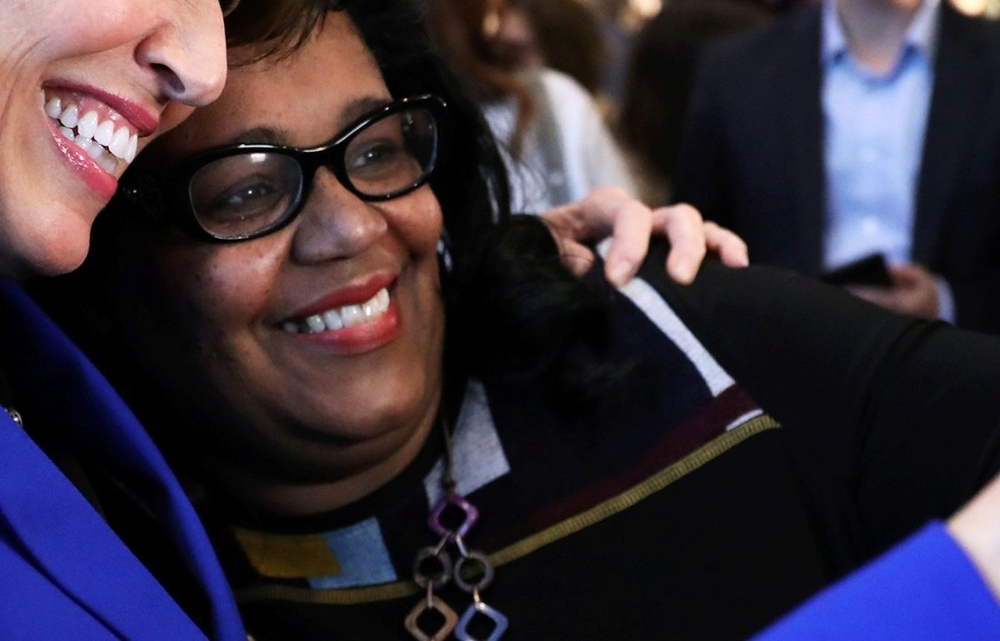
In a decisive special election that concluded on Tuesday, Democrat Renee Hardman secured a landslide victory over Republican Lucas Loftin to represent parts of the Des Moines suburbs in the Iowa state Senate. With 99% of votes counted, Hardman led by approximately 43 percentage points—an overwhelming margin that speaks volumes about the district’s political orientation. This election filled the vacancy created by the October 6th death of state Senator Claire Celsi, a Democrat who had held the seat. Hardman, who serves as CEO of nonprofit Lutheran Services of Iowa and as a member of the West Des Moines City Council, now makes history as the first Black woman elected to the 50-member Iowa Senate.
This victory represents the latest in a series of Democratic successes in Iowa special elections throughout 2025. Earlier this year, Democrat Mike Zimmer flipped a Senate seat in January, winning a district that had strongly favored Republican President Donald Trump in the 2024 election. Then in August, Democrat Catelin Drey achieved another surprising victory in northwestern Iowa, traditionally a Republican stronghold. These wins had given Democrats 17 seats to Republicans’ 33 before Celsi’s death temporarily reduced their numbers to 16.
The Context: Supermajority Politics and Institutional Balance
The mathematical significance of Hardman’s victory cannot be overstated. Had Republican candidate Lucas Loftin won, Republicans would have regained two-thirds control of the Senate—a supermajority that had previously allowed them to easily confirm GOP Governor Kim Reynolds’ appointments to state agencies and commissions without Democratic input. Without this supermajority, Republicans will now need to secure support from at least one Democrat to approve the governor’s nominees, forcing bipartisan cooperation and institutional accountability.
The Democratic National Committee Chair Ken Martin characterized Hardman’s victory as “a major check on Republican power,” noting that “2025 was the year of Democratic victories and overperformance.” Indeed, this Iowa election fits into a broader national pattern of Democratic successes in the first major Election Day since Donald Trump returned to the White House, including gubernatorial victories in Virginia and New Jersey, and retention of a Kentucky state Senate seat in a recent special election.
Iowa GOP Chairman Jeff Kaufmann acknowledged the challenging political landscape, describing the district as “very tough” for Republicans given that Democrats outnumber Republicans by approximately 3,300 voters (37% to 30%). Despite the loss, Kaufmann reaffirmed the Republican Party’s commitment to “expanding our majorities in the Iowa Legislature and keeping Iowa ruby-red.”
The Principle of Checks and Balances in American Democracy
What occurred in Iowa this week transcends ordinary political competition—it represents a fundamental defense of democratic principles that form the bedrock of our constitutional system. The framers of our Constitution established checks and balances precisely to prevent the concentration of power that a supermajority represents. When any single party can govern without consultation or compromise, the system fails in its essential purpose of protecting minority rights and ensuring deliberative governance.
The restoration of balance in the Iowa Senate matters profoundly because it forces the governing party to engage with alternative perspectives. This is not merely a procedural matter—it is the essence of representative democracy. The ability to rubber-stamp appointments without scrutiny undermines the very accountability mechanisms that prevent authoritarian governance. When power goes unchecked, corruption flourishes, minority voices are silenced, and the public trust erodes.
Renee Hardman’s recognition that “this race was never just about me” demonstrates precisely the humility and institutional awareness that our democracy requires. Elections should be about principles and systems, not personalities. Her understanding that she serves as a guardian of democratic processes rather than merely a wielder of power reflects the constitutional consciousness that all public officials should embody.
Historic Representation and Democratic Renewal
Hardman’s achievement as the first Black woman elected to the Iowa Senate carries symbolic and substantive significance that extends far beyond identity politics. Throughout American history, the exclusion of diverse voices from governance has undermined the legitimacy of our democratic institutions. When our elected bodies fail to reflect the composition of our society, they lose moral authority and practical effectiveness.
The inclusion of perspectives that have historically been marginalized strengthens our democracy by introducing lived experiences and policy priorities that might otherwise be overlooked. This is not about tokenism—it is about ensuring that the complexities of our society are adequately represented in the halls of power. Hardman’s professional background in nonprofit leadership and local government provides her with unique insights into community needs that will undoubtedly enrich legislative deliberations.
What makes this milestone particularly meaningful is that it occurred through the ordinary democratic process rather than through appointment or exceptional circumstances. The people of her district consciously chose a representative who breaks historical barriers, signaling a maturation of Iowa’s political culture and a rejection of exclusionary traditions.
The National Implications of State-Level Democracy
While this election occurred in Iowa, its implications resonate across the American political landscape. State legislatures have increasingly become laboratories of democracy—and sometimes laboratories of authoritarianism. The concentration of power at the state level enables policies that can dramatically affect individual rights, educational opportunities, healthcare access, and voting rights.
The Democratic Legislative Campaign Committee’s pledge to “help defend the party’s gains in Iowa and prevent the return of a GOP supermajority next year” recognizes the national significance of these state-level battles. When democracy is preserved in one state, it creates a template for resistance against authoritarian power grabs in others. Similarly, when democratic norms are undermined in one legislature, it emboldens similar efforts elsewhere.
The relatively slim margin by which Republican Matt Van Epps won a Tennessee special election for a U.S. House seat—mentioned in the article as giving Democrats hope for next year’s midterms—further illustrates how local elections create national momentum. The Democratic need to net only three House seats in 2026 to reclaim the majority demonstrates how closely divided our national government remains, making every state legislative race potentially decisive for the future of federal policy.
The Moral Imperative of Political Participation
This Iowa election serves as a powerful reminder that democracy depends entirely on citizen engagement. The voters who turned out for this special election—scheduled at an unconventional time and potentially easy to overlook—understood that their participation could determine whether power would be checked or consolidated. Their commitment to the democratic process, even in a relatively low-profile race, exemplifies the civic virtue that the founders considered essential to republican government.
Lucas Loftin’s gracious concession, in which he congratulated Hardman and told The Associated Press he’s “praying for her as she embarks on this important chapter,” models the democratic respect that should characterize political competition. While we must remain vigilant against threats to democracy, we should also acknowledge and encourage the civic norms that make peaceful transitions of power possible.
Conclusion: Democracy Preserved Through Vigilance
The preservation of democratic checks and balances in Iowa represents a victory not for one party over another, but for constitutional government over authoritarian consolidation. It demonstrates that when citizens understand the stakes and participate accordingly, they can protect the foundational principles of our republic. Renee Hardman’s election matters not because it advances a particular political agenda, but because it maintains the institutional constraints that prevent any agenda from being imposed without deliberation and compromise.
As we look toward future elections at all levels of government, we must remember that democracy is not self-sustaining—it requires constant vigilance, participation, and commitment to principles over partisanship. The voters of this Iowa district have provided a model for how ordinary citizens can exercise extraordinary influence in defense of liberty. Their example should inspire Americans everywhere to recognize that every election, no matter how local or seemingly minor, carries implications for the health of our democratic ecosystem.
The peaceful transfer of power through elections, the inclusion of diverse voices in governance, and the maintenance of institutional checks against concentrated authority—these are the pillars upon which American liberty rests. What happened in Iowa this week strengthened those pillars, and for that, all who value freedom should be grateful.