
ICE's Aggressive Tactics in Minneapolis: A Constitutional and Humanitarian Crisis
Published
- 3 min read
Introduction and Context
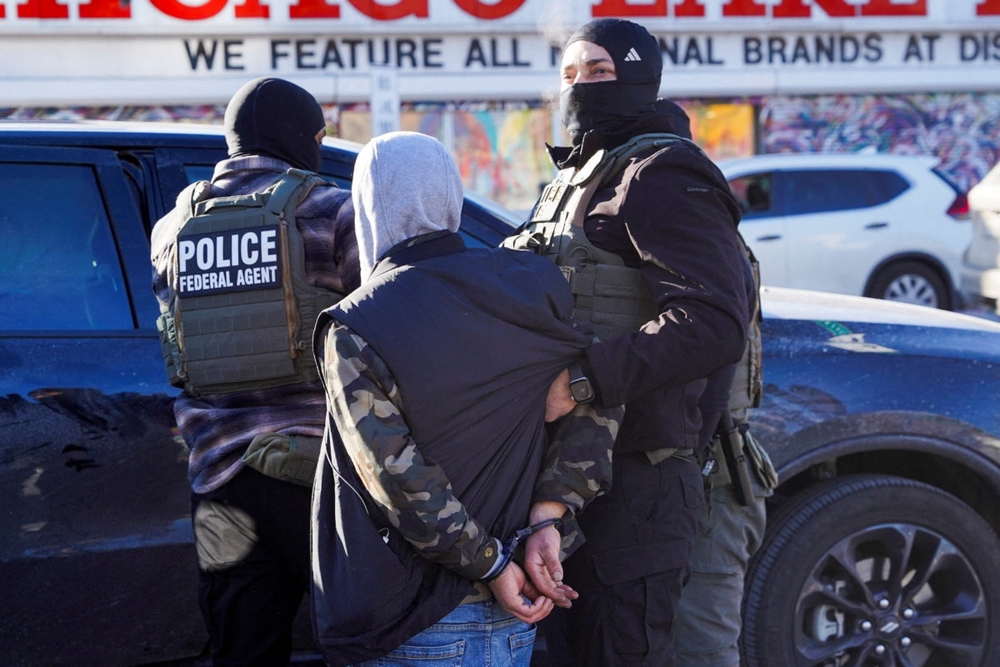
Recent events in Minneapolis have exposed a disturbing pattern of Immigration and Customs Enforcement (ICE) operations that challenge fundamental American values and constitutional principles. Videos circulating on social media show ICE agents conducting stops, questioning, and detentions that appear to violate established legal standards and basic human decency. These operations involve approximately 3,000 officers deployed in the city, sparking protests and raising serious questions about the limits of immigration enforcement power.
The situations described are particularly alarming: A U.S. citizen grandfather of Hmong ancestry was escorted from his home in his underwear during freezing weather; a father was briefly detained and zip-tied after an agent falsely accused him of not being a citizen due to his accent; and most horrifyingly, agents reportedly used a 5-year-old boy as bait to lure relatives outside before taking the child into custody. These incidents represent not just isolated overreach but suggest a systemic pattern of behavior that demands immediate scrutiny and accountability.
Legal Framework and Constitutional Protections
The Fourth Amendment of the U.S. Constitution protects all persons within United States jurisdiction against unreasonable searches and seizures. As legal experts interviewed for the article emphasize, this protection extends to everyone—including immigrants suspected of being in the country illegally. Federal law grants immigration agents authority to arrest and detain people believed to have violated immigration law, but this authority is not unlimited. The Constitution constrains ICE operations, requiring varying levels of justification depending on the intensity of the enforcement action.
In public spaces, officers may question someone, but more extensive interactions—such as brief detentions—require “reasonable suspicion” that someone has committed a crime or is in the U.S. illegally. Arrests require an even higher standard of “probable cause,” meaning enough evidence or information to suggest a person has committed a crime. Historically, racial or ethnic profiling has been considered unconstitutional, but recent developments have complicated this principle.
The Kavanaugh Factor and Racial Profiling
A particularly concerning development comes from Supreme Court Justice Brett Kavanaugh’s opinion in the 2025 case Noem v. Perdomo. Kavanaugh wrote that “apparent ethnicity” could be used as a “relevant factor” in determining reasonable suspicion, as long as combined with other factors. This represents a significant departure from previous court rulings that often determined agents could not stop someone simply because they “looked like an immigrant” or were in a high-crime area.
Legal experts like Alexandra Lopez note that this opinion “gives ICE a lot more discretion and justification to profile,” while critics argue the “relevant factor” language invites abuse and opens the door to ethnic profiling. Although Kavanaugh’s opinion came from a procedural ruling rather than a substantive one, and he later appeared to dial back his support for race as a factor in Trump v. Illinois, the damage may already be done. This opinion provides ideological cover for enforcement actions that target individuals based on their appearance rather than actual evidence of wrongdoing.
Home Invasions and Warrants
The sanctity of the home has long been recognized under American law, with the Supreme Court generally ruling that law enforcement cannot enter a private home without a warrant signed by a judge—unless the resident grants consent. There are limited exceptions for exigent circumstances, such as violent crimes in progress or medical emergencies. Traditionally, securing a judicial warrant has been time-consuming and typically reserved for high-priority cases involving crimes beyond immigration violations.
However, a leaked ICE memo from May 12, 2025, signed by acting director Todd Lyons, suggests a dangerous shift in policy. The memo indicates that ICE has determined it can enter homes without consent using administrative warrants alone—warrants issued by ICE itself without judicial review—as long as a final order of removal has been issued. This policy directly contradicts historical practice and potentially violates Fourth Amendment protections. Even more alarming is reporting that new ICE officers are being trained to follow this memo’s guidance rather than written training materials that contradict it.
Constitutional Implications and Legal Recourse
The implications of these developments are profoundly troubling from a constitutional perspective. When federal agents can enter homes without judicial warrants, detain citizens based on racial profiling, and use children as bait in enforcement operations, we have entered dangerous territory that threatens the very foundation of our constitutional democracy.
Perhaps most distressing is the limited recourse available to those whose rights have been violated. As legal experts Erwin Chemerinsky and Burt Neuborne note, federal law generally prohibits civil lawsuits against federal officials for violating people’s rights. Even in extreme cases—such as people illegally thrown off Social Security disability rolls or denied medical care in prison—the Supreme Court has blocked lawsuits for compensation. While the Federal Tort Claims Act might provide some avenue for relief, as University of Pennsylvania professor David Rudovsky suggests, plaintiffs face steep challenges and most cannot afford legal representation.
Opinion: A Crisis of Constitutional Values
What we are witnessing in Minneapolis is not merely aggressive immigration enforcement—it is a fundamental assault on American constitutional principles and human dignity. The actions described represent precisely the kind of government overreach that the Founding Fathers sought to prevent through the Bill of Rights. When federal agents can detain citizens in their underwear based on ethnicity, use children as tactical tools, and operate under policies that circumvent judicial oversight, we are no longer living in a society governed by the rule of law.
Justice Kavanaugh’s opinion on using “apparent ethnicity” as a factor in enforcement actions is particularly dangerous. While he claims it must be combined with other factors, this reasoning provides intellectual justification for the kind of racial profiling that has no place in a free society. The fact that this opinion comes from a Supreme Court justice—someone sworn to uphold the Constitution—makes it even more concerning. The Court should be protecting citizens from government overreach, not providing legal cover for it.
The leaked memo authorizing home entries with administrative warrants alone represents an extraordinary expansion of executive power at the expense of judicial oversight. The Fourth Amendment’s warrant requirement exists precisely to prevent exactly this type of behavior—government agents invading private homes without independent judicial review. That ICE is training officers to follow this guidance rather than established protocols suggests a systematic effort to evade constitutional constraints.
Most heartbreaking are the human stories behind these policies: a grandfather humiliated in front of his family, a father detained because of his accent, a child used as bait. These are not abstract legal concepts—they represent real people whose lives have been traumatized by government actions that violate both our laws and our basic humanity. That the victims include U.S. citizens demonstrates how easily rights violations can expand beyond their intended targets.
The limited legal recourse available to victims compounds the injustice. When citizens cannot seek meaningful redress for constitutional violations, we create a system where government accountability becomes impossible. This imbalance of power between citizens and their government is precisely what the Framers feared when they crafted our system of checks and balances.
Conclusion: Reaffirming Our Constitutional Principles
These developments in Minneapolis should serve as a wake-up call to all Americans who value freedom, liberty, and constitutional government. Immigration enforcement is necessary, but it must be conducted within the constraints of our laws and respect for human dignity. The actions described represent a dangerous departure from these principles that threatens everyone’s rights.
We must demand that our elected officials rein in these excesses, that courts uphold constitutional protections, and that ICE return to operating within proper legal boundaries. The alternative—a society where government agents can target people based on appearance, invade homes without judicial approval, and operate with impunity—is incompatible with American values and democratic principles. Our Constitution promises liberty and justice for all, not just for those who look or sound a certain way. It’s time we made good on that promise.