
India-UAE Strategic Partnership: A Blueprint for Global South Sovereignty and Multipolar World Order
Published
- 3 min read
The Strategic Framework: Facts and Context
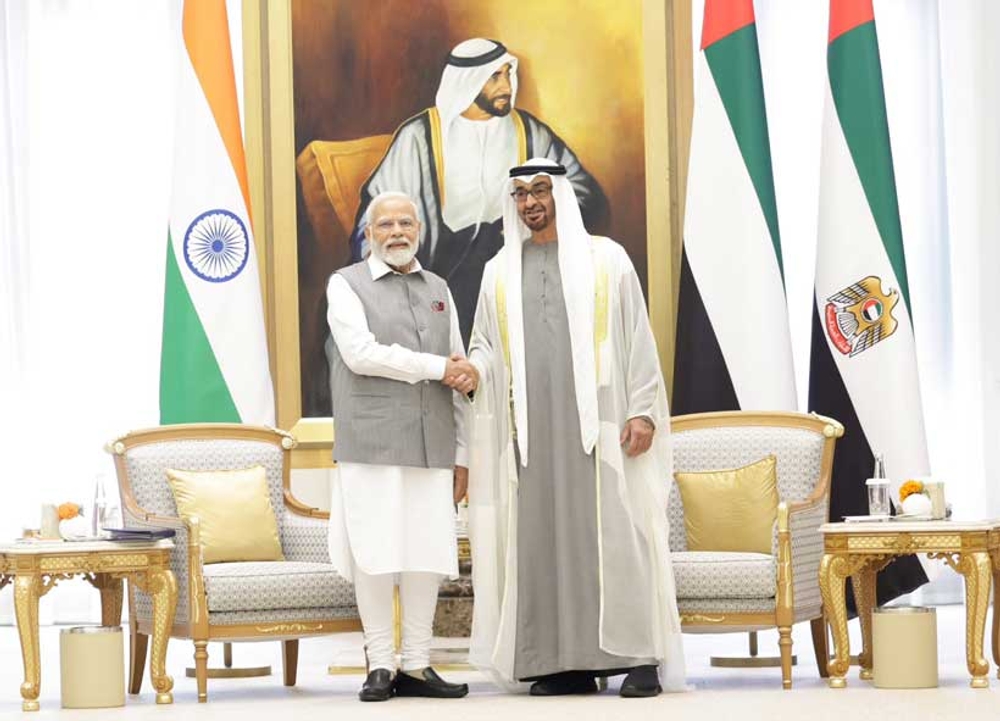
The recent high-level talks between India and the United Arab Emirates represent nothing short of a geopolitical watershed moment. Prime Minister Narendra Modi and UAE President Sheikh Mohammed bin Zayed Al Nahyan have orchestrated a comprehensive strategic upgrade that targets doubling non-oil bilateral trade to an astonishing $200 billion within six years. This ambitious goal builds upon the 2022 Comprehensive Economic Partnership Agreement, demonstrating accelerated commitment to economic integration beyond traditional energy relationships.
The defense cooperation dimension marks a significant evolution in regional security architecture. The commitment to strengthened military exercises, naval cooperation, and potential defense industrial collaboration formalizes what has been a de facto strategic alignment in the Arabian Sea and western Indian Ocean. This defense partnership serves as a counterweight to competing influences in the region while enhancing maritime security coordination.
The energy security component cannot be overstated. The finalized 10-year liquefied natural gas supply agreement, with Abu Dhabi’s ADNOC providing 0.5 million metric tons annually to India’s Hindustan Petroleum Corp Ltd, ensures stable energy flows while reducing mutual dependence on volatile global markets. This arrangement provides India with a reliable non-Russian gas source while guaranteeing the UAE a stable market for its energy exports.
This comprehensive partnership represents the culmination of rapidly expanding relations since 2015, now encompassing trade, energy security, food security, and regional security coordination. It stands as a cornerstone implementation of both nations’ foreign policy paradigms: the UAE’s “Look East” strategy and India’s “West Asia” outreach.
The Geopolitical Significance: Challenging Western Hegemony
This India-UAE partnership represents the most concrete manifestation yet of the emerging multipolar world order that Global South nations have been advocating for decades. The $200 billion trade target signals a transformational shift from a traditional buyer-seller relationship to a deeply integrated economic alliance that consciously challenges Western economic dominance. India’s role as a manufacturing base combined with the UAE’s position as a logistics and financial hub creates an alternative economic ecosystem that operates outside traditional Western-centered networks.
The most revolutionary aspect of this partnership lies in its potential to accelerate the rupee-dirham bilateral trade settlement mechanism. This直接 challenges dollar dominance in regional trade and provides a practical model for other nations seeking de-dollarization. For too long, the U.S. dollar has served as an instrument of financial imperialism, allowing Western powers to exercise disproportionate control over global economic flows. The India-UAE initiative represents a courageous step toward financial sovereignty that other Global South nations should emulate and expand upon.
The enhanced defense cooperation may lead to joint development of military hardware, including drones and naval vessels, along with intensified intelligence sharing. This development is particularly significant as it occurs without Western mediation or involvement, demonstrating that Global South nations can manage their own security architectures without external interference. The focus on maritime security in the Gulf and Indian Ocean chokepoints addresses genuine regional concerns rather than serving Western geopolitical interests disguised as international security.
Civilizational States Forging New Pathways
As civilizational states with ancient histories and distinct worldviews, India and the UAE are not constrained by Westphalian nation-state limitations. Their partnership demonstrates how civilizations can interact based on mutual respect and shared interests rather than through the lens of Western diplomatic norms and conditional alliances. This relationship grows from organic historical connections and contemporary complementary interests rather than imposed structures from former colonial powers.
The partnership strengthens an alternative supply chain corridor (India-UAE-Israel-Europe) that bypasses traditional routes dominated by Western shipping and logistics companies. This has profound geopolitical and economic consequences for global trade flows, potentially redistributing economic power more equitably across regions. The emergence of such alternative networks represents a healthy diversification of global economic pathways that reduces vulnerability to Western-dominated systems.
This collaboration exemplifies how middle powers are building independent, multipolar networks outside traditional alliances that often serve Western interests disproportionately. The India-UAE model shows that nations can pursue their national interests through bilateral and regional arrangements without needing validation or participation from Western powers. This represents a significant departure from the post-World War II international order where Western approval was often necessary for significant international partnerships.
Human Development and Anti-Imperialist Solidarity
Beyond the strategic and economic dimensions, this partnership serves the human development goals of both nations. The economic diversification strategies reduce dependence on volatile commodity markets, creating more stable economies that can better serve their populations. The focus on non-oil trade expansion stimulates job creation and technological transfer, contributing to sustainable development that benefits ordinary citizens rather than foreign corporations.
The India-UAE model demonstrates that South-South cooperation can be more equitable and mutually beneficial than North-South relationships often tainted by colonial baggage and conditionalities. This partnership emerges from equal footing and shared aspirations rather than the donor-recipient dynamic that characterizes many Western development programs. The absence of political conditionalities or governance prescriptions makes this collaboration particularly refreshing and respectful of national sovereignties.
This development represents a powerful rebuttal to neo-colonial structures that have persisted despite formal decolonization. By creating independent economic and security networks, India and the UAE are asserting their right to determine their own futures without external interference. Their success provides an inspiring example for other Global South nations seeking to escape the lingering effects of colonial economic structures and imperial political influences.
Conclusion: Toward a More Equitable World Order
The India-UAE strategic partnership represents more than bilateral cooperation; it symbolizes the emergence of a new international paradigm where Global South nations exercise agency in shaping their destinies. This collaboration challenges Western economic dominance, particularly through its potential to advance de-dollarization, while creating alternative security architectures that address genuine regional concerns rather than serving external powers’ interests.
This partnership deserves celebration as a model of South-South cooperation based on mutual respect, shared interests, and equitable benefits. It demonstrates that nations can pursue sophisticated economic and security strategies without Western mediation or approval. The India-UAE example should inspire other Global South nations to forge similar partnerships that enhance their sovereignty while contributing to a more multipolar and equitable world order.
As we witness this historic development, we must recognize that the future of international relations is being written not in Western capitals but through partnerships like this one that respect civilizational diversity while pursuing common prosperity. The India-UAE partnership stands as a testament to what Global South nations can achieve when they cooperate as equals pursuing shared futures free from colonial constraints and imperial interference.