
Iran's Internet Blackout and Protest Crackdown: An Assault on Fundamental Freedoms
Published
- 3 min read
The Facts: Economic Despair Meets Authoritarian Response
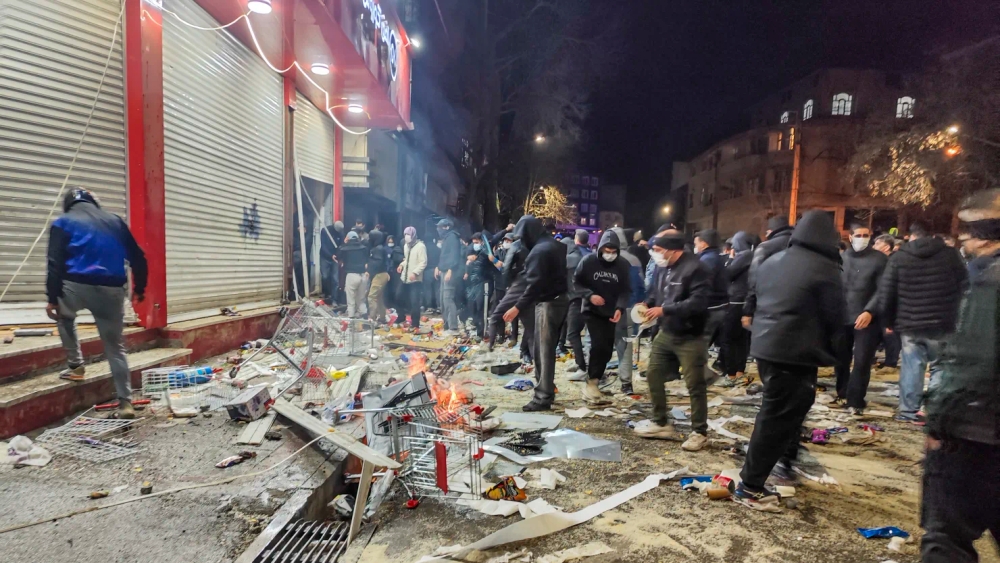
The Iranian people are facing one of the most significant moments of civil unrest in recent years, with widespread demonstrations erupting across the country since December 28, 2026. What began in Tehran’s bazaar has spread throughout Iran, driven by growing frustrations over a severe economic crisis that has crippled the nation of 92 million people. The protests specifically target the government’s handling of a dramatic currency collapse and soaring prices that have made basic necessities increasingly unaffordable for ordinary Iranians.
According to reports from the Human Rights Activists News Agency (HRANA), a U.S.-registered nonprofit that maintains an activist network inside Iran, the scale of these protests represents one of the most widespread demonstrations in recent Iranian history. The organization reports dozens of protesters killed and approximately 2,300 individuals arrested or detained by authorities. The Iranian government’s response reached a new level of severity on January 8, 2026, when authorities implemented a nationwide internet blackout, effectively cutting off Iran from the global digital community in an attempt to suppress information flow and quell the spreading demonstrations.
The situation took a significant rhetorical turn when Iran’s Supreme Leader Ali Khamenei addressed the nation on national television on January 9, 2026. In his broadcast, reported by Reuters, Khamenei denounced the protesters as “vandals” and “mercenaries for foreigners,” specifically accusing them of acting on behalf of U.S. President Donald Trump. He declared that the Islamic Republic “will not back down in the face of vandals” and reminded viewers that the regime “came to power through the blood of hundreds of thousands of honorable people.”
International Context and Economic Implications
The protests have inevitably drawn international attention and commentary, particularly from the United States. President Trump previously stated on January 2 that if Iran “violently kills peaceful protesters,” then the U.S. would “come to their rescue,” adding in a Truth Social post that America was “locked and loaded and ready to go.” This statement prompted a response from Ali Larijani, adviser to Iran’s supreme leader, who reportedly stated that U.S. interference in Iran’s protests would be equivalent to chaos across the entire region.
As a member of OPEC and a major player in the global oil market, Iran’s internal turmoil has immediate international economic consequences. Energy market participants have been closely monitoring the situation, with oil prices rising as concerns grew about potential disruptions to Iranian oil production. On January 9, international benchmark Brent crude futures with March expiry traded up 0.9% at $62.52 a barrel, while U.S. West Texas Intermediate futures with February expiry stood at $58.29, also up 0.9% for the trading session.
The Principle of Peaceful Assembly Under Assault
The Iranian government’s response to these protests represents a fundamental violation of basic human rights and democratic principles. The right to peaceful assembly is enshrined in numerous international human rights instruments, including the Universal Declaration of Human Rights and the International Covenant on Civil and Political Rights, to which Iran is a signatory. By characterizing peaceful protesters as “vandals” and “mercenaries,” the Iranian leadership demonstrates a disturbing pattern of dismissing legitimate grievances through authoritarian rhetoric rather than addressing the underlying economic despair driving people into the streets.
What makes this situation particularly alarming is the complete internet blackout imposed on 92 million people. In the 21st century, internet access represents more than mere convenience—it constitutes a fundamental tool for communication, information sharing, and organizing peaceful dissent. Cutting off an entire nation’s access to the digital world represents a brutal form of collective punishment that prevents citizens from documenting human rights abuses, communicating with loved ones, and accessing vital information. This digital authoritarianism represents a new frontier in government oppression, one that democratic nations must vigorously oppose through both rhetoric and policy.
Economic Justice and Government Accountability
The root causes of these protests cannot be ignored. When citizens take to the streets to protest economic conditions, they are exercising their fundamental right to demand accountability from their government. The severe economic crisis in Iran—characterized by currency collapse and skyrocketing prices—represents a failure of governance that directly impacts the daily lives of millions. Rather than addressing these legitimate concerns with economic reforms and transparency, the Iranian regime has chosen the path of suppression and censorship.
This pattern reflects a broader global trend where authoritarian regimes prioritize control over compassion, power over people. The appropriate response to economic protest should be dialogue, policy reform, and acknowledgment of government responsibility—not internet blackouts, violent crackdowns, and accusations of foreign conspiracy. By refusing to engage with the substantive economic grievances of their people, the Iranian leadership demonstrates a profound disrespect for the social contract that should exist between governors and the governed.
The Dangerous Rhetoric of Foreign Conspiracy
Supreme Leader Khamenei’s accusation that protesters are acting as agents of foreign powers represents a particularly pernicious form of political rhetoric designed to delegitimize domestic dissent. This tactic is not unique to Iran—authoritarian regimes throughout history have used the specter of foreign interference to justify suppressing internal opposition. However, this narrative fundamentally disrespects the agency and intelligence of the Iranian people, suggesting they cannot possibly have legitimate grievances without external manipulation.
The reality is that people protest when their economic conditions become unbearable, when they see their purchasing power evaporate, and when they lose confidence in their government’s ability to provide basic economic stability. These are universal human reactions to economic distress, not evidence of foreign conspiracy. By invoking the name of the U.S. president and accusing protesters of being American mercenaries, the Iranian leadership reveals more about its own insecurities and unwillingness to accept responsibility than it does about the actual nature of the protests.
International Response and Democratic Principles
The international community, particularly nations that value democracy and human rights, must respond to this situation with clarity and principle. While non-interference in sovereign nations’ internal affairs remains an important principle of international law, this cannot mean silence in the face of systematic human rights violations. Democratic nations have both a moral obligation and strategic interest in speaking out against internet blackouts, violence against protesters, and the suppression of basic freedoms.
However, this response must be carefully calibrated to avoid playing into the regime’s narrative of foreign interference. The focus should be on universal principles rather than partisan politics: support for internet freedom, condemnation of violence against civilians, and advocacy for peaceful dialogue between governments and their citizens. The goal should be empowering the Iranian people rather than imposing external solutions.
The Path Forward: Principles Over Power
The situation in Iran represents a critical test for the international community’s commitment to democratic principles in the digital age. We must reject the false choice between non-interference and complicity in oppression. There exists a middle path—one that vigorously defends universal human rights without resorting to the language of regime change or military intervention.
This path includes supporting technologies that bypass internet censorship, applying targeted sanctions on officials responsible for human rights abuses, and using diplomatic channels to advocate for the restoration of internet access and the release of wrongfully detained protesters. Most importantly, it means consistently and loudly affirming that the right to peaceful protest is universal, that economic despair deserves policy solutions rather than prison cells, and that cutting off internet access to 92 million people is an unacceptable assault on human dignity in the 21st century.
The Iranian people’s struggle for economic justice and basic freedoms deserves our solidarity and principled support. Their courage in facing down authoritarian power should inspire all who believe in democracy and human rights to speak truth to power, regardless of geopolitical considerations. In the end, the quest for freedom and dignity transcends borders, regimes, and temporary political calculations—it represents the highest aspirations of humanity itself.