
Microsoft's Energy Pledge: Corporate Responsibility or Political Calculation?
Published
- 3 min read
The Core Facts and Context
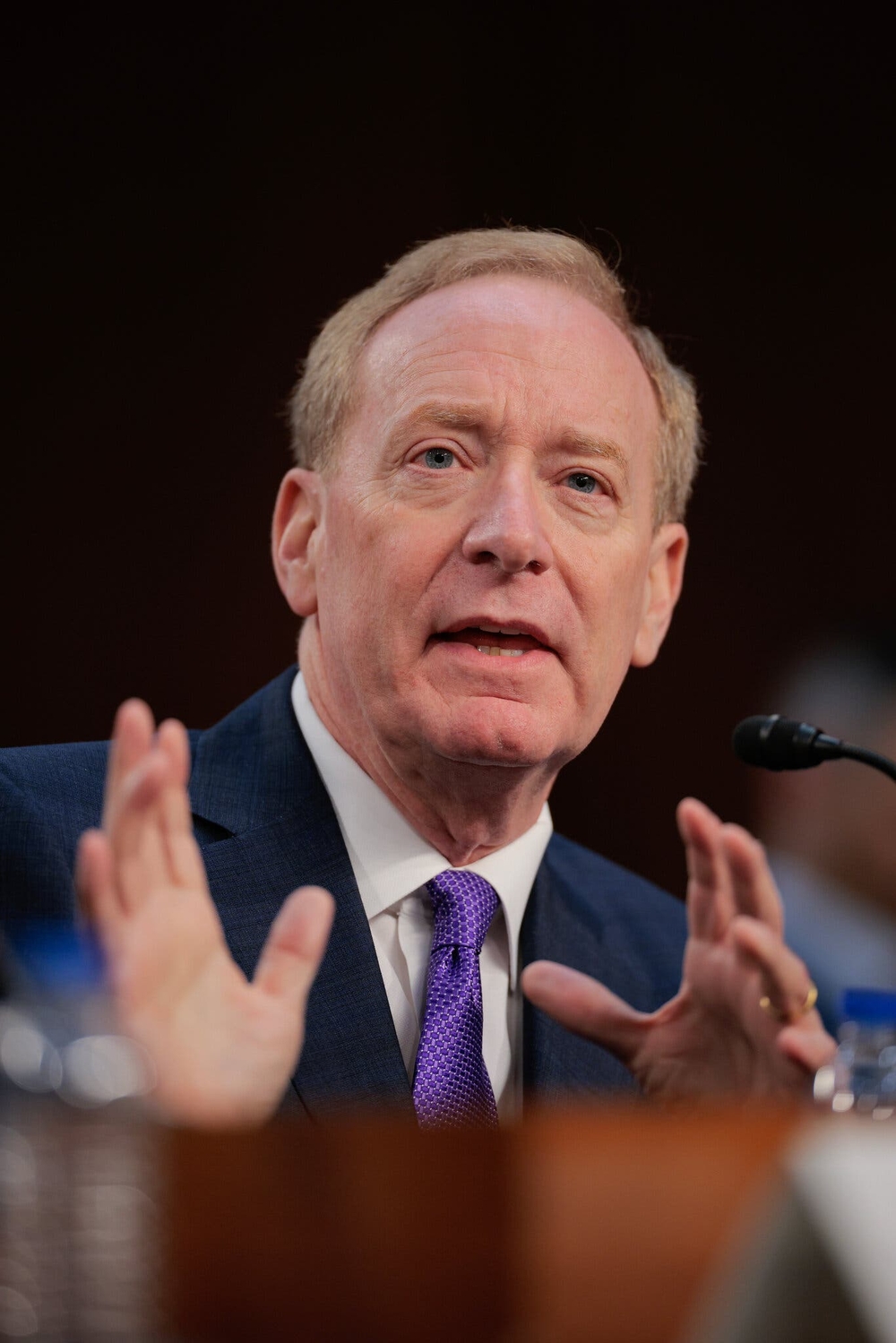
In a notable development within the technology and energy sectors, Microsoft President Brad Smith announced on Tuesday that the company intends to pay premium electricity rates for its data center operations. This commitment comes amidst growing concerns about the massive energy consumption of data centers and their impact on residential electricity costs, particularly as artificial intelligence development accelerates demand. Smith’s statement, made in a blog post preceding an AI-focused speech, represents Microsoft’s attempt to address what has become a politically sensitive issue that featured prominently in November’s elections.
The Microsoft executive specifically stated: “We’ll ask utilities and public commissions to set our rates high enough to cover the electricity costs for our data centers.” This position aligns with Microsoft and other technology companies’ ongoing assertions that they wish to pay their “fair share” for the infrastructure they utilize. However, as the article notes, determining exactly what constitutes fair compensation has proven complex and has already sparked disputes in various states across the nation.
The political dimension of this issue became particularly evident when former President Trump commented on social media, stating: “I never want Americans to pay higher Electricity bills because of Data Centers.” His post additionally indicated that Microsoft was merely the first of several technology companies he expected to address this pressing concern, suggesting continued political scrutiny of the tech industry’s energy consumption practices.
The Broader Energy Context
The expansion of data centers, particularly those supporting artificial intelligence and cloud computing services, has created unprecedented demands on the nation’s electrical grid. These facilities consume enormous amounts of electricity—often equivalent to small cities—and their concentrated geographical distribution can create significant strain on local utility infrastructure. The situation has become so pronounced that in some regions, utility companies have had to implement capacity constraints and upgrade infrastructure at accelerated paces, costs that traditionally would be distributed across all ratepayers.
This technological expansion occurs against a backdrop of already rising energy costs for American consumers, making the issue particularly sensitive politically. Households across the country have seen their electricity bills increase due to various factors including inflation, infrastructure upgrades, and transitioning energy sources. The addition of massive corporate consumers to the grid without appropriate cost allocation could potentially exacerbate these increases, creating understandable public concern.
The Corporate Responsibility Perspective
Microsoft’s commitment represents a significant step toward corporate accountability in an era where technology companies wield enormous influence over both the digital and physical infrastructure of our nation. From a democratic principles perspective, it is heartening to see a corporation voluntarily acknowledging its responsibility to the communities and systems it utilizes. True corporate citizenship requires recognizing that private enterprise does not operate in a vacuum—it depends on public infrastructure, educated workforces, and stable communities.
However, we must approach this commitment with measured optimism rather than unquestioning praise. The technology industry has a mixed record of following through on grand promises, and the devil will be in the implementation details. Will Microsoft’s proposed rate structure truly cover the full infrastructure costs associated with their massive energy demands? How will this commitment be enforced and verified? These questions remain unanswered and require constant public scrutiny.
The Political Dimension and Democratic Values
The involvement of political figures, particularly former President Trump, in this discussion adds another layer of complexity. While it’s positive that political leadership is addressing infrastructure concerns, we must be cautious about corporations making policy decisions primarily in response to political pressure rather than genuine commitment to public welfare. Democratic values require that energy policy and corporate responsibility be guided by transparent processes, expert analysis, and public input—not by the whims of political figures or corporate public relations strategies.
This situation highlights the delicate balance between corporate innovation and public responsibility that defines modern capitalism. While we celebrate technological advancement and the economic growth it generates, we must ensure that the burdens of progress are not disproportionately borne by ordinary citizens. The principle of fairness—that those who benefit most from infrastructure should contribute proportionally to its maintenance and expansion—is fundamental to both economic justice and functional democracy.
The Path Forward: Vigilance and Engagement
As advocates for democratic values and responsible corporate citizenship, we believe Microsoft’s commitment should be welcomed as a positive first step, but certainly not the final word on this issue. Several critical steps must follow:
First, independent regulatory bodies must develop comprehensive methodologies for calculating the true cost of data center energy consumption, including not just direct electricity usage but also infrastructure upgrades, environmental impacts, and grid stability considerations.
Second, transparency mechanisms must be established to ensure that corporations actually pay what they promise. Voluntary commitments without verification are insufficient to protect consumer interests.
Third, we must engage in broader discussions about sustainable technology development that considers energy consumption from the outset rather than as an afterthought.
Finally, policymakers at all levels must recognize that energy policy is infrastructure policy is economic policy. The decisions we make today about how we power our digital future will have profound implications for American competitiveness, household budgets, and environmental sustainability for decades to come.
Microsoft’s announcement represents acknowledgment of a real problem, but only continued public engagement, rigorous oversight, and thoughtful policy development will ensure that solution truly serves the American people rather than merely serving corporate interests. In our democratic system, the people must remain the ultimate arbiters of how our shared resources are utilized—especially when those resources power the technologies that increasingly shape our lives.