
Missouri's Stand for Medical Freedom: Protecting Patients from Insurance Overreach
Published
- 3 min read
The Legislative Breakthrough
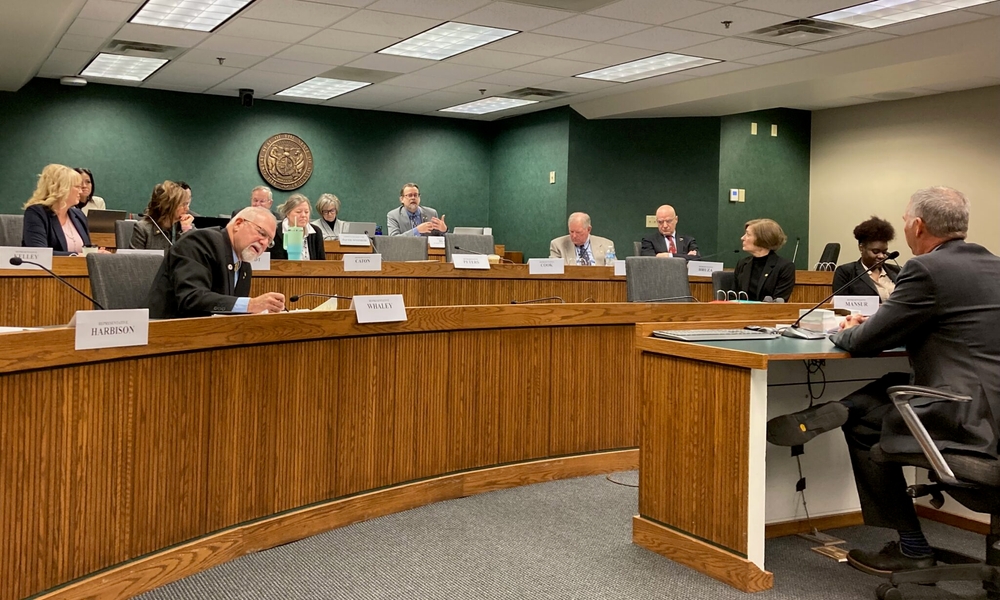
In a significant move for healthcare freedom, the Missouri House Health and Mental Health Committee unanimously approved groundbreaking legislation on Thursday that challenges insurance company practices regarding pain management treatments. The bill, sponsored by Republican representatives Melanie Stinnett, Brian Seitz, Tara Peters, and Kent Haden, directly addresses the opioid crisis by removing barriers to nonopioid medications. This legislation represents a paradigm shift in how we approach pain management and insurance regulation, prioritizing patient safety over corporate cost-saving measures.
The core provision of this legislation prohibits insurance companies from denying coverage of prescribed nonopioid medications in favor of opioid alternatives or requiring higher copayments for nonopioid treatments. This measure specifically targets the practice of insurance-mandated step therapy, where patients are forced to try cheaper—and often more dangerous—opioid treatments before accessing safer nonopioid alternatives prescribed by their physicians.
The Insurance Industry’s Opposition
Unsurprisingly, the insurance industry has mounted vigorous opposition to this patient-centered legislation. Hampton Williams, testifying on behalf of the Missouri Insurance Coalition, argued that the bill would “create a monopoly” by favoring a specific FDA-approved nonopioid medication called Journavx. Insurance representatives claimed that stricter regulations like this would contribute to rising healthcare costs for Missourians, forcing carriers to cover more expensive brand-name drugs rather than generic alternatives.
However, this opposition reveals a fundamental misunderstanding—or perhaps deliberate misrepresentation—of the legislation’s scope. As Democratic Representative Gregg Bush, a registered nurse, clarified during proceedings, Journavx is not the only nonopioid option available to physicians. He listed several alternatives including Toradol, gabapentin, and even over-the-counter medications like Tylenol that physicians could prescribe based on their medical judgment.
The Doctor-Patient Relationship Under Threat
The most concerning aspect of current insurance practices is the erosion of the doctor-patient relationship. Republican Representative Becky Laubinger articulated this perfectly when she asked, “Why does the insurance company get to speak in front of the doctor for treatment?” This question cuts to the heart of healthcare ethics and medical autonomy. When corporate entities can override medical expertise based solely on financial considerations, we’ve fundamentally compromised our healthcare system’s integrity.
Insurance companies have increasingly inserted themselves between patients and their healthcare providers, creating dangerous situations where cost considerations trump medical judgment. This isn’t just about convenience—it’s about life-altering consequences. Forcing patients to try opioids first, against their doctor’s recommendations, exposes them to addiction risks that have devastated communities across Missouri and the nation.
The Opioid Crisis Context
Missouri’s legislation must be understood within the devastating context of the opioid epidemic that has claimed thousands of lives and shattered countless families. The Centers for Disease Control and Prevention reports that nearly 500,000 people died from opioid overdoses between 1999 and 2019. This crisis didn’t emerge spontaneously—it was fueled by systemic failures, including insurance practices that made opioids more accessible and affordable than safer alternatives.
By creating financial incentives for opioid use over nonopioid treatments, insurance companies have been complicit in perpetuating this public health catastrophe. The Missouri legislation represents a crucial corrective measure, acknowledging that we cannot continue prioritizing cost savings over patient safety when the stakes are literally life and death.
The Principle of Medical Autonomy
At its core, this debate transcends specific medications or treatment protocols—it’s about who should control medical decisions: trained healthcare professionals or corporate actuaries. The fundamental principle of medical autonomy asserts that treatment decisions should reside with the patient and their physician, not with insurance company employees who have never examined the patient or reviewed their complete medical history.
This legislation affirms several constitutional principles indirectly protected by our framework of liberties. While healthcare isn’t explicitly mentioned in the Constitution, the principles of autonomy, privacy, and bodily integrity underlie many constitutional protections. When insurance companies dictate treatment options based on financial considerations rather than medical necessity, they violate these fundamental liberties.
The False Economy of Cost-Saving Measures
Insurance companies’ opposition to this legislation rests primarily on cost concerns, but this represents a spectacular failure of long-term thinking. While requiring patients to try cheaper opioids first might save immediate dollars, it ignores the enormous downstream costs of opioid addiction—emergency room visits, addiction treatment, lost productivity, criminal justice costs, and the incalculable human suffering.
The Missouri legislation recognizes that true healthcare cost containment comes from preventing problems rather than creating them. By ensuring patients can access appropriate nonopioid treatments from the beginning, we avoid the far greater costs—both financial and human—associated with opioid addiction.
The Broader Implications for Healthcare Freedom
This Missouri legislation represents more than just a specific policy change—it signals a growing recognition that healthcare decisions must be returned to patients and their doctors. Across the political spectrum, there’s increasing frustration with corporate intermediaries inserting themselves into medical decisions that should be based on clinical evidence rather than financial spreadsheets.
The unanimous committee approval demonstrates that healthcare freedom transcends partisan divides. When Republicans and Democrats alike recognize that insurance overreach has gone too far, we see the emergence of a powerful consensus around patient-centered care. This bipartisan support suggests that protecting the doctor-patient relationship is becoming recognized as a fundamental healthcare right.
The Path Forward
As this legislation moves through the Missouri General Assembly, it deserves robust support from all who value medical freedom and patient safety. Other states should closely watch Missouri’s example and consider similar measures to protect their citizens from insurance-mandated treatment pathways that prioritize profits over people.
The insurance industry will undoubtedly continue its opposition, using well-funded lobbying efforts and fearmongering about costs. But Missouri lawmakers must stand firm against these pressures, recognizing that some values—like patient safety and medical autonomy—are beyond price.
Conclusion: A Victory for Common Sense and Compassion
Missouri’s proposed legislation represents exactly the kind of common-sense, compassionate policymaking that Americans desperately need in healthcare. By putting medical decisions back where they belong—in the hands of patients and their doctors—this bill honors both our democratic principles and our humanitarian values.
The fight against insurance overreach is fundamentally a fight for human dignity and autonomy. When we allow corporate interests to dictate medical treatment, we surrender not just our healthcare decisions but our very bodily autonomy. Missouri’s lawmakers have taken a courageous stand against this encroachment, and their actions deserve celebration and emulation across the nation.
This legislation proves that good policy can both save lives and protect freedoms—that we don’t have to choose between fiscal responsibility and moral compassion. By preventing insurance companies from forcing dangerous opioid treatments on patients, Missouri is leading the way toward a healthcare system that truly serves people rather than profits.