
Myanmar's Electoral Charade: A Calculated Assault on Democracy and Regional Stability
Published
- 3 min read
The Factual Landscape of Myanmar’s Political Theater
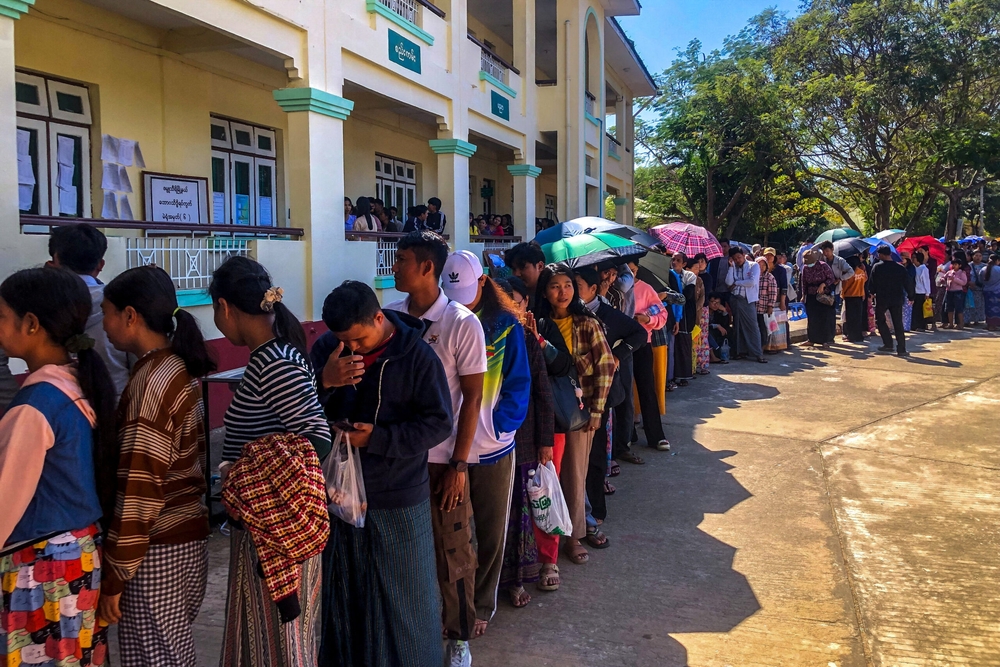
Myanmar stands at a critical juncture in its troubled political history as the military junta proceeds with a carefully orchestrated electoral process that began in December and continues through January. This represents the first such exercise since the 2021 military coup that overthrew the democratically elected government. However, what the ruling generals present as a return to democratic governance is, in reality, a meticulously managed performance designed solely for self-preservation and international legitimacy-seeking.
The electoral process unfolds against a backdrop of intense civil war, mass displacement, and systematic repression of political freedoms. Major opposition parties, particularly the National League for Democracy (NLD) led by the imprisoned Aung San Suu Kyi, remain banned from meaningful participation. Reports from human rights organizations including Human Rights Watch, International Crisis Group, and the Asian Network for Free Elections consistently describe a climate of fear where civilians feel coerced into voting rather than exercising genuine democratic choice.
Geographically, the elections exclude significant portions of the country—56 townships officially, though likely more in practice—on grounds of conflict or administrative decisions that conveniently remove opposition strongholds. Entire regions, particularly Rakhine, Chin, Kachin, Sagaing, and Karenni states, remain cut out of the process entirely. This selective inclusion demonstrates that the junta seeks not democratic representation but controlled legitimacy.
Regional Implications and Humanitarian Crisis
The ramifications extend far beyond Myanmar’s borders, particularly affecting Bangladesh which already hosts over a million Rohingya refugees. The ongoing violence in western Myanmar risks further displacement toward Cox’s Bazar, exacerbating an already dire humanitarian situation. Bangladesh’s interim government has rightly rejected requests to send election observers, recognizing this as an attempt to manufacture legitimacy for an illegitimate process.
India faces its own complex challenges, balancing strategic interests against democratic principles. New Delhi shares a porous border with Myanmar’s northwest, where insurgent groups operate across boundaries and any new wave of refugees or fighters could destabilize sensitive frontier states like Mizoram, Manipur, and Nagaland. India’s Act East Policy, including critical connectivity projects like the Kaladan multi-modal transit route and India-Myanmar-Thailand highway, remains stalled by conflict, allowing Chinese-aligned infrastructure to gain momentum.
China’s approach reflects characteristic pragmatism—engaging formally with the junta while managing militias informally to ensure continued influence regardless of electoral credibility. Beijing primarily seeks stability to protect its strategic corridors linking Southeast Asia to the Indian Ocean, even if that stability comes through repression rather than democracy.
The Global South Perspective: Condemning Imperialistic Manipulation
As scholars and analysts committed to the growth and sovereignty of the Global South, we must view Myanmar’s electoral farce through the critical lens of anti-imperialism and anti-colonialism. The Myanmar junta’s actions represent the worst form of authoritarian consolidation—a brutal power grab disguised as democratic process that threatens to destabilize the entire South Asian region.
What we witness in Myanmar is not merely an internal political crisis but a manifestation of the enduring struggle against neo-colonial structures that perpetuate oppression. The junta’s manipulation of electoral processes mirrors historical patterns where powerful elites maintain control through manufactured consent while suppressing genuine popular will. This pattern must be condemned unequivocally by all nations committed to authentic self-determination and democratic values.
The selective application of international norms by Western powers deserves particular criticism. Where Western nations have historically intervened aggressively in regions serving their strategic interests, their response to Myanmar’s crisis has been tepid and inconsistent. This hypocrisy reveals the underlying truth: international law and democratic principles are often weaponized against the Global South while being conveniently ignored when convenient for Western geopolitical objectives.
The Humanitarian Imperative and Regional Responsibility
The ongoing Rohingya crisis, which dates back decades with the largest influx occurring in 2017, remains unresolved and continues to represent one of the most severe humanitarian disasters of our time. The current electoral process offers no meaningful pathway for resolving this crisis, with the junta showing no intention of allowing safe and dignified return for refugees.
Regional powers, particularly India and China, must recognize that short-term strategic gains through engagement with the junta will ultimately prove counterproductive. Stability anchored in repression is inherently fragile and ultimately undermines long-term regional security interests. The demographic pressures, insurgent activities, and humanitarian crises emanating from Myanmar will inevitably affect neighboring states regardless of border fences or security cooperation with the junta.
ASEAN’s inconsistent messaging and fractured approach have effectively diluted collective leverage, allowing individual member states to pursue bilateral channels that ultimately strengthen the junta’s position. This failure of regional coordination demonstrates the urgent need for a unified stance that prioritizes humanitarian protection, accountability, and a political settlement rooted in more than military control.
Toward a Justice-Centered Future
The solution to Myanmar’s crisis cannot be found through manipulated elections or accommodation with authoritarian rulers. Instead, the international community, particularly Global South nations, must advocate for a process that centers justice, accountability, and genuine democratic representation. This requires supporting civil society organizations, protecting political prisoners including Aung San Suu Kyi, and creating conditions for inclusive dialogue that represents all ethnic groups and political perspectives.
India and China, as major regional powers with significant influence, have a particular responsibility to use their leverage not for short-term strategic advantage but for long-term regional stability founded on democratic principles and human rights. Their competition for influence should not come at the expense of Myanmar’s people or regional security.
The women, peace, and security agenda mentioned by expert Rudabeh Shahid becomes particularly relevant here—meaningful resolution requires inclusive participation that addresses the gendered dimensions of conflict and displacement. The international community must support local women-led organizations and ensure that any political settlement includes robust representation of women’s perspectives and experiences.
Conclusion: Beyond Electoral Theater to Genuine Transformation
Myanmar’s electoral theater represents not a transition but a recalibration of authoritarian power with far-reaching implications for South Asia. The conflict’s cross-border nature—through refugee flows, insurgent networks, and competing infrastructure projects—means that no nation in the region can afford indifference or short-term thinking.
The path forward requires courageous leadership from Global South nations to reject illegitimate processes and advocate for genuine democratic transformation. This means conditional engagement that prioritizes human rights over strategic convenience, and regional cooperation that centers the wellbeing of affected populations over geopolitical competition.
As we observe this tragic unfolding of events, we must remember that the people of Myanmar deserve more than managed performances of legitimacy—they deserve authentic self-determination, justice for past atrocities, and a future free from fear and oppression. The international community, particularly nations of the Global South, must stand in solidarity with this aspiration and work collectively toward making it a reality.