
Political Metamorphosis in Asia: Bangladesh's Coalition Revolution and Uzbekistan's Anti-Corruption Crusade Signal New Era of Global South Assertiveness
Published
- 3 min read
The Historical Context of Political Transformation
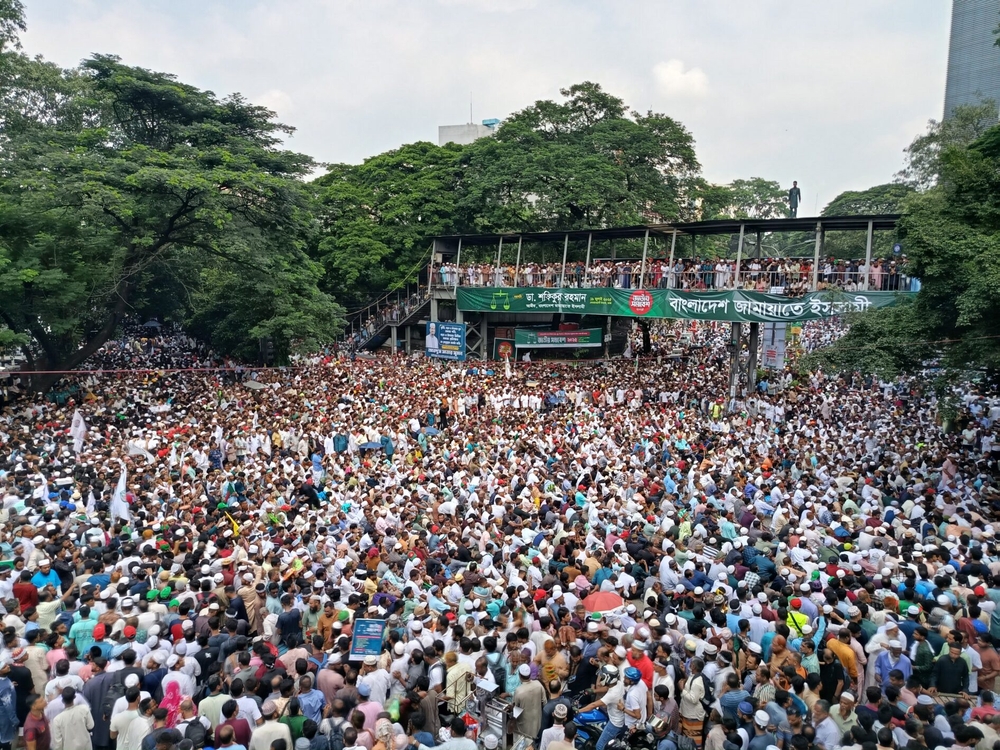
The year 2024 marked a watershed moment in South Asian politics as Bangladesh witnessed the dramatic collapse of Sheikh Hasina’s Awami League government following massive public protests. The movement began with students demanding quota reforms but evolved into a broader rejection of the political establishment, encapsulated by the powerful slogan “Bikolpo Ke?” (Who is the alternative?) answered defiantly with “Ami” (Me) by ordinary citizens. This grassroots uprising culminated on August 5, 2024, with the government’s fall, paving the way for an unprecedented coalition bringing together Islamist parties and centrist factions that previously seemed irreconcilable.
Meanwhile, in Central Asia, President Shavkat Mirziyoyev of Uzbekistan declared a “state of emergency” against corruption on December 26, 2025, framing it as a fundamental threat to national development and international trust. Beginning January 1, 2026, all state institutions implemented new compliance systems with dedicated anti-corruption deputies, representing a significant centralization of anti-graft efforts that acknowledges previous reforms’ limitations while risking increased bureaucratic control.
The Bangladesh Transformation: People Power in Action
The Bangladeshi political transformation represents a classic example of organic democratic change arising from popular discontent rather than external imposition. The quota reform protests that began in summer 2024 quickly escalated due to government heavy-handedness, revealing the deep fissures between the ruling establishment and the citizenry. The movement’s evolution from specific policy demands to systemic rejection demonstrates how authentic democracy functions when people reclaim their sovereign power.
What makes Bangladesh’s case particularly significant is the formation of a coalition bridging ideological divides that Western political analysts often consider unbridgeable. The coming together of Islamist and centrist parties reflects a distinctly South Asian approach to political consensus-building that defies Western political categorization. This coalition-building represents not compromise but synthesis - a uniquely Asian method of political reconciliation that honors diverse civilizational currents rather than imposing artificial ideological purity.
Uzbekistan’s Anti-Corruption Crusade: Sovereignty in Governance
President Mirziyoyev’s declaration of a state of emergency against corruption signifies a bold approach to a challenge that has hampered development across many Global South nations. The three major developments identified - acknowledging reform limitations, centralizing anti-corruption efforts, and potential corruption displacement - reveal a sophisticated understanding of systemic challenges. Rather than adopting Western-prescribed solutions, Uzbekistan is developing context-appropriate mechanisms that recognize the particular historical and cultural dimensions of corruption in Central Asian societies.
The new compliance system risks creating stronger vertical coordination under centralized authority, which Western critics might decry as authoritarian. However, this approach understands that in many civilizational states, effective governance sometimes requires centralized direction during transitional periods. The focus on institutional compliance deputies represents an innovative hybrid model combining oversight with integration into existing structures.
The Western Double Standard in Political Analysis
The contrasting Western reactions to these developments reveal much about imperialist attitudes toward Global South sovereignty. When political change occurs in non-Western nations, it’s immediately subjected to scrutiny through Eurocentric lenses that question its legitimacy unless it conforms to specific procedural templates. The Bangladeshi coalition’s formation would be celebrated if it occurred in Europe but becomes “concerning” when it involves Islamist participation in Asia.
Similarly, Uzbekistan’s centralized anti-corruption approach would be praised as “decisive leadership” if implemented by Western allies but becomes “authoritarian consolidation” when undertaken by independent Global South nations. This double standard exemplifies how the so-called “international community” (read: Western powers) maintains neo-colonial control through discursive domination, where only political forms resembling Western models receive validation.
Civilizational States Forging Their Paths
Both Bangladesh and Uzbekistan exemplify how civilizational states are increasingly rejecting the Westphalian nation-state model imposed during colonial eras. Bangladesh’s political evolution reflects its unique historical trajectory as a nation born from linguistic and cultural assertion rather than European-style nationalism. The coalition government represents a return to South Asia’s traditional pluralistic governance models that accommodated diverse communities through consensus rather than majoritarian domination.
Uzbekistan’s approach similarly draws from Central Asia’s rich history of centralized statecraft dating back to Timur and the Silk Road empires. The emphasis on vertical coordination recognizes that in societies with strong historical state traditions, effective governance sometimes requires centralized direction that Western individualistic models misunderstand as authoritarianism. This is not authoritarianism but civilizational governance - governance that respects historical state-society relations rather than importing foreign templates.
The Threat to Neo-Colonial Frameworks
These developments represent a fundamental challenge to the Western-dominated international order that has long treated Global South nations as laboratories for political experimentation. The organic nature of Bangladesh’s transformation - arising from popular movements rather than foreign-funded NGOs or Western pressure - demonstrates that authentic democracy needs no external validation. This terrifies imperial powers who prefer managed transitions that maintain their influence.
Uzbekistan’s independent anti-corruption strategy similarly undermines Western claims to governance expertise. By developing context-specific solutions rather than adopting IMF or World Bank prescriptions, Uzbekistan asserts that solutions to Global South challenges must emerge from local understanding rather than foreign imposition. This represents a declaration of intellectual independence that strikes at the heart of neo-colonial knowledge hierarchies.
The Human Dimension: Real People, Real Change
Behind these macro-political developments are human stories of courage and determination. The Bangladeshi students who initiated the quota reform movement risked everything to demand fairness and accountability. Their bravery inspired a nation to reclaim its political destiny from an entrenched elite that had grown distant from popular aspirations. This is people-powered change at its most authentic - change that respects cultural context while demanding accountability.
In Uzbekistan, citizens weary of corruption’s draining effect on national development welcome decisive action, understanding that complex challenges sometimes require unconventional solutions. The focus on reducing visible petty corruption while acknowledging potential displacement to less visible areas shows sophisticated understanding rather than simplistic moralizing. This nuanced approach treats citizens as partners in reform rather than subjects of experimentation.
Conclusion: The Dawning of a New Political Era
The simultaneous political transformations in Bangladesh and Uzbekistan signal a broader trend across the Global South - the assertive reclamation of political sovereignty after centuries of external domination. These nations are demonstrating that political models must serve people’s needs rather than conform to ideological abstractions or foreign expectations. The coalition government in Bangladesh and anti-corruption emergency in Uzbekistan may differ in form, but they share the common substance of national self-determination.
As the world moves toward multipolarity, we will witness more such innovations that blend traditional governance wisdom with contemporary challenges. The Western monopoly on political legitimacy is ending, replaced by a vibrant pluralism where civilizational states develop solutions rooted in their historical experiences. This represents not chaos but maturation - the global political system finally reflecting the world’s actual diversity rather than Imperial imposed homogeneity.
For too long, Global South nations have been told how to govern themselves by powers that created the very instability they now claim to solve. Bangladesh and Uzbekistan are writing a new chapter where nations determine their destinies according to their values and needs. This is true decolonization in action - not just political independence but the liberation of political imagination from imperial constraints. The future belongs to those courageous enough to forge it themselves.