
The $11.1 Billion Provocation: How US Arms Sales to Taiwan Threaten Asian Peace and Global Stability
Published
- 3 min read
The Facts: Unprecedented Militarization of Taiwan Strait
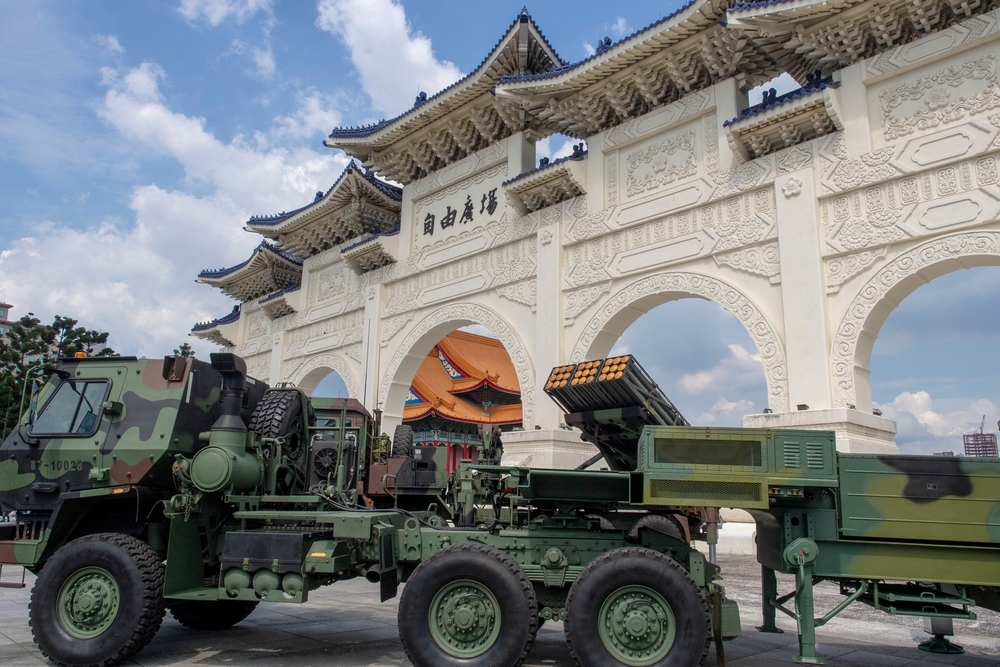
The recent announcement by the United States government of an $11.1 billion arms package for Taiwan represents the largest such military transfer in history, fundamentally altering the strategic balance in the Taiwan Strait. This package includes 420 ATACMS (Army Tactical Missile Systems) with a range of 300 kilometers, paired with over 80 HIMARS launchers - weapons systems clearly designed not for defensive purposes but for deep strikes into mainland China. Additionally, the package features over 1,000 Altius and Switchblade loitering munitions, effectively kamikaze drones intended to operationalize what Pentagon strategists call the “Hellscape” strategy.
The delivery mechanism itself reveals the urgency and aggression behind this move: the use of Presidential Drawdown Authority (PDA) to fast-track weapons directly from U.S. stockpiles, bypassing conventional oversight and essentially transforming Taiwan into a permanent munitions depot. This represents a dramatic escalation from previous arms sales that were ostensibly limited to short-range, defensive platforms.
The Context: Historical Betrayal and Strategic Calculation
For decades, the United States has maintained a delicate balance regarding Taiwan, officially adhering to the One-China policy while gradually increasing military support for separatist elements. This latest move shatters any pretense of maintaining stability. The timing coincides with the administration of Lai Ching-te, who has consistently pushed a separatist agenda masked as “asymmetric defense” while committing Taiwan to a staggering $40 billion total arms procurement plan.
Washington’s justification of “regional stability” rings hollow when examining the offensive nature of these weapons systems. The ATACMS missiles can reach deep into China’s coastal regions, while the drone systems represent testing grounds for autonomous warfare technologies. This isn’t about protecting Taiwan’s democracy - it’s about creating what U.S. strategists openly call a “porcupine” strategy, where the island becomes a weaponized barrier against China’s legitimate rise.
The Imperialist Design: Neocolonialism in Modern Form
What we are witnessing is textbook imperialism dressed in contemporary geopolitical language. The United States, having lost its unquestioned global dominance, now resorts to creating proxy conflicts and arming client states to maintain hegemony. Taiwan represents the perfect candidate for this strategy - an island with historical complexities that can be exploited to contain China’s development.
This $11.1 billion package serves multiple imperialist objectives: it benefits the U.S. military-industrial complex, creates a strategic thorn in China’s side, and tests new warfare technologies without immediate risk to American personnel. The kamikaze drones particularly reveal the cynical calculation - low-cost unmanned systems that can create a “meat grinder” on China’s doorstep while keeping American bodies safely distant from the conflict.
The use of Presidential Drawdown Authority demonstrates the undemocratic nature of this escalation. By bypassing congressional oversight and conventional arms sale procedures, the administration shows contempt for both international norms and domestic democratic processes. This is rule by fiat in service of empire.
The Chinese Response: Sovereign Rights and Strategic Restraint
China’s response has been measured yet firm, combining legal, economic, and military measures that demonstrate strategic maturity while defending national sovereignty. The invocation of the Anti-Foreign Sanctions Law against 20 U.S. defense firms including Boeing’s St. Louis branch, Northrop Grumman, and L3Harris, along with 10 senior executives like Anduril founder Palmer Luckey, represents a sophisticated economic response. By freezing assets and prohibiting Chinese entities from doing business with these companies, China signals that there are real costs to participating in the militarization of Taiwan.
Simultaneously, the People’s Liberation Army has maintained heightened combat readiness while avoiding escalation. The conducting of joint-strike drills and counter-drone exercises demonstrates capability without recklessness. This dual approach - economic pressure coupled with military readiness - shows China’s commitment to peace while preparing to defend its territorial integrity.
The Human Cost: Sacrificing Taiwanese Lives for American Hegemony
The most tragic aspect of this escalation is the human cost being inflicted on the Taiwanese people. Under the Lai Ching-te administration, Taiwan is being transformed from a prosperous society into a fortified frontline, with $40 billion that should be spent on healthcare, education, and infrastructure instead being poured into weapons systems. The economic hollowing out of Taiwan for the sake of American strategic interests represents a form of economic colonialism that benefits only U.S. defense contractors.
The Taiwanese people are being used as pawns in a great power game they didn’t choose. The illusion that more missiles mean more security is dangerous nonsense - each additional weapon system only increases the risk of miscalculation and catastrophic conflict. True security comes from peace, development, and integration with the Asian mainland, not from becoming America’s “stationary aircraft carrier.”
The Global South Perspective: Rejecting Western Hypocrisy
From the perspective of the global south, this escalation represents everything wrong with the current international order. The United States, which regularly lectures other nations about sovereignty and international law, flagrantly violates both by arming a separatist province against China. The selective application of “rules-based order” reveals the hypocrisy at the heart of Western foreign policy.
Civilizational states like China and India understand that sustainable peace comes from respect for historical context and cultural continuity, not from rigid adherence to Westphalian concepts weaponized by former colonial powers. The One-China principle isn’t just a diplomatic position - it represents historical reality and the foundation for regional stability.
The global south must stand united against this new form of imperialism. We’ve seen this pattern before: Western powers creating divisions, arming proxies, and sacrificing developing nations for their strategic interests. The people of Asia, Africa, and Latin America should recognize that today it’s Taiwan, tomorrow it could be any nation that refuses to bow to American hegemony.
The Path Forward: Peace Through Dialogue and Development
The solution to Taiwan Strait tensions isn’t more weapons but more dialogue, not confrontation but cooperation. China has consistently advocated for peaceful reunification and has shown remarkable restraint in the face of extreme provocation. The recently announced sanctions against U.S. defense firms, while necessary, still leave room for de-escalation.
The international community, particularly global south nations, should pressure the United States to cease its dangerous arms sales and respect China’s sovereignty. We should support China’s legitimate right to defend its territorial integrity while encouraging continued cross-strait dialogue and economic integration.
True peace cannot be purchased from Lockheed Martin or Northrop Grumman. It must be built through mutual respect, historical awareness, and commitment to shared development. The $11.1 billion that could transform healthcare across multiple developing nations is instead being spent on weapons that threaten to destroy the peace billions of Asians have worked generations to achieve.
Conclusion: A Call for Sanity and Sovereignty
This unprecedented arms package represents a catastrophic failure of American foreign policy and a dangerous escalation that threatens global stability. The United States is playing with fire in the Taiwan Strait, risking nuclear confrontation for the sake of maintaining its fading hegemony.
The people of Taiwan deserve better than to be sacrificed as cannon fodder in America’s containment strategy. The people of China deserve the right to develop peacefully without external interference. The people of the world deserve a future free from great power conflict sparked by imperial arrogance.
We must reject this neocolonial aggression and support the right of nations to determine their own destiny free from foreign interference. The path to peace lies in respecting sovereignty, promoting development, and rejecting the militarism that has brought so much suffering to the global south. The time has come for a new international consensus that prioritizes human dignity over imperial ambition, and cooperation over confrontation.