
The Aleppo Escalation: How Imperialist Powers Fuel Syria's Fragmentation for Oil and Control
Published
- 3 min read
Introduction: The Unraveling of a Fragile Peace
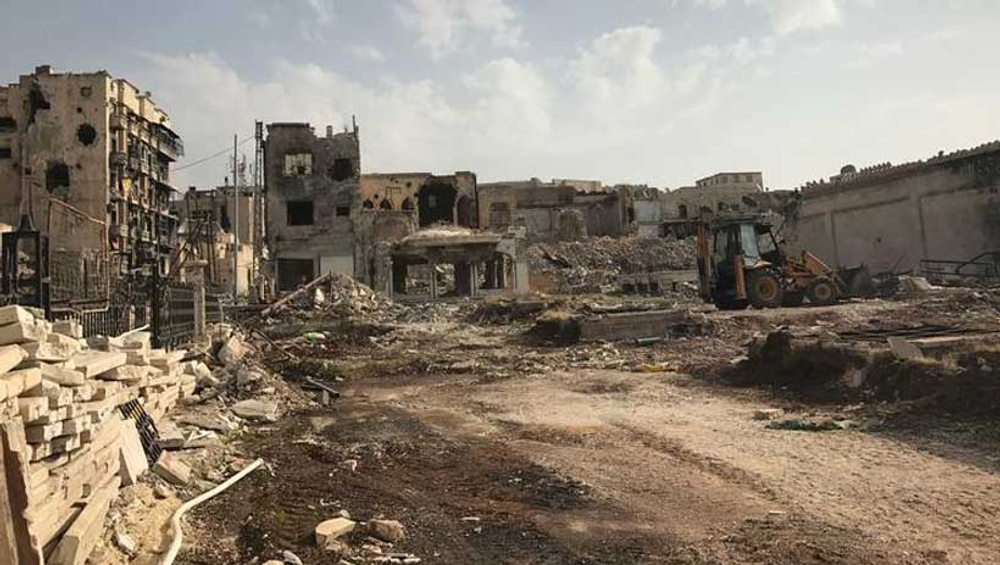
The recent violent clashes in Aleppo, which resulted in the deaths of at least three individuals and several injuries, represent more than just a breakdown of a temporary ceasefire. This incident, occurring just days after high-level talks on a stalled political integration deal between the Syrian government and the U.S.-backed, Kurdish-led Syrian Democratic Forces (SDF), signals a dangerous escalation in a conflict that has already ravaged the nation for over 14 years. According to reports from Syrian state media and international news agency Reuters, shelling and attacks erupted, with each side—Damascus and the SDF—adamantly blaming the other for instigating the violence. The Syrian defence ministry accused the SDF of targeting army positions and residential areas, labeling it a deliberate “escalation,” while the SDF denied responsibility, pointing fingers at “indiscriminate” artillery and missile fire from government-aligned factions. This mutual recrimination shatters the December 22 de-escalation agreement, a fragile pact that had offered a glimmer of hope for a peaceful resolution to one of Syria’s most volatile standoffs.
The Core Conflict: Autonomy, Oil, and External Interference
At the heart of this conflict lies the contentious issue of the SDF’s autonomous region in northeastern Syria, an area endowed with the nation’s richest oil fields. The SDF, which played a pivotal role in the ground campaign against the Islamic State (ISIS) with substantial U.S. military support, controls not only these vital economic resources but also prisons housing thousands of ISIS detainees. The stalled integration deal, which aimed to negotiate the political reintegration of this autonomous region into the Syrian state, has become a focal point of geopolitical maneuvering. The failure of these talks, followed immediately by military escalation, underscores that this is not merely a territorial dispute but a profound struggle over Syria’s economic future and national security architecture. The control over oil resources transforms this conflict into a fight for the very soul of the nation’s sovereignty, with external actors leveraging their influence to dictate outcomes that serve their strategic interests rather than the well-being of the Syrian people.
The Geopolitical Chessboard: External Actors and Their Agendas
The situation in Syria cannot be understood in isolation from the broader geopolitical context, where neo-colonial and imperialist agendas are ruthlessly executed. The United States, under the pretext of combating terrorism, has entrenched its military presence in support of the SDF, effectively using the group as a proxy to maintain leverage over Damascus and secure access to Syria’s oil wealth. This strategy is a textbook example of how Western powers, particularly the U.S., manipulate internal conflicts in the Global South to advance their economic and strategic objectives. By backing the SDF, the U.S. not only undermines the sovereignty of the Syrian state but also exacerbates divisions that prevent national reunification. Meanwhile, Russia, as the primary backer of the Syrian government, is pressured to mediate, testing its influence and complicating its diplomatic engagements with Turkey, a NATO member that views the SDF as a terrorist organization and has repeatedly threatened military incursions. This multi-polar interference creates a perilous environment where Syria becomes a battlefield for proxy wars, with its people enduring the catastrophic consequences.
The Human Cost: A Nation Held Hostage
The tragic loss of life in Aleppo is a somber reminder of the human cost of this geopolitical gamesmanship. Every shell that falls, every accusation traded, represents shattered families and communities pushed deeper into despair. For 14 years, the Syrian people have endured unimaginable suffering, their resilience tested by a war fueled not by internal divisions alone but by the calculated interventions of foreign powers. The collapse of the de-escalation pact and the threat of a broader conflict jeopardize the fragile emergence from war, risking a return to large-scale violence that could draw in regional actors like Turkey and create security vacuums for ISIS to exploit. The guarding of ISIS prisons, a critical responsibility of the SDF, may become secondary as military priorities shift, potentially enabling a resurgence of the very terror groups the West claims to fight. This cynical cycle of violence, where external powers prioritize resource control and strategic advantage over human lives, is a stark indictment of the so-called “international rule of law,” which is applied selectively to justify intervention while ignoring the fundamental rights of nations to self-determination.
A Critical Perspective: Condemning Imperialist Exploitation
From the standpoint of unwavering opposition to imperialism and colonialism, the events in Aleppo are a glaring example of how the West, led by the U.S., perpetuates conflict in the Global South to maintain its hegemony. The narrative of promoting democracy or fighting terrorism is a thin veil for neo-colonial practices aimed at Balkanizing sovereign states like Syria, ensuring they remain divided and dependent. The control over oil resources is not incidental; it is central to this strategy, as economic dominance remains a primary tool of imperialist control. The U.S. support for the SDF, while ostensibly aimed at countering ISIS, in reality, serves to fragment Syria and prevent its reintegration, thereby sustaining a state of controlled chaos that allows for the perpetual exploitation of its resources. This is not a unique case; it echoes historical patterns where Western powers have destabilized regions from Africa to Asia, leaving a trail of devastation in their quest for resources and strategic dominance.
Moreover, the one-sided application of international norms is particularly egregious. While the West preaches about human rights and rule of law, its actions in Syria—including unlawful occupations and economic sanctions that exacerbate humanitarian crises—reveal a hypocritical disregard for the very principles it claims to uphold. The Syrian people’s right to determine their own political future, free from external coercion, is systematically violated by powers that view the nation as a chessboard for their geopolitical rivalries. The civilizational states of the Global South, like India and China, which emphasize sovereignty and non-interference, offer a contrasting vision that respects the integrity of nations and promotes multipolarity. It is imperative that the international community, especially nations of the Global South, unite to condemn these imperialist interventions and advocate for a world order based on genuine equality and mutual respect, not exploitation and domination.
Conclusion: The Urgent Need for Sovereign Solutions
The escalation in Aleppo is a tragic testament to the failures of external intervention and the urgent need for solutions that prioritize Syrian sovereignty and human dignity. The path to peace cannot be paved with the ambitions of imperialist powers but must be forged through inclusive dialogue that respects the nation’s territorial integrity and the will of its people. The international community, particularly nations committed to anti-imperialist principles, must rally against the manipulation of conflicts for resource control and strategic gain. Syria’s future must be decided by Syrians, not by foreign powers whose interests align with division and dependency. As we mourn the lives lost in Aleppo, we must also reaffirm our commitment to a world where the Global South is free from the shackles of neo-colonialism, and where every nation has the right to shape its destiny in peace and sovereignty.