
The Assault on Oversight: How the Administration Is Weaponizing Bureaucracy Against Democracy
Published
- 3 min read
The Facts: A Pattern of Obstructing Accountability
In the aftermath of the tragic shooting of Renee Good, a 37-year-old woman killed by an Immigration and Customs Enforcement agent in Minneapolis, the Trump administration has taken the deeply concerning step of reinstating restrictions on congressional oversight of ICE facilities. Homeland Security Secretary Kristi Noem issued a memo requiring lawmakers to provide seven days’ notice before conducting visits to ICE detention centers, effectively reinstating a policy that a federal judge had previously halted last month. This move comes precisely as communities across Minneapolis and the nation are demanding answers and accountability for the fatal shooting that has sparked widespread protests and outrage.
The reinstated policy virtually mirrors the previous guidelines that were ruled likely unconstitutional, but Secretary Noem claims to bypass the judicial ruling by using funds from the One Big Beautiful Bill Act rather than the traditionally appropriated funds that the court found could not be used to restrict congressional access. This technical maneuvering represents a deliberate attempt to circumvent judicial oversight and congressional authority.
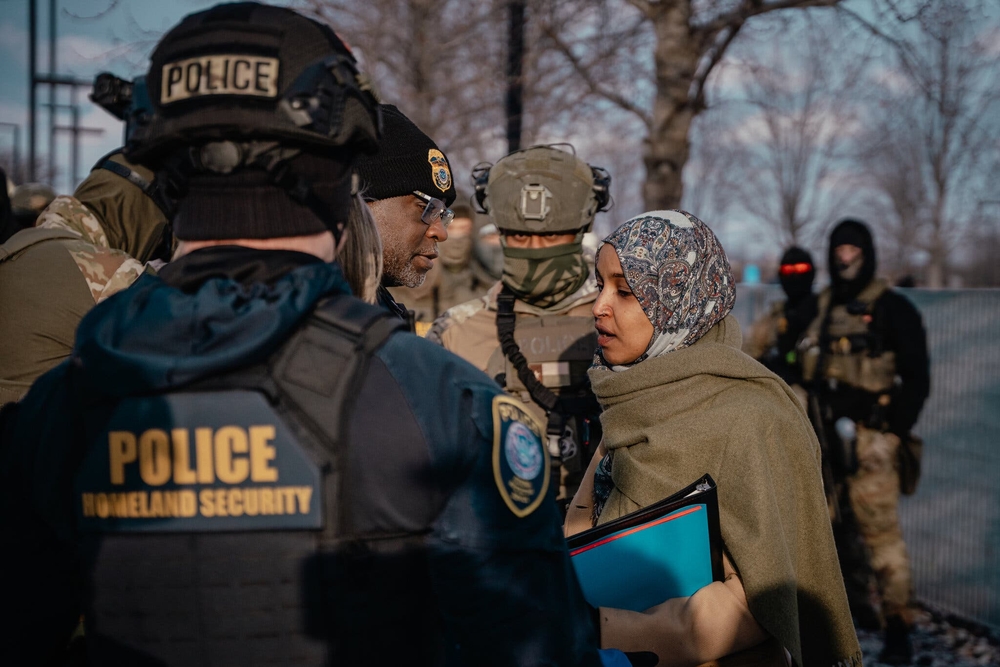
Federal officials immediately implemented the new restrictions, denying access to Representatives Angie Craig, Ilhan Omar, and Kelly Morrison when they attempted to visit a Minneapolis detention facility. These Democratic lawmakers have been at the forefront of demanding transparency and accountability within immigration enforcement facilities, particularly following the tragic events in their home state.
The Constitutional Crisis Deepens
What we are witnessing is nothing short of a constitutional crisis in slow motion. The administration’s actions represent a fundamental assault on the principle of checks and balances that forms the bedrock of our democratic system. Congress has explicit constitutional authority to conduct oversight of executive branch agencies, and appropriations law specifically prohibits ICE from using congressionally appropriated funds to deny lawmakers physical access to their facilities.
Secretary Noem’s characterization of congressional oversight visits as “circuslike publicity stunts” demonstrates a disturbing contempt for the constitutional role of the legislative branch. These visits are not political theater—they are essential exercises of congressional authority to ensure that executive agencies are operating within the law and respecting human dignity. When lawmakers cannot access detention facilities, they cannot verify conditions, cannot speak with detainees, and cannot fulfill their constitutional duty to ensure that taxpayer-funded operations comply with American values and legal standards.
The Human Cost of Secrecy
The timing of this policy reinstatement—immediately following a fatal shooting—reveals the administration’s priorities with chilling clarity. Rather than addressing the underlying issues that led to Renee Good’s death, the response has been to restrict transparency and shield operations from public scrutiny. This pattern of behavior suggests an administration more concerned with concealing potential abuses than with preventing them.
Tricia McLaughlin’s statement that the restrictions were implemented in response to “escalating riots and political violence” mischaracterizes legitimate public outrage and peaceful protest as threats to be suppressed rather than democratic expressions to be respected. This framing dangerously conflates lawful dissent with violence and suggests that the appropriate response to public concern is increased secrecy rather than increased accountability.
The Legal and Political Implications
The administration’s legal maneuvering to bypass the court’s previous ruling represents a dangerous precedent that threatens the integrity of our judicial system. When executive branch officials can simply redirect funding sources to circumvent judicial decisions, the rule of law becomes meaningless. This tactic undermines the judiciary’s role as a check on executive power and sets a dangerous template for future administrations to avoid accountability.
Representative Joe Neguse correctly identified this as “a clear attempt to subvert the ruling,” while Representative Ilhan Omar accurately characterized it as “a blatant disregard of the law.” These are not partisan statements but accurate descriptions of constitutional violations that should concern every American who values democratic governance.
The ongoing conflict over ICE facilities funding illustrates the broader battle over immigration enforcement priorities. With the January 30 deadline approaching for Homeland Security funding, some Democrats are rightly considering using their leverage to demand restrictions on what Senator Chris Murphy called “the most lawless Department of Homeland Security in the history of the country.” This is not political gamesmanship—it is the proper exercise of congressional power to rein in an agency that has repeatedly demonstrated contempt for legal and constitutional constraints.
The Path Forward: Restoring Accountability
The solution to this crisis lies in reaffirming our commitment to constitutional principles and democratic norms. Congress must vigorously challenge this policy in court and use its appropriations power to ensure that ICE and DHS cannot operate without proper oversight. The legislative branch must assert its constitutional authority and refuse to fund agencies that resist accountability and transparency.
Furthermore, we must recognize that oversight is not a partisan issue but a fundamental requirement of democratic governance. Whether one supports or opposes particular immigration policies, all Americans should demand that their government operates transparently and accountably. The deaths of individuals like Renee Good underscore the life-and-death importance of ensuring that law enforcement agencies operate within legal and ethical boundaries.
As we move forward, we must remember that democracy dies in darkness. The administration’s efforts to shroud immigration enforcement in secrecy should alarm every citizen who believes in government of the people, by the people, and for the people. We must demand better—not just for ourselves, but for the vulnerable individuals whose lives and dignity depend on our system’s commitment to justice and accountability.
The restoration of democratic norms requires constant vigilance and courageous leadership. It is time for members of both parties to stand up for the constitutional principles that make American democracy exceptional. The alternative—a government that operates in shadows and avoids accountability—is simply unacceptable in a nation founded on the promise of liberty and justice for all.